Yearly Archives: 2014

HMS Tireless returns to Plymouth for the final time before being decommissioned

  • Picture by Helen Pearse

  • HMS Tireless returning to Devonport Naval Base this evening. Picture by Nick Copson.

  • HMS Tireless returning to Devonport Naval Base this evening. Picture by Nick Copson.

  • HMS Tireless returning to Devonport Naval Base this evening. Picture by Nick Copson.

  • Picture by Helen Pearse

  • Picture by Helen Pearse

  • Picture by Helen Pearse

  • Picture by Helen Pearse

  • Picture by Helen Pearse

  • Picture by Helen Pearse

  • Picture by Helen Pearse

  • Picture by Helen Pearse

  • Picture by Helen Pearse

  • Picture by Helen Pearse

  • HMS Tireless returning to Devonport Naval Base this evening. Picture by Nick Copson.

NUCLEAR-powered Royal Navy submarine HMS Tireless has returned home to Plymouth for the last time.

The service’s longest serving nuclear-powered hunter killer sub is due to be decommissioned after nearly 30 years of service.

The vessel, base ported in Devonport, operated as one of the Cold War “warriors”, a Navy spokesman said.

“Out of sight and mind, she deployed for long, secret and often dangerous missions out into the Atlantic,” he added. “She patrolled for months at a time searching for and stalking her enemies.

“Renowned for her stealth and many successes she enjoys a strong reputation to this day.”

The sub returned home tonight after completing the first deployment by a Royal Navy nuclear-powered submarine to Australia in seven years.

HMS Tireless had also been assisting in the search for missing Malaysian Airlines flight MH370.

HMS Tireless was launched in 1984 and commissioned a year later.

She surfaced at the North Pole in 1991, 2004 and 2006, and between 2010 and 2011 took part in a 10-month deployment, the longest continuous deployment by a UK nuclear-powered submarine up to that date.

This year she has been on East of Suez deployment, which included her searching for Flight MH370.

Source – Plymouth Herald

HMS Thetis submarine tragedy: Memorials mark 75 years

Ships join the rescue operation in 1939 Ships join the rescue operation in 1939

The 75th anniversary of the sinking of a submarine with the loss of 99 lives has been marked.

On Sunday wreaths were dropped into the sea off Llandudno to remember the Royal Navy’s worst peacetime tragedy in 1939 involving the HMS Thetis.

A memorial was also unveiled in Birkenhead with the names of all those who died.

An accident happened during sea trials for the new vessel which had sailed from Wirral.

There were 103 men on board on 1 June 1939, twice the usual number, with the Royal Navy crew swelled by engineers from ship builders Cammell Laird.

Due to a combination of unfortunate circumstances, sea water flooded in and the boat nosedived and was unable to resurface.

“Start Quote

After the war ended and the loss of life, it became forgotten about”

End Quote Derek Arnold Son of survivor Walter Arnold

Because the boat was crowded and air in shorter supply, time was of the essence but the rescue operation was hampered by delays and communication problems.

The men were left fighting rising levels of carbon dioxide, 12 miles off the Great Orme.

Derek Arnold’s father Walter was a stoker on board and one of just four survivors.

He was experienced and had been well drilled in what to do during an emergency and eventually escaped through a hatch.

“He was there overnight and was rescued by a ship,” said Mr Arnold.

“What was worse for him personally was how he was treated afterwards.

“He didn’t have his pass book – all their gear was on the submarine – and he wasn’t paid for six months. He relied on help from workers at Cammell Laird and the Salvation Army to put food on the table.”

The wreath-laying by the Llandudno and Moelfre lifeboat crew was at the accident spot.

HMS Thetis
Those who died on the Thetis either drowned or were poisoned

“As lifeboat crew we are all aware of the power of the sea,” said Rod Pace, Moelfre RNLI operations manager.

At 13:40 BST, the exact time the Thetis signalled her intentions to start the trials, both lifeboats lay wreaths to remember the 99 men.

Mr Arnold has been the instigator of the memorial for Birkenhead on the River Walkway.

It carries the details of those lost and the few who survived.

“It happened three months before World War II – the Thetis actually grounded on Anglesey on the day war was declared,” said Mr Arnold.

“So after the war ended and the loss of life, it became forgotten about.

“But there’s been great interest in what happened and I saw them putting the finishing touches to the memorial, and they’ve done a wonderful job.”

Source – BBC News

UK – Look inside a nuclear submarine during dockyard open days

HMS Courageous

HMS Courageous

THE GENERAL public will have the chance to see inside a nuclear submarine during two dockyard open days.

Devonport naval base will throw open its doors this Sunday from 10am to 5pm and on May 26 during the same hours.

Commodore Graeme Little, the commanding officer of the base, has agreed to the base being opened to the public in support of Plymouth’s History Festival.

The days are being run by Friend and Volunteers of Devonport Naval Heritage Centre.

As well as having a tour of a decommissioned submarine, HMS Courageous, the public can also visit the model ship gallery, take a look at the ships figureheads, visit the police museum, look around Gilroy House (the former home of the senior police officer) and enjoy fascinating talks throughout the day.

One of the talks will be given by Peter Holt form the SHIPS (Shipwrecks and History In Plymouth Sound) project.

Bob Cook, from the naval museum, said: “Everyone is welcome to come along. HMS Courageous is set out for visitors but you have to be fit enough to go in and out of the tubes, like going down a manhole, so as long as you don’t have a heart condition, vertico, claustrophobia or are heavily pregnant, you’re more than welcome – but wear trousers.

“We will have a formal opening by the Lord Mayor and we are hoping the commodore will come along too.”

A programme of events will be available on both days to boost museum funds.

Anyone going should head to the Naval Base Heritage Museum off Granby Way (postcode PL1 4HG). Car parking is available.

For more details contact 01752 554200

Sailing into the history books: the Navy’s first women submariners: Trio complete months of training to earn their ‘Dolphins’


  • First females in the 110-year history of the Navy’s Submarine Service
  • Ban on women serving in submarines lifted in December 2011
  • During training the three women conducted operations on nuclear-powered Vanguard-class submarine HMS Vigilant
  • ‘Dolphin’ is the name give to the clasp worn by qualified submariners

Three women have made history by becoming the first female submariners to serve in the Royal Navy.

Lieutenants Maxine Stiles, Alexandra Olsson and Penny Thackray have completed months of specialised training to earn their ‘Dolphins’ – the clasp worn by qualified submariners – becoming the first women in the 110-year history of the Navy’s Submarine Service.

For years women were unable to serve on submarines because of possible health risks but, after an independent review found that only pregnant women should not serve, Philip Hammond, the defence secretary, lifted the ban in December 2011.

Lieutenants Maxine Stiles, Alexandra Olsson and Penny Thackray (left-right) have made history by becoming the first female submariners to serve in the Royal Navy

Lieutenants Maxine Stiles, Alexandra Olsson and Penny Thackray (left-right) have made history by becoming the first female submariners to serve in the Royal Navy

Today, Mr Hammond said: ‘This is not only a huge personal achievement for these three outstanding officers, as they take up their new roles supporting the ultimate safeguard of our national security, but also an historic moment for the Royal Navy and our armed forces.’

Following the arrival of woman officers, female ratings (non-commissioned personnel) will start training later this year with a view to serving on Vanguard submarines in 2015.

Female personnel will also be able to serve on Astute-class submarines from around 2016.

Ring ring goes the bell: After 110 years of the Silent Service, pioneering Lieutenants Maxine Stiles, Alex Olsson and Penny Thackray have become the first women to serve onboard a Vanguard class submarine

Ring ring goes the bell: After 110 years of the Silent Service, pioneering Lieutenants Maxine Stiles, Alex Olsson and Penny Thackray have become the first women to serve onboard a Vanguard class submarine

During their training, previously only undertaken by men, the three women officers conducted operations on nuclear-powered Vanguard-class submarine HMS Vigilant, passing their rigorous final exams with flying colours, and will now embark on careers in the Submarine Service.

Lt Stiles, from Ashton-under-Lyne, Greater Manchester, said: ‘I wanted to be able to say that I had made the most of every opportunity that I had been given in the Navy.

‘It’s very intense and very challenging but that’s what makes it so rewarding. At the end of it, when you get your Dolphins and are accepted into the submarine community, it’s great.’

Describing the reception from the 165 male members of the 168-member crew, the 29-year-old, who has been in the Navy for four years, said: ‘As long as you can do your job and you’re good at what you do, I don’t think they cared whether you were male or female.’

HMS Vigilant's (pictured) commanding officer Commander Matt Dennis, who oversaw the training, said: 'I was impressed with how seamlessly the three women integrated on board'

HMS Vigilant’s (pictured) commanding officer Commander Matt Dennis, who oversaw the training, said: ‘I was impressed with how seamlessly the three women integrated on board’

A life under the ocean wave: Lieutenants Maxine Stiles, Alexandra Olsson and Penny Thackray (left-right) have completed months of specialised training to earn their 'Dolphins' - the clasp worn by qualified submariners

A life under the ocean wave: Lieutenants Maxine Stiles, Alexandra Olsson and Penny Thackray (left-right) have completed months of specialised training to earn their ‘Dolphins’ – the clasp worn by qualified submariners

Ever vigilant: Lt Penny Thackray, 39, from Hightown in West Yorkshire, will become an education oficer

Ever vigilant: Lt Penny Thackray, 39, from Hightown in West Yorkshire, will become an education oficer

Lt Olsson, 26, from Tranmere, the Wirral, was inspired to volunteer to serve on submarines after childhood visits to see HMS Onyx at the Maritime Museum in Birkenhead.

She said: ‘I kept volunteering and volunteering until it came in.’

She admitted that the three women might have ‘stuck out’ on board, but said: ‘They were really receptive. Having a slower process of introducing a few females first in the officer cadre and then ratings has helped. We haven’t just knocked on the door of a submarine and said ‘Can we come to sea please?’

‘I felt like a little sister to 165 brothers. You live as a very strange family. Once we got qualified they were glad for us the same way they had been glad for hundreds of submariners before.

‘At the end of the day manpower is a big thing for the Navy – as long as you can do the job, it doesn’t matter.’

Maxine Stiles will serve aboard HMS Vigilant as a logistics officer

Maxine Stiles will serve aboard HMS Vigilant as a logistics officer

 She added: ‘We did a long patrol, we’ve come across most things people want to know about, like how you live and how the guys get on with you.

‘I know there’s people who are interested but they haven’t been able to make an informed decision.

‘Of course it’s been challenging, but women are absolutely capable of doing this job. I think that change can always be a bit of a shock, but I look forward to seeing more and more women getting on board.’

Describing the living conditions on board, she said: ‘It’s slightly more cramped that you would be used to.

Actually you bring your perspective in so you don’t see the lack of space anymore – you see the space that’s there.

‘It’s a bit of an odd place to live – everything smells the same, it all has this diesel oily smell which you have to get used to. But it’s not a horrible place to live.

Always a rover: Lt Olsson, 26, from Tranmere, the Wirral, was inspired to volunteer to serve on submarines after childhood visits to see HMS Onyx at the Maritime Museum in Birkenhead

Always a rover: Lt Olsson, 26, from Tranmere, the Wirral, was inspired to volunteer to serve on submarines after childhood visits to see HMS Onyx at the Maritime Museum in Birkenhead

 ‘I managed to have a shower every day, we had laundry facilities. There was gym equipment. And food becomes a massive part of your day, it’s a routine you get into.’

Lt Thackray, 39, from Hightown in West Yorkshire, said: ‘You limit your horizons. I found I just forgot about the existence of some things – someone asked me if I missed bananas. I hadn’t even noticed until they mentioned it. I just forgot the outside world, you get a whole new world.’

After their training, Lt Stiles will continue her logistics officer post on board; Lt Olsson is undertaking deputy weapons engineering officer training; and Lt Thackray will become an education officer.

HMS Vigilant’s commanding officer Commander Matt Dennis, who oversaw their training, said: ‘I was impressed with how seamlessly the three women integrated on board.

‘They qualified without any difficulty and two of them even completed additional training whilst at sea.

‘As I would expect, they were accepted as integral members of the ship’s company by the rest of the crew and have really paved the way for women on submarines to be business as usual from now on.’

Second Sea Lord Vice Admiral David Steel said: ‘Women have been serving in ships at sea with the Royal Navy for more than 20 years and integrating them into the Submarine Service completes their inclusion into all seagoing branches.

‘This is a proud day for the Royal Navy but equally a major personal achievement for these three officers, as it is for all those qualifying.’

Source – Daily Mail.

U.S. Submarine in Asia Trip as Obama Seeks to Assure Allies


The Virginia-class fast-attack submarine USS North Carolina sits moored at Changi Naval Base in Singapore.

A U.S. nuclear submarine is making a port call in Singapore as the Navy showcases its ability to operate in shallow coastal waters after questions about the fitness of its Littoral Combat Ship for use in Asia.

The Virginia-class USS North Carolina was designed with littoral combat in mind, particularly for special operations and anti-mine warfare, its commanding officer Richard Rhinehart told reporters yesterday. It is the submarine’s second visit to the region since its commissioning ceremony in 2008.

U.S. Navy officers in the Pacific fleet have raised concerns that the Littoral Combat Ship may lack the speed, range and electronic-warfare capabilities to operate in the vast Asian waters. President Barack Obama, who made a week-long trip to the region to shore up ties with key allies, has said the U.S. would protect East China Sea islands administered by Japan that are claimed by China and reaffirmed defense treaty obligations with the Philippines, embroiled in a dispute with China in the South China Sea.

“This is not the first Virginia-class to deploy to the region,” said Commander Rhinehart. “This does, however, represent a continued effort by the U.S. to send the best technology and capabilities into the Pacific theater.”

The North Carolina, which has been on its current deployment for four months, is the first class of submarine equipped with a periscope system consisting of two photonics masts with infrared and laser range-finding capability that makes it suitable for littoral waters, Rhinehart said. It can launch torpedoes and Tomahawk land attack missiles, has counter-mine capabilities and a nine-man lockout chamber to allow swimmers to exit, he said.

GAO Report

The Littoral Combat Ship, designed to operate in coastal waters, “might be better suited to operations” in the smaller Persian Gulf, the U.S. Government Accountability Office said in a report obtained by Bloomberg News this month. The Navy should consider buying fewer of the ships if its limitations prevent effective use in the Pacific, the report said, following others that have questioned the cost, mission and survivability in combat of the ship.

U.S. Defense Secretary Chuck Hagel said in a Feb. 24 memo that “considerable reservations” led him to bar negotiations for any more than 32 of the vessels, 20 fewer than called for in the Navy’s $34 billion program. The Littoral Combat Ship is made in two versions by Lockheed Martin (LMT) Corp. and Austal Ltd.

Operating in shallow waters is a bigger challenge because there are more objects for sound to bounce off, the mix of salt water and fresh water can cause changes in buoyancy, and there is a greater likelihood of encountering other ships such as fishing vessels, Rhinehart said.

Projecting Power

The U.S. Navy will probably keep buying Littoral Combat Ships because it doesn’t really have an alternative, according to Richard Bitzinger, a senior fellow at the S. Rajaratnam School of International Studies in Singapore who focuses on regional military issues.

“One of the reason why they’re building Littoral Combat Ships is to give them the ability to project power from the water close to land,” he said. “Asia’s important, Southeast Asia in particular is important, and the United States is going to be demonstrating its intention to stay here.”

Obama Visits

Tensions in Asia have been on the rise as China asserts its military muscle and presses claims to territory and resources. In November, China prompted criticism from the U.S., South Koreaand Japan after it announced an air defense identification zone over a large part of the East China Sea. In January, it introduced fishing rules in the South China Sea requiring foreign vessels to seek permission before entering waters off its southern coast.

China will make “no compromise, no concessions” in such disputes and is ready to fight and win any battle, General Chang Wanquan said on April 8 in Beijing.

China has said central government defense spending will rise 12.2 percent this year to 808.2 billion yuan ($129.3 billion), at a time the Pentagon is cutting back, proposing a budget for the coming fiscal year of $495.6 billion and to reduce the Army’s personnel by 6 percent by 2015. China’s increased budget threatens to end U.S. military superiority, Frank Kendall, under secretary of defense for acquisition, technology and logistics, said Feb. 11.

Counter, Contain

Obama, speaking on April 24 after a meeting in Tokyo with Japanese Prime Minister Shinzo Abe, said a security treaty between the U.S. and Japan covers “all territory that is administered by Japan.” The commitment to defend the area is longstanding and he was not drawing a new “red line” with China over the issue, Obama said.

Yesterday, the Philippines and the U.S. signed an agreement that will boost the rotational American troop presence in the Southeast Asian nation.

The U.S. is seeking to work cooperatively with China in the region, Obama said at a briefing in Manila with Philippine President Benigno Aquino. “Our goal is not to counter China, our goal is not to contain China,” he said. “Our goal is to make sure that international rules and norms are respected and that includes in the area of maritime disputes.”

“We have a lot of regional allies,” said the North Carolina’s Commander Rhinehart. “The entire Asia area is very important and we’re here with our partner nations trying to promote security and the rights of all nations large and small.”

Source – Bloomberg News

HMS Onyx – Bid to make former Navy submarine Clyde exhibit

SHIPPING enthusiasts have launched an ambitious scheme to buy a former Royal Navy submarine and berth her on the Clyde as an exhibit.

They are seeking to buy HMS Onyx, the last Oberon-class sub, and bring her back to Greenock, where the undersea craft was assembled.

But since 2006 the sub has been languishing at Buccleuch Dock in Barrow-in-Furness, Cumbria, after being part of a plan to build a Submarine Heritage Centre which never materialised.

Eleven Oberon-class submarines were built at Scott’s Drydock in Greenock, six for Royal Australian Navy, three for Royal Navy and two which were purchased by Chile.

The group members, which include former submariners, have been to inspect HMS Onyx and say she is in good enough condition to be put on display. A feasibility study is currently under way to establish if the plan could go ahead, while a number of local businessmen are backing the scheme.

HMS Onyx saw action during the Falkland Islands conflict and helped smuggle members of the Special Boat Service into the warzone.

The group’s spokesman, Bill Mutter, said: “Greenock has a proud heritage of shipbuilding but at the moment all it has to show for it is the (Paddle Steamer) ‘Comet’ and it is positioned in Port Glasgow.

“Onyx is display ready, as for many years she was located in Liverpool and it was only due to harbour regeneration around 2007 that the then museum had to be broken up.

“We narrowly missed out on acquiring her then, and she went to a Barrow business man, supposedly as a gift to the people of Barrow, but when his planning application for a hotel he proposed building was refused he promptly sold Onyx to a scrap dealer with whom she presently languishes.”

He added he felt the old Scott’s Dry Dock would be the ideal location for Onyx as it was in this dock that the Oberons built by Scott’s were fitted out. He said the dock itself is also historic.

Source – Herald Scotland


UK Diesel Boat Reunion -Plymouth (August)

Dolphins

Gentlemen

The next Diesel Boat Reunion will be held at the normal venue on the normal date as per usual. Basically, at the Oakvilla Social Club, Weston Mill ( PL2 2EL ) which is behind Camel Head Fire Station on Saturday 2nd August starting at about 1200 ish.

Anyone requiring the buffet, it will be, as usual £5.00 to be with me by the 28th of July at the very latest please. If you could send a cheque for the £5.00 to Mr MW PITKEATHLY, The Courageous Exhibit Office, N193, HM Naval Base, Devonport Dockyard, PLYMOUTH,PL2 2BG. Unfortunately, this will be non refundable. Some of you have gone really modern and no longer have a cheque book, this is now not a problem, so if you could email me first, I will give you the bank details.

Can you please get the word around to the very few that are not on email and maybe interested in coming along to the DBR please.

At the last reunion in 2013, I asked for a volunteer to take over in case I ended up having a stroke/heart attack/dead etc. I am very pleased that Pat Langdon(Fireman Pat) from Exeter has taken up the mantle. We have set up a joint bank account with the Natwest that we can both access, which we feel is ideal and he has access to the dieselboatreunion@hotmail.co.uk email account should I be indisposed or even dead.

Just prior to the last reunion I asked for ex pusser S/M items, so that it could be utilised on HMS Courageous. I would like to thank Pincher Martin for a green sleeping bag and Rodney Hodge for a Pusser’s case full of old kit and bits, much appreciated from both of you thanks.

A message from Ken Woods. If you are in Plymouth for a long weekend, the Plymouth Hoe Club, 1 Osbourne Place, Lockyer Street  tel no: 01752 311512 welcomes all submariners.  If you are staying locally for the weekend it’s a popular watering hole for shipmates and a place to meet up before the big day!

I trust that you are all well and look forward to seeing you at the 2014 DBR

Kind regards

Pat Langdon and Pitt.k (former naval person) 

Nuclear submarine to get new core after test reactor problem

HMS Vanguard (file pic) HMS Vanguard makes up part of the UK’s Trident nuclear weapons system
Low levels of radioactivity have been discovered in the cooling waters of a nuclear submarine test reactor at Dounreay, Defence Secretary Philip Hammond has said.

Mr Hammond told MPs that no leak had occurred and said there were no safety implications for staff working on the site, or risks to the environment.

But, as a result, HMS Vanguard is to be refuelled with a new nuclear core at a cost of £120m.

The problem was discovered in 2012.

Labour criticised the government for not announcing the information earlier, calling it a matter of “national importance”.

‘Below scale’

Although the news is only being made public now, the Ministry of Defence says the Scottish Environment Protection Agency and the defence nuclear inspectorate were kept informed.

Mr Hammond said the Vulcan Naval Reactor Test Establishment ran at higher levels of intensity than those on Britain’s fleet of nuclear submarines and was designed to pre-empt any similar problems with the reactors on board those vessels.

The defence secretary said: “These low levels of radioactivity are a normal product of a nuclear reaction that takes place within the fuel but they would not normally enter the cooling water.

“This water is contained within the sealed reactor circuit and I can reassure the House there has been no detectable radiation leak from that sealed circuit.

“Indeed, against the International Atomic Energy Agency’s measurement scale for nuclear-related events this issue is classed Level 0, described as ‘below scale – no safety significance’.”

The refuelling of HMS Vanguard – the UK’s oldest nuclear submarine – will take place during its next scheduled “deep maintenance period”, due to last three and a half years from 2015.

‘National security’

Mr Hammond said: “This is the responsible option: replacing the core on a precautionary basis at the next opportunity, rather than waiting to see if the core needs to be replaced at a later date which would mean returning Vanguard for a period of unscheduled deep maintenance, potentially putting at risk the resilience of our ballistic missile submarine operations.”

Mr Hammond said a decision on refuelling the next-oldest submarine, HMS Victorious, would not need to be taken until 2018.

New submarines for the Trident replacement programme, known as the Successor submarines, will not be affected by the problem, he added.

For Labour, shadow defence secretary Vernon Coaker said the government should have told the Commons earlier about the fault.

He added: “There must be public confidence in the government to be open and transparent on these matters.

“A fault, however small, that develops in a nuclear reactor is something that the British people and this House should have been told about. This is an issue of national security and national importance.”

Source – BBC News

Australia Reviews Plan to Double Submarine Fleet

Decision to Revisit $32 Billion Purchase Comes as Asian Neighbors Bulk Up Military Muscle

The first of Australia’s six Collins class submarines hitting the water at Port Adelaide in 1993; Australia is reviewing a plan to replace its fleet with 12 new subs at a cost of more than $30 billion.

CANBERRA, Australia—Australia will review plans to double its fleet of submarines, with the new conservative government under pressure to rein in its budget even as Asian neighbors dramatically ramp up military spending.

Defense Minister  David Johnston  said he was unconvinced that Australia needed as many as 12 new conventional submarines currently foreseen by military planners. It comes as regional neighbors, led by China, build up their naval and air arsenals amid disputes over territorial waters, especially in North Asia.

At a cost of up to 36 billion Australian dollars (US$32.28 billion), doubling the submarine fleet would be the country’s largest single military purchase.

“It’s a mystery to me [where that number of 12 came from],” said Mr. Johnston, who has called for a review of military-equipment spending as part of a yearlong strategic planning process launched by the conservatives, who swept to power in September elections on a promise of fiscal restraint.

“That is a technical issue that the current circumstances will dictate and I want [the] navy to tell me what they foresee is the way forward. It might be more than 12, it might be less. I’m not sure,” he said in an interview.

Australia’s former Labor government in 2009 released a defense planning paper that called for a dozen large, conventionally powered submarines to replace the country’s existing six-boat fleet of Collins class submarines.

Although much larger than submarines operated by regional neighbors, the Collins class submarines have been plagued by technical problems. On Thursday, a fire erupted on the submarine HMAS Waller off the West Australian coast, Australia’s Defense Department said. There were no casualties.

A new fleet of larger, more powerful and longer-range submarines would counter a growing undersea presence in Asia. Singapore, Indonesia, Vietnam and Malaysia are fielding new submarines to counter threats to some of the world’s most important energy-trade routes, as well as to hedge against Chinese ambitions.

China in January sent a surface warship fleet—possibly backed by a submarine—into waters between Indonesia and Australia, demonstrating Beijing’s naval reach. The move prompted some alarm in Canberra, which sent a maritime patrol aircraft to keep watch.

Southeast Asian nations typically operate submarines of about 2,000 submerged tons, while Australia envisages boats of 4,000 tons or more, possibly equipped with submarine-launched cruise missiles for land attack and capable of deploying special-forces soldiers.

Australia’s submarine-replacement program, no matter how ambitious it turned out to be, wouldn’t add to regional rivalries, with the close U.S. ally having long fielded a small but highly capable military that was well respected regionally, Mr. Johnston said.

“For many, many years we have owned and operated the world’s largest conventionally powered submarine, so the neighborhood is well used to us having a large and unique diesel-electric submarine,” he said.

Australia already has embarked on an expensive buildup of military equipment, including two 27,000-ton amphibious assault ships, new attack and transport helicopters, guided-missile destroyers, tanks and Super Hornet strike and electronic attack aircraft.

Australia has a defense budget of some A$26 billion in the fiscal year to June, or 1.6% of gross domestic product. The government plans in the next few years to buy up to 100 F-35 Lightning joint strike fighters to provide radar-evading air power, at a cost of up to A$16 billion.

But the military has come under pressure to reduce costs as the world’s 12th-largest economy retreats from a mining boom, driving up joblessness and eating into government revenues. The government in December forecast budget deficits totaling A$123 billion over the next four fiscal year to June 2017, and said it would cut billions from spending.

Mr. Johnston said he was open to the idea of Australia’s far-flung Cocos islands, in the Indian Ocean southwest of Indonesia, being developed as a base for U.S. or Australian Tritons. But he said there was no proposal currently to upgrade the islands’ dilapidated airstrip to expand maritime reach, as Chinese vessels increasingly patrol further from home.

China’s growing assertiveness in the East China Sea and elsewhere was to be expected of any country with growing energy needs, Mr. Johnston said, including a demand for Australian oil and gas resources. China is Australia’s largest trading partner.

“They are hostage to the importation of food and energy. I think they would be dilatory were they not to want to protect those sea lanes,” he said. “I’m not reactive to these things that are happening in the South China Sea.”

Source – The Wall Street Journal

Fire damaged submarine returns to Canadian navy after nearly a decade

9355532

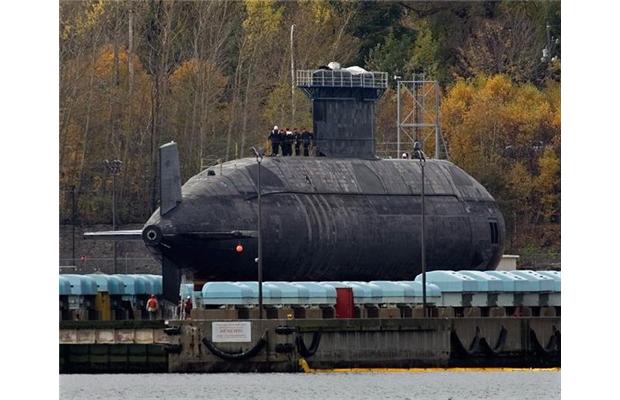
HMCS Chicoutimi rests on the syncrolift after being removed from the harbour in Halifax, N.S., Canada on Saturday, Nov. 5, 2006. A newly rebuilt HMCS Chicoutimi is set to rejoin the Canadian navy’s submarine fleet, nearly 10 years after a deadly fire aboard the second-hand warship effectively crippled the program.

A newly rebuilt HMCS Chicoutimi is set to return to Canada’s naval fleet nearly 10 years after a deadly fire aboard the second-hand warship effectively crippled the Canadian navy’s submarine program.

The resurrection of the British-built vessel, which became emblematic of the sorry state of Canadian military equipment in 2004, has the Department of National Defence contemplating for the first time how best to employ its controversial subs.

One internal defence proposal foresees deploying the undersea warships to far-flung oceans, patrolling trouble spots the way the navy’s frigates do today.

Chicoutimi has been fully repaired and upgraded, says the navy’s top commander.

It entered the water in late November after three years of work at Victoria Shipyards Co. Ltd., a return that is about two years behind the navy’s original schedule.

The submarine is in the process of being turned over to the military and the crew is expected to begin sea trial in waters off Esquimalt, B.C. over the next few weeks, Vice-Admiral Mark Norman told The Canadian Press in a recent interview.

“We’re on the cusp of achieving what we laid out,” said Norman, who noted the original goal of the program was to have three of the navy’s four submarines operational at all times.

Chicoutimi will, however, be restricted to shallow-water diving for the foreseeable future, according to a series of defence documents obtained by The Canadian Press under the Access to Information Act.

It’s been a long, excruciating journey since Jean Chretien’s Liberal government announced in 1998 it would buy four surplus diesel-electric boats from the Royal Navy in what was heralded at the time as a great bargain for Canadian taxpayers.

The poor condition of the mothballed submarines — they were rusty, prone to flooding and one had a dented hull — tarnished the reputation of the boats. But it was the fire aboard Chicoutimi in October 2004, which killed Lt. Chris Saunders and sent two other sailors to hospital, that nearly scuttled the program entirely.

A subsequent military board of inquiry found that an open hatch allowed sea water from a rogue wave to wash down the conning tower and inundate poorly insulated high-voltage wires, triggering the fire. Still, the 700-page report blamed no one for the tragedy, which occurred off Ireland during the ship’s voyage to Halifax.

The initial estimate to repair the boat was pegged at $15 million in 2005. It quickly increased to $20 million in 2006, but internal documents suggest the price tag could run to more than $125 million, including removal of all fire-damaged components.

Originally commissioned as HMS Upholder, the ship has spent the bulk of its nearly 28-year existence either in dry-dock or tied up to a wharf.

HMCS Victoria is the Canadian navy’s only fully operational submarine, having completed the test firing of a live torpedo. A third submarine, HMCS Windsor, is operational but has not gone through process of certification to fire its weapons and remains under dive restrictions.

HMCS Corner Brook is currently in dry-dock for life extension and repairs after slamming into the ocean floor off Vancouver Island.

Despite the trials, senior brass have been thinking ahead and want to see the subs play a meaningful role, possibly in extended deployments in waters off the world’s trouble spots in much the same way the Dutch have utilized their fleet.

Former chief of defence staff, general Walt Natynczyk, directed before he retired that the navy develop a deployment plan that would “accelerate the strategic reach of the submarines.”

Since the boats are slow and have limited range, Natynczyk envisioned the navy using a piggyback ship to whisk the submarines to support ongoing international operations, such as anti-piracy patrols off the Horn of Africa.

“The immense effort this has required, and the massive investment it represents, must now begin to yield a visible and defensible return on your investment,” the former top commander wrote in a directive dated March 5, 2012.

Norman says the navy isn’t quite ready for such an operation, but concedes it is a goal.

“We see this as a viable deployment possibility, looking into the near future,” he said.

A number of factors would have to be considered, including the cost of transport, sustaining the submarine once it’s on station, and the climate, since the boats were designed during the Cold War for operations in the frigid North Atlantic.

“Those boats are more comfortable in cold war than warm water,” Norman said.

But it would be in Canada’s national interest to conduct such far-flung patrols in addition to keeping tabs on the country’s coastline, he added.

“If you can pre-position them in whatever area of strategic interest you may have, they become all that more useful.”

Source – The Province