Author Archives: jasonlockley

Spain – The mistake will cost £9million over three years to rectify

Spain’s £1.75billion submarine programme is torpedoed after realising near-complete vessel is 70 tonnes too heavy because engineer put decimal point in the wrong place

  • Experts fear that the Isaac Peral will not surface again if sent to sea
  • The mistake will cost £9million over three years to rectify
  • A US company is to present a range of options to Spanish officials
  • The project could be set back two years by the error


A £1.75 billion Spanish submarine project has run aground after officials realised that the vessel is more than 70 tonnes too heavy – because an engineer put a decimal point in the wrong place.

A former Spanish official has described the mistake, which has led to fears that the submarine might not resurface if sent to sea, as ‘fatal’.

The Isaac Peral, the first in a new class of diesel electric submarines, was almost complete when the problem was noticed.

Too heavy: The Isaac Peral, a new, Spanish-designed submarine is more than 70 tons too heavy, and officials fear if it goes out to sea, it will not be able to surface. Officials are pictured next to the engine of the vessel last NovemberToo heavy: The Isaac Peral, a new, Spanish-designed submarine is more than 70 tons too heavy, and officials fear if it goes out to sea, it will not be able to surface. Officials are pictured next to the engine of the vessel last November

Spain will now pay US Navy contractor Electric Boat £9million over three years to assess the issue and carry out the work required to correct it, according to the Spanish Defence Ministry.

Rafael Bardaji, former director of the Office of Strategic Assessment at Spain’s Defense Ministry said that officials will review options suggested by Electric Boat.

But he said the preference has been to extend the length of the submarine’s hull, perhaps by 5 to 6 meters, to increase buoyancy.

Otherwise, the weight of the 2,200 tonne submarine would have to be reduced, and he said the Spanish Navy would not want to compromise features such as the combat system or an air-independent propulsion system.

Experts: Electric Boat, the company who will help the Spanish rectify the problem, helped to build the Astute class attack submarine, pictured, for the British Navy in 2003Experts: Electric Boat, the company who will help the Spanish rectify the problem, helped to build the Astute class attack submarine, pictured, for the British Navy in 2003

Electric Boat, the primary contractor for the U.S. Navy’s fleet of nuclear submarines, accepted the contract through a foreign military sales agreement between the American Navy and the Spanish Defense Ministry, the U.S. Naval Sea Systems Command announced this week.

THE ISAAC PERAL SUBMARINE

The submarine project has cost the Spanish some £1.75billion so far. But what exactly are they getting for their money with the SSK submarine:

  • Weight: 2,200 tonnes (surfaced) / 2,426 tonnes submerged)
  • Length: 71,05 metres
  • Power: 3 x diesel engines, 1 x electric engine, 1 x AIP reactor
  • Speed: 12 knots (14mph) surfaced / 19 knots (22mph) submerged
  • Complement: Space for three officers, four subofficers, 25 sailors and eight special forces soldiers
  • Armament: 6 x 533mm torpedo launchers, DM2/A4 Torpedos, Mk48 Torpedos, Sub-Harpoon Block II missiles, Tomahawk TacTom Cruise missiles (range about 1,600 km)

Electric Boat, a division of General Dynamic Corp., has helped other countries with their submarine programs.

It began assisting with development of the Astute-class nuclear attack submarine for the British Royal Navy in 2003, and it is working under another foreign military sales agreement on Australia’s Collins class of submarines.

The 233ft long submarine will carry a crew of 32, along with eight special forces troops, and weapons systems for surface and anti-submarine warfare.

The Defense Ministry said technical problems are normal for projects of this scale.

It said in a statement: ‘The technology challenges that these programs face during development are much more than simple calculations.

‘All the major military programs, especially submarines, have experienced delays and often have required the support of a technology partner.’

Mr Bardaji added: ‘Apparently somebody in the calculations made a mistake in the very beginning and nobody paid attention to review the calculations.’

The Isaac Peral, named after a 19th century Spanish submarine designer, is one of four vessels in the class that are in various stages of construction. The country has invested about £1.75 billion in the program.

The first vessel was scheduled to be delivered in 2015 but the Spanish state-owned shipbuilder, Navantia, has said the weight problems could cause delays of up to two years.

Source – Daily Mail

Hunt for lost First World War submarines

Explorers are launching a new project to locate dozens of British and German submarines which sank off the coast of England during the First World War, as part of a major new study to mark the centenary of the conflict.

Day trippers crowd around the German Submarine U Boat U118, washed up on the beach at Hastings, East Sussex, in 1919.

Day trippers crowd around the German Submarine U Boat U118, washed up on the beach at Hastings, East Sussex, in 1919.

The English Heritage research will involve identification and analysis of all submarine shipwrecks from the period which are within territorial waters – 12 miles from the coast.

Preliminary research by the team, studying historical records, has already identified three British and 41 German submarines from the conflict which are known to have sunk in the area.

The locations of some of these have already been established, but others have yet to be discovered.

Once they have been found, the team will dive onto them to assess their condition. They will then decide whether any measures can be taken to slow down the shipwrecks’ rate of decay on the seabed.

Depending on their historical significance, the vessels may also be added to existing list of shipwrecks covered by the Protection of Wrecks Act, which tightly controls such sites, or scheduled as an ancient monument.

If the vessels sank with men on board, they could be added to the register covered by the Protection of Military Remains Act, to ensure the war graves cannot be disturbed.

Mark Dunkley, a marine archaeologist with EH, said: “These sites may be out of sight, but they are still an important part of our heritage. There are people still around who will have a link to the men lost on these boats.

“They are an important part of family, as well as military, history.

“People might know more about U-boats in the Second World War, but this project will show just what a significant part they played in the first world war – and very close to land.”

The locations of around half of the 44 vessels are known. To find the others, EH is planning to enlist the help of local diving groups around the coast.

Although most associated with the Second World War, submarine warfare was first deployed during the earlier conflict, as German U-boats attempted to cut supply lines into and around the British Isles, while Royal Navy vessels patrolled in search of enemy ships.

At the start of the war, submarines were supposed to abide by international rules which complied them to then allow the crews of merchant ships to get to safety before sinking their vessels.

But this swiftly became impractical and led to the adoption of unrestricted submarine warfare by Germany, which, nearly brought Britain to its knees in 1917.

During the course of the war, German U-boats sank more than 12 million tons of shipping – around 5,000 ships – with the loss of 178 submarines and almost 5,000 men killed.

Most of the wrecks covered by the English Heritage project, which is expected to run throughout the four years of the Great War centenary, are German submarines which were targeting coastal routes, either attacking merchant shipping with torpedoes or laying mines.

They include UB65, which sank HMS Arbutus, a Royal Navy sloop, as well as six merchant ships and damaged six more, before sinking with the loss of all 37 crew near Padstow, Cornwall in July 1918.

The vessel, which went to the bottom after an apparent accident, had been plagued by bad luck and deaths and before its loss the German navy is said to have called a priest on board to perform an exorcism.

They also include UB115, which sank off the coast of Northumberland in 1918 with the loss of all 39 crew, after being attacked by British armed trawlers, warships, and even an airship, R29, which dropped bombs on it.

Several others went down off the east coast, among them UB107, which sank off Flamborough Head in July 1918, either as a result of an attack by British vessels, an accident, or after hitting a mine; UB41, last sighted by the SS Melbourne on October 5 1917 off Scarborough, which is thought to have struck a mine of suffered an internal explosion; and UB75, which had left Borkum on November 29, 1917 for the Whitby area. She succeeded in sinking four ships but never made it back home.

The only three Royal Navy submarines covered by the project were lost in accidents: HMS G3, which ran aground in Filey Bay, North Yorkshire, after the war in 1921; HMS G11, which ran aground near Howick, Northumberland, 1918; and HMS J6, which was sunk in a friendly fire incident, after being mistaken for a U-boat in 1918.

A young couple pose for photographs on the wreck of HMS G3 in Filey Bay, North Yorkshire.

English Heritage has responsibility for all historic wrecks off the English coast, but most of those it cares for are wooden warships.

To find out more about how to preserve the metal vessels from the First World War, it conducted a preparatory survey last year, on the wrecks of two submarines which sank just before the conflict – the Holland No 5, which sank off Beachy Head in 1912 and the A1, which went down in Bracklesham Bay a year earlier.

Both vessels sank without loss of life, although the A1 had previously sunk, in 1904, with the loss of all hands.

Both boats had a hull half an inch thick, but after more than 100 years on the seabed, researchers found these had thinned to as little as a quarter of an inch in places.

The team believe that some wrecks can be preserved by placing on them “sacrificial” anodes, which corrode at a faster rate, protecting the hulls.

Source – The Telegraph

US – Buying Submarines in an Age of Austerity

U.S. Navy submarine.

The US Navy’s plan to increase the size of its fleet is on a collision course with budget austerity. But, fortunately, there’s a nuclear option.

The  Navy’s shipbuilding plan is simply “unaffordable,” as Rep. Mike McIntyre, D-N.C., pointed out during the House Armed Services Seapower Subcommittee’s markup of the National Defense Authorization Act for Fiscal Year 2014 last week.

Why is the Navy’s plan “unaffordable”? One of the culprits is the Navy’s new nuclear ballistic missile submarines, known as the SSBN[X]. The Navy is planning to procure 12 SSBN[X] at a cost of nearly $6 billion each. These extraordinarily high costs “crowd out spending for other necessary ships,” according to Senate Armed Services Seapower Subcommittee Chairman Jack Reed, D-R.I., who represents the state where the current Ohio class nuclear missile submarines were manufactured.

Echoing Reed’s concerns, Randy Forbes, R-Va., chairman of the House’s Seapower Subcommittee, said during the markup that buying these 12 SSBN[X] at such a prohibitive price “will serve to significantly reduce [the size of] our naval forces.”

Fortunately, there’s a simple solution, according to Hans Kristensen, director of the Nuclear Information Project at the Federation of American Scientists – buy fewer SSBNs. Kristensen’s argument for purchasing fewer new nuclear subs is not about costs – though buying fewer ships would, of course, save billions of dollars – it’s about how the Navy actually uses its nuclear submarines.

Since the Cold War ended, the Navy has reduced its number of nuclear sub deterrent patrols – a justifiable reduction given the need to focus on 21st century, not Cold War, threats. In fact, the number of deterrent patrols undertaken now is less than a third of what was done at the end of the Cold War, according to Kristensen’s data.

But, if one logically believes the SSBN fleet is 1/3rd the size of what it was at the end of the Cold War, think again. There are only four fewer nuclear launch subs now than there were in the mid-1990’s (14 vs. 18), as the Navy’s response to Kristensen’s report concedes. Thus, each nuclear sub is now doing much less of what it was first designed to do – patrolling as a nuclear deterrent.

All of this leads Kristensen to conclude that “Fewer SSBNs can do the job …The navy could easily cut the SSBN fleet from 14 to 12 boats now and reduce the requirement for the next-generation SSBN from 12 to 10 boats and save billions of dollars in the process.”

The savings would give the Navy desperately needed flexibility in a shipbuilding budget that the House Seapower Subcommittee calls “unsustainable.” This would allow the Navy to fully fund other ships better suited to the Asia pivot, such as the Virginia class multi-mission submarines – whose cost is half that of an SSBN[X] – which conducts anti-submarine missions, delivers special operations forces in close-to-shore operations and launches Tomahawk missiles.

As Congressman Ed Markey, D-Mass., said, “It is insane to spend hundreds of billions on new nuclear bombs and delivery systems to fight a long-past Cold War while ignoring our 21st century security needs.” Cutting the size of our nuclear submarine fleet would both save money yet accomplish the Navy’s worldwide mission of nuclear deterrence in an era of military belt-tightening.

Source – USNEWS.COM

Electric Boat gets contract to help lighten Spanish sub

Groton — The first of the Spanish Navy’s four new submarines is too heavy and Electric Boat has been asked to help.

The U.S. Navy hired Electric Boat as the contractor for a foreign military sales agreement with the Spanish Ministry of Defence, in support of the Spanish Navy, according to a statement the U.S. Naval Sea Systems Command issued Monday.

The agreement is worth up to $14 million, an official at the Embassy of Spain who is familiar with the contract said. EB will provide technical assistance and review the S-80 Submarine project for almost three years, the official added.

The S-80 Submarine is Spain’s first submarine design. According to Spanish press reports, the S-81 Isaac Peral, the first member of the class, is at least 75 tons overweight. The diesel-electric submarine weighs 2,400 tons submerged and the excess weight could prevent it from surfacing after it dives.

Navantia, a Spanish state-owned company, is building the S-80 submarine fleet. Each submarine will have a crew of 32 and eight special forces.

The Isaac Peral was scheduled to be delivered in 2015 at a cost of about $700 million, but it is estimated that correcting the weight and balance issues could take up to two years.

When asked whether EB would help with the weight problem specifically, the Embassy official said, “We hope.” He did not know how many EB employees would be involved.

EB referred questions to the U.S. Navy.

In 2003, the British Ministry of Defence solicited EB’s help for its Astute submarine program through a foreign military sales agreement with the United States.

With a substantial gap between the design and construction of the Vanguard class and the start of the Astute program, submarine design and construction skills had atrophied in the United Kingdom, according to the RAND Corp., and about 100 experienced EB designers and managers worked with BAE Systems on the design effort.

Source – Patch . Com

Russian nuclear submarines resuming patrols in southern hemisphere

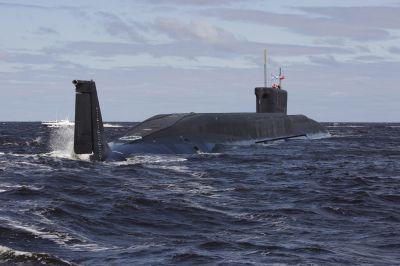
A new Russian nuclear submarine, the Yur

A new Russian nuclear submarine, the Yuri Dolgoruky, drives in the water area of the Sevmash factory in the northern city of Arkhangelsk on July 2, 2009.

Russian President Vladimir Putin watches

Russian President Vladimir Putin watches a military exercises in the Barents Sea aboard of “Pyotr Veliky” heavy nuclear missile cruiser, 17 August 2005.

MOSCOW — Russia plans to resume nuclear submarine patrols in the southern seas after a hiatus of more than 20 years following the break-up of the Soviet Union, Itar-Tass news agency reported on Saturday, in another example of efforts to revive Moscow’s military.
The plan to send Borei-class submarines, designed to carry 16 long-range nuclear missiles, to the southern hemisphere follows President Vladimir Putin’s decision in March to deploy a naval unit in the Mediterranean Sea on a permanent basis starting this year.
“The revival of nuclear submarine patrols will allow us to fulfill the tasks of strategic deterrence not only across the North Pole but also the South Pole,” state-run Itar-Tass cited an unnamed official in the military General Staff as saying.
The official said the patrols would be phased in over several years. The Yuri Dolgoruky, the first of eight Borei-class submarines that Russia hopes to launch by 2020, entered service this year.

Putin has stressed the importance of a strong and agile military since returning to the presidency last May. In 13 years in power, he has often cited external threats when talking of the need for a reliable armed forces and Russian political unity.
Fears of a nuclear confrontation between Russia and the United States has eased in recent years, and the Cold War-era foes signed a landmark treaty in 2010 setting lower limits on the size of their long-range nuclear arsenals.
But the limited numbers of warheads and delivery vehicles such as submarines that they committed to under the New START treaty are still enough to devastate the world. Putin has made clear Russia will continue to upgrade its arsenal.
Russia’s land-launched Intercontinental Ballistic Missiles (ICBMs) would fly over the northern part of the globe, as would those fired from submarines in the northern hemisphere.
Both the Borei-class submarines and the Bulava ballistic missiles they carry were designed in the 1990s, when the science and defense industries were severely underfunded.
Russia sees the Bulava as the backbone of its future nuclear deterrence, but the program has been set back by several botched launches over the past few years.

Our submarines are free to navigate international waters: China

Our submarines are free to navigate international waters: China
BEIJING: Amid the long-simmering territorial row between China and Japan, Chinese military has asserted that its submarines are free to navigate international waters.

Chinese submarines are free to navigate international waters, including the Northwest Pacific, which is also visited by other nations’ maritime forces, spokesman for China’s Ministry of National Defence, Geng Yansheng, said yesterday.

Geng also criticised the so-called “China Military Threat”, as described by some Japanese media, as an act of “intentionally creating tension with an ulterior political motive,” state-runXinhua news agency reported today.

“Such act is irresponsible and not conducive to peace and stability in the region,” he said.

Geng made the remarks in response to a question regarding some Japanese media outlets’ recent, frequent reporting on the voyages of China’s Yuan-type submarines in Japan’s contiguous zones.

Japan’s coastguard recently said that the Chinese maritime surveillance vessels were spotted inside the 12-nautical-mile zone off the Senkaku islands, which China calls the Diaoyus, in the East China Sea.

The move marked the latest in the decades long standoff between Beijing and Tokyo as they jostle over ownership of the resource-rich islands.

Last September, Japan nationalised three islands in the chain, angering China.

Source – Economic Times


There’s nothing sadder than the wreck of a once-great submarine

There's nothing sadder than the wreck of a once-great submarine

They dove beneath the waves, and helped to win massive global wars. But submarines can’t submerge forever. Eventually, these old warhorses get swept away by history. Here are some images of the most haunting dead submarines of all time.

Puget Sound Naval Shipyard, May 17 1993

There's nothing sadder than the wreck of a once-great submarine

One submarine tender and 16 nuclear submarines are awaiting scrapping.

The remains of two XT-Craft midget submarines, Aberlady Bay, Scotland, UK

There's nothing sadder than the wreck of a once-great submarine

The XT-Craft submarines are the training versions of the X-Craft that attacked the Battleship Tirpitz in September 1943. Two of these vessels were transported to Aberlady Bay and used for target practice and gun tests by Royal Air Force aircraft.

There's nothing sadder than the wreck of a once-great submarine

There's nothing sadder than the wreck of a once-great submarine

There's nothing sadder than the wreck of a once-great submarine

There's nothing sadder than the wreck of a once-great submarine

Near the Russian naval base of Olenya Bay, Kola Peninsula, Russia

There's nothing sadder than the wreck of a once-great submarine Continue reading

Submarine deal secures future for hundreds of Glasgow jobs

 IT IS taller than a Glasgow tenement and packs more punch than the late Gorbals-born world flyweight boxing champion Benny Lynch ever did.

The latest structure completed by Clyde shipbuilders

The latest structure completed by Clyde shipbuilders

The latest structure completed by Clyde shipbuilders

BAE Systems Clyde shipbuilders unveiled its latest engineering fete – a man-made island of steel which will tower over Britain’s newest aircraft carrier.

The Aft Island unit is 31m tall.

It is the tallest structure ever to be built at the Scotstoun warship yard and is the maritime equivalent of an air traffic control tower.

A flight commander will take charge of the hand picked personnel who will manage the fighter jets and helicopters which will fly from the new carrier.

The Ministry of Defence has yet to release details of the number of staff who will be on operational duty on ‘the island’ when the nation’s biggest warship goes into action.

But it is thought the on-board controllers could be responsible for up to 40 fighter jets, though the average number is likely to be 12.

The towering steel structure comprises nine decks, which include sleeping accommodation and a briefing room for pilots.

Once completed, it will bristle with radar and antenna.

It will also be used by a sailor to steer the massive carrier, under instruction from the ship’s captain who will be located elsewhere on the vessel.

The latest carrier block to be manufactured by Scotstoun and workers at the sister Govan yard is 32 metres long and unlike any ship ever seen on the Clyde.

Project head Derek McCaffrey, from Stewarton, East Ayrshire, said: “It’s shape dictates its radar signature. The smaller the signature the safer the crew from enemy attack.”

From the first steel cut in January last year it has taken 86 weeks to build the unit. It will be loaded and welded on to a barge in less than two weeks time before taken around Scotland’s northern coastline to Rosyth, where the super sized carrier – being built in sections at yards across the UK – is being put together like a giant metal jigsaw.

The Aft Island is the most intricate and most advanced block produced so far on the Clyde for the multi-billion pound carrier programme and the workmanship has impressed Systems Into Service Director Steven Carroll.

He is responsible for the delivery of both carriers – the Prince of Wales is the second of the fleet.

From the tradesmen at Scotstoun to the yard’s own specialist design engineers, he saluted them all when he said: “They have done a fantastic job.

“It was a 90-week programme but they managed to complete four weeks earlier than scheduled, which is all to their credit.”


Govan-based Thales Optronics is to help support the Royal Navy’s fleet of submarines as part of 10-year deal with the Ministry of Defence.

The deal will see the French-owned defence contractor manage the visual systems fitted on every Royal Navy submarine including the periscopes for the four Vanguard nuclear ballistic missile subs which form Britain’s so called nuclear deterrent as well as the five nuclear-powered Trafalgar fleet.

The contract will also see Thales maintain optronic masts fitted on the Navy’s new of Astute nuclear-driven subs.

Thales UK chief executive Victor Chavez, said: “This contract reinforces our positive well-established relationship with the Royal Navy.”

And Philip Dunne, Minister for Defence Equipment, Support and Technology, said said the new long term contract was good for the MoD and Thales.

He added: “Not only will it secure a number of jobs across the UK while delivering savings but will also provide essential support for the combat equipment that helps give the Royal Navy’s fleet of ships and submarines a vital technological edge wherever they are based in the world.”

The latest bumper contract comes almost exactly two years after Thales Optronics won the Queen’s Award for Enterprise after selling more than £100m of military equipment to foreign buyers over a 36-month period.

The defence manufacturer which specialises in optronic based products including hi-tech binoculars used by frontline soldiers as well as laser rangefinders and infra-red thermal cameras was previously known as Barr & Stroud Ltd.

It was a leading Scots engineering company launched 125 years ago in Glasgow and is now located in custom built premises in Linthouse Road.

News of the £600m deal comes as BAE Systems Clyde shipbuilders unveiled its latest engineering fete – a man-made island of steel which will tower over Britain’s newest aircraft carrier.

The Aft Island unit is 31m tall. It is the tallest structure ever to be built at the Scotstoun warship yard and is the maritime equivalent of an air traffic control tower.

A flight commander will take charge of the hand picked personnel who will manage the fighter jets and helicopters which will fly from the new carrier.

The Ministry of Defence has yet to release details of the number of staff who will be on operational duty on ‘the island’ when the nation’s biggest warship goes into action.

But it is thought the on-board controllers could be responsible for up to 40 fighter jets, though the average number is likely to be 12.

The latest carrier block to be manufactured by Scotstoun and workers at the sister Govan yard is 32m long and unlike any ship ever seen on the Clyde.

Project head Derek McCaffrey, from Stewarton, East Ayrshire, said: “It’s shape dictates its radar signature. The smaller the signature the safer the crew from enemy attack.”

From the first steel cut in January last year it has taken 86 weeks to build the unit. It will be loaded and welded on to a barge in less than two weeks time before taken around Scotland’s northern coastline to Rosyth, where the super sized carrier – being built in sections at yards across the UK – is being put together like a giant metal jigsaw.

Source – Evening Times

Retired Veteran Recalls Life on a Submarine During the Vietnam War

USS Woodrow Wilson, ballistic missile submarine

USS Woodrow Wilson, ballistic missile submarine

In a recent interview, Sgt. 1st Class Bruce Lipe, who retired in 2009 after 41 years of collective service between the Navy and the National Guard, shared what it was like to be part of a submarine crew during the Vietnam War. While his days were not spent tromping through thick jungles, but rather hidden in the depths of the Pacific Ocean, he still faced a unique set of challenges while contributing service. The biggest of those challenges? Isolation and communication.

His entire time of service was spent aboard four different submarines (see photos), each with a specific function. The types of submarines included ballistic missile subs, fast attack subs and a patrol gun boat that was assigned to the coastal surveillance group.

His deployment during the Vietnam War was what was referred to as WESTPAC, which covers the area of the western Pacific Ocean and Southeast Asia. Each deployment lasted three to four months and most, if not all, of that time was spent under water within the submarine. Which, of course, meant that for those months under water, the crew was unable to see or feel any sunlight.

USS Daniel Webster, ballistic missile submarine

USS Daniel Webster, ballistic missile submarine

Those that were aboard submarines had to not only be able to perform their own duties and responsibilities, but also had to have an understanding and working knowledge of other jobs on the vessel. In the event that others were not able to perform their regular jobs, the remaining members of the crew had to be able to fill those positions. The inability to carry out a job may be due to the individual, such as sickness or injury, or it may be the result of other circumstances, such as flooding, in which event certain areas of the vessel would be sealed off, making it impossible to rotate work areas.

The submarine community is relatively small compared with the rest of the surface Navy, and the camaraderie within the submarine community is uniquely its own. While the brotherly bond is strong, as it is in within any military unit, residing within the depths of the ocean for several months at a time with only about 100 people in a 33-foot diameter metal tube, the bond can be distinctive. And there’s an understanding of challenges they all face in such conditions, an understanding which carries over even once back on land.

USS Queenfish, fast attack sub

USS Queenfish, fast attack sub

Due to the nature of the environment, the psychological and other screenings required to be stationed on a submarine are much more in depth, as adverse reactions, such as claustrophobia and paranoia, are much more likely to occur. In addition, one of the biggest challenges faced by those stationed on submarines is the effect of isolation.

During the time of the Vietnam War, communications on submarines were slow and unreliable at best. Sailors were allowed to receive communication through familygrams, a 25 to 50 word message. They could receive these messages, but not send any. Another problem was that family members sending the familygrams had no way of knowing whether or not the message was received. Oftentimes, those aboard the submarine would have to wait to receive news of any kind until surfacing, which could be up to four months later. Obviously, technology has since changed and communications are much improved aboard submarines.

USS Antelope, patrol gun boat

USS Antelope, patrol gun boat

Lipe then goes on to talk about the attitude surrounding the Vietnam War, describing it as “an unpopular time.” For the most part, soldiers were not looked upon as heroes. They were ridiculed and insulted, called horrific names and spat upon. Many soldiers were warned to change out of uniform immediately upon returning home, as Lipe explains, they “were not welcomed by the American people,” and for the most part were made to feel as if they had done something wrong for being a part of the war, regardless of the part that they played. He recalls a time when he came home on sick leave and was spit on in the airport. There was much animosity present and soldiers were often told, more or less, to just “suck it up and drive on.” And Lipe shares that that’s exactly what he did, keeping all of the emotions of the war bottled up inside for years.

With different times came different wars, and it wasn’t until many years later, during Desert Storm, that those emotions were released. Seeing the support of the American people for the soldiers during that time was the beginning of healing the emotional hurt from the Vietnam era. And some say, including Lipe’s wife, that the American people felt an obligation to treat those soldiers with the love and support that they so bitterly lacked during Vietnam.

Even those who were not deployed were still involved in the welcome home parades of Desert Storm and that’s when Lipe was truly able to let go of the negativity he had felt since Vietnam. He explains that he was reluctant to be involved, but nonetheless was. “When we crossed the Broadway Bridge over the Arkansas River and saw the crowds that had come out, lined up as far as you could see, and eight, 10, 12 people deep… a lot of those feelings were released.” Continuing on, the more recent events of 9/11 has molded the American public’s view, and the soldiers are once again getting the respect that they deserve.

He then goes on to talk about the outpouring of support that the soldier’s would receive, not only upon returning, but any time they were out and about in uniform. This was a support that the soldiers in Vietnam lacked. He spoke of taking flights and being moved to first class and going to pay for a meal in a restaurant, only to find that someone had already paid for it.

Jennifer Cruz on her wedding day with her father, Bruce Lipe.

The author on her wedding day with her father, Bruce Lipe.

Average Americans can feel respect and support for today’s soldiers, but often don’t know how to show it. Other than supporting organizations that strive to help vets, they are unaware how to show that they care. Sometimes the smallest gestures can mean the most, so the next time you’re out and see a soldier in uniform, pay for their meal, or just simply take the time to shake their hand and say, “Thank you for your service.”

US nuclear submarine fit for porpoise – Video Clip

AMERICA has a new submarine which is fit for a porpoise.

Or rather, it’s fit for dolphins – two of which appeared to give USS  Minnesota the seal of approval as they spectacularly surfed its churning bow  wave during recent, successful sea trials.

The beautiful moment when the two mammals swam into the 8000-tonne Virginia  class boat’s forward wake was captured on camera and has been shared widely  online by gobsmacked viewers.

The video shows the dolphins leaping high into the air as the huge nuclear  attack sub, launched late last year, barrels across the surface at up to  46km/h.

Two Navy personnel can be seen watching from the conning tower as the mammals  ride the wave, apparently enjoying being propelled forward so quickly.


“That is a beautiful sight! That must be like a surfer’s dream to the  dolphins,” one online viewer commented. 

Dr Hugh Finn, a researcher at WA’s Murdoch University, said he’s seen  dolphins riding the bow waves of Australia’s Collins class subs in Cockburn  Sound, off Fremantle’s coast.

“Essentially the dolphins get a free ride from the pressure wave that a ship  creates in front of it,” he told AAP.

“The ship is moving the water for them and they are quite adept at riding the  wave.

“The same sort of phenomenon – including the leaping – occurs when dolphins  ‘surf’ waves along the coast.”

Source – News Com. AU