We’re learning from Astute submarine flaws, admiral promises

MoD should not have boasted about ‘classified’ top speed of hunter-killer boats

Astute arrives at Faslane for the first time

Astute sailing up the Clyde estuary into her home port of Faslane, Scotland, for the first time after the journey from Barrow-in-Furness shipyard.
.

The head of the Royal Navy’s submarine programme has told the Guardian that his team discovered design faults, technical problems and flaws in the construction of the multibillion-pound Astute class boats, but said he was still confident it would enter service on time next year.

In a frank interview in which he spoke in detail for the first time about the challenges of launching the submarines, Admiral Simon Lister also admitted the military should not have boasted about the boats’ top speed.

It was not unusual, he said, for the first of a class to be “a difficult birth”, but he added that the Astute was now the most tested boat in the navy. Lister insisted that lessons were being learned and that changes were already being made to Astute’s sister boats, which are due to come into service over the next decade.

He said he was feeding these modifications into the blueprints now on the drawing board for the submarines, dubbed Successor, to carry the Trident replacement.

Lister said he wished none of the problems on the Astute had occurred, but they were being dealt with and safety had not been compromised. “I wish none of them had happened. I wish I could buy a submarine as if it was a Mercedes-Benz coming off the production line after 10 years of product development. It isn’t that.

“What I would say is that the speed and the quality of the activity to put things right is second to none. The ambition to bring Astute into service in perfect order so that she is able to enter service within three months of exiting the shipyard, if anyone thinks that’s possible, they would be mistaken. A nuclear submarine is a complex beast. It has many different disciplines. It is one of the most complex things man produces.”

Lister said it would be wrong for the military to claim the difficulties were just “stuff and nonsense and teething troubles”, but he said it would also be wrong for critics to write off what is the navy’s most technically advanced boat.

The Ministry of Defence has ordered seven Astute hunter-killer submarines that will cost up to £10bn and expects them to become the backbone of the fleet.

The programme has been hindered by delays and overspends since it was commissioned 15 years ago, and suffered embarrassment in 2010 when Astute was grounded off Scotland – a calamity that led to the commander being removed.

Last month, the Guardian revealed that Astute, which is coming to the end of three years of sea trials, was forced into an emergency surfacing when it sprang a leak, suffered from internal corrosion, and been fitted with equipment and materials of the wrong quality.

Since then the Guardian has discovered new issues. The MoD has admitted to problems with the trays that carry important cables controlling Astute’s sonar, which has led some of them to fray badly. During a recent test, Ambush – the second of the class and also built at BAE Systems in Barrow-in-Furness, Cumbria – flew its “Not Under Command” flag – which denotes that due to exceptional circumstances it is unable to manoeuvre properly.

Both boats are having to be equipped with an electronic chart system, after a report into the grounding of the Astute in 2010 ordered the upgrade.

Significantly, both have also suffered propulsion problems that have prevented them from reaching or exceeding the speed published by the MoD – 30 knots.

The Guardian has been told that the design is likely to restrict the top speed of all the boats, but the navy will not be drawn on the issue, saying it is a confidential matter. However, Lister insisted the Astute did not have to be a fast boat, and admitted the MoD should have been more cautious about discussing speed when the fleet was first commissioned.

“Is Astute a high-speed submarine? No sir. We have emphasised stealth over outright speed. That is an operational decision we have made, a trade-off, to achieve other capabilities. We haven’t designed this submarine to be quick, we have designed it to be quick enough. Whoever [in the MoD] put ‘this submarine goes at 30 knots’ didn’t understand that the top speed of a submarine is a classified matter and missed out ‘up to’ which is traditionally the formula.

“Because you have poked us, we want to say it [will go] more than 20 knots, which we can say with certainty without giving too much away to the enemy. We don’t reveal the top speed because it would give a potential enemy an advantage. It is a classified number.”

Lister said he had identified three sorts of problems with the Astute: flaws in design that only became apparent when testing started; equipment that broke down too easily; and some problems relating to poor construction at the shipyard.

“In the programme of testing over three years we have identified issues in all of those categories. And got on and fixed them. Is this normal? Where is this on the spectrum of scandalous waste of taxpayers’ money? Is this what we could expect, is this the normal endeavour of dragging any ship out of the dockyard? You will have to make your own mind up. [But] the programme of testing is on track and the submarine will enter service this coming year.

“Every aspect of that submarine has been tested to the limit. It is the most thoroughly tested submarine in the navy today. Point me to any submarine building yard that produces a first of class and I will show you a process that is extraordinarily challenging. The level of challenge in Astute I don’t think has been any more than in the level of challenge in the first of class in other submarines.”

He said he had not and would not compromise on safety, even if that meant further delays to the programme. “I buy these things, I set the pace, I place the demand on the company, I judge whether the product is right enough and good enough.

“My rule is the thing that gives is not safety, the thing that gives is time. Where the shipyard needs to learn to do something it is the schedule that is relaxed to enable that learning to take place. What gives? It is the schedule, which is why Ambush emerged from the dockyard later than planned.”

He added: “The first child has been a difficult birth. We have learned those lessons and every engineering development that we put into Astute has gone into or is going into Ambush. Astute as she emerged from the dockyard will be very different from the seventh one because we learn from Astute.”

Lister said he had 800 people on his Astute team and 1,000 working on the replacement for the Trident-carrying Vanguard class submarines. He said the navy was using the lessons from Astute to refine plans for Successor.

“My policy is to take every lesson I can from every quarter I can find it into the design of Successor and its manufacturing plan. I am having meetings about Successor and attempting to learn the lessons from other areas of the programme – including Astute. You would expect me to. That is what we do.

“I am not sitting down saying ‘Astute has been a failure we are not doing that again’. I am saying what must we learn from our experience on a daily basis in how we put Successor together. Astute is a superb submarine and is going to be the backbone of the fleet, the submarine flotilla, when she enters into service.”

Source – The Guardian
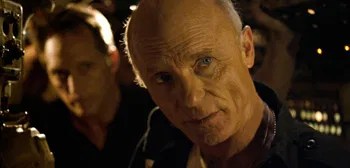
Submarine film – “Phantom – Video clip (Trailer)

Trailer for Submarine Thriller ‘Phantom’ with Harris, Duchovny

Phantom Trailer

Ed Harris & David Duchovny, both of them in a Cold War submarine thriller called Phantom? The cast in this, beyond Harris and Duchovny, also includes some other fantastic actors: William Fitchtner,Sean Patrick FlaneryJohnathon Schaech and Lance Henriksen.

Harris plays the captain of a Cold War Soviet missile submarine who has secretly been suffering from seizures that alter his perception of reality. There’s some odd supernatural-y twists, but otherwise this just looks like another solid submarine thriller.

The Captain of a Soviet submarine holds the fate of the world in his hands. On a seemingly haunted vessel, with a rogue element on board, Captain Demi (Ed Harris) is forced to face his past in order to find redemption in the present. But, in the depths of the South Pacific, man and machine are not alone.

Phantom was both written & directed by up-and-coming filmmaker Todd Robinson, of a few docs previously like Wild Bill: Hollywood Maverick and Amargosa, as well as the crime film Lonely Heartspreviously. RCR Distribution is releasing Phantom in theaters on March 1st, 2013

Source – First Showing

3 brothers followed their dad into the Navy and all become commanders of submarines

Bacon Brothers had remarkable Naval careers after their Bremerton High days

CONTRIBUTED PHOTO  Navy commanders Roger, Bart and Dan Bacon. Roger and Bart played on the 1955 Bremerton basketball team, and brother Dan was the manager.

Navy commanders Roger, Bart and Dan Bacon. Roger and Bart played on the 1955 Bremerton basketball team, and brother Dan was the manager.

CONTRIBUTED PHOTO  Bart Bacon was the commander of the submarine USS Trout at one point during his career.
Bart Bacon was the commander of the submarine USS Trout at one point during his career.

But the Bacons — twins Roger and Barton and younger brother Dan, who was the team manager — did exceptionally well in their careers. And their careers were similar if not identical. That makes their story even more remarkable.

Roger and Bart started on that 1955 team. Once they got their graduation diploma, the two quickly got on with their lives. Roger accepted an appointment to the Naval Academy, where his basketball career fizzled out after a couple years because of foot injuries. He wound up coaching the Plebes (freshman) basketball team his senior year, and he also rowed with the Navy crew. He graduated 50th in a Navy class of 800 and got a masters from the Navy Postgraduate School in Monterey, Calif.

Bart played one year of football at Washington State and then followed his high school sweetheart and future wife, Marilyn Miller (now deceased), to the University of Washington where he got a split degree in industrial engineering and business. He would have played football at Washington except he didn’t know about a new rule that forced transfers to sit out a year. When he was a junior he figured he was too far behind the others to try it.

Dan, whom his older brothers considered the smartest, went to Stanford to get his math and physics degrees and got a masters of science degree from the Navy Postgraduate School in Monterey.

To keep the story short, Dan and Roger eventually got into the Navy Submarine School at New London, Conn., following in the footsteps of their dad, Barton Sr., who was in ROTC at Stanford and eventually became a submarine commander.

Bart had decided to go a different rout. He went to Navy Flight School in Pensacola, Fla., with the intent to become a pilot. His brothers were worried about him, so they talked him into applying for sub school.

“They thought I was eventually going to kill myself (by being a pilot),” said Bart, who was tops in his class at Pensacola in academics and second in flight school. He was on a tour with the carrier USS Yorktown when he was accepted into sub school, thus continuing an amazing streak of Bacons in submarine service for our country.

All three Bacons once commanded different subs in the Pacific at the same time.

Roger, who lives in retirement on Hood Canal near Poulsbo, had a 33-year Navy career that ended with him being Vice Admiral in charge of all the submarines in the United States arsenal — 100 fast attack and 30 strategic submarines. He commanded the fast attack submarine USS Flasher, the strategic nuclear submarine USS Patrick Henry and the submarine tender USS Hunley. He also served as commander of a submarine squadron in Pearl Harbor and as commander of Submarines Mediterranean, Naples, Italy.

Photo with no caption

As a civilian he worked for Westinghouse as vice president at Hanford overseeing nuclear waster disposal, and at Rocky Flats as president of Safe Sites of Colorado. He closed down Rocky Flats. He also was chair of the undersea Warfare Department at the Navy Postgraduate School for four years.

Bart was commanding officer of the USS Trout submarine and the USS Cleveland LPD 7 (light class cruiser), and was commanding office of the Submarine Training Facility, and Navy Personnel Research Department, both in San Diego. He also is a graduate of the National War College, Armed Forces Staff College, and Defense Intelligence College. Retired from the Navy after 31 years, Bart lives in San Diego.

Dan was commanding officer of the fast attack nuclear submarine USS Haddock and retired as a Commander after 20 years of service. As a civilian he was president and founder of West Coast Division of Sonalist, and was awarded the Department of Defense Certificate of Excellence in 2000. He died suddenly in 2008 at the age of 67 at his home in San Diego. His oldest son, Dan, who lives on Bainbridge Island, graduated from the Navy Academy and served in the Navy 20 years, spending half that time with the nuclear sub force.

Every submarine the Bacon’s commanded was awarded the Battle Efficiency E for overall excellence in competition with all other submarines in the squadron over a course of a year. Bart’s USS Trout command was adjudged the most outstanding diesel submarine in the entire submarine force in 1976.

“Roger figured out that the Bacon Navy family had 16 commands during the 99 years of cumulative naval service,” Bart said.

Bart Bacon Sr. and his boys, Roger, Dan and Bart, just before World War II. All three of the Bacon brothers later commanded different subs in the Pacific at the same time.

All three brothers earned numerous Navy honor way too long to list here. Roger was awarded the French Legion of Honor and three Distinguished Service medals. Dan and Bart’s awards include Legion of Merit and Presidential Meritorious Service Medal.

This, of course, is not the entire story of the Bacons. It’s a glimpse, a snapshot if you will, of three brothers who served our country well, as they once did for Bremerton High School as young high school students that were part of a remarkable collection of guys who played for a remarkable basketball coach — Ken Wills — on a remarkable basketball team.

Source – Kitsap Sun

INF submarine ‘sinks enemy ships’ – Video Clip

Ahead of arrival of new German-made submarine, Navy releases rare video of underwater vessel’s drill

The Israel Navy (INF) released a rare video Monday, allowing a sneak peak at its most expensive weapon – the stealth submarine.

The video shows an exercise in which the submarine’s crew fires torpedoes at “enemy warships.”

The exercise was held as part of the INF’s preparations to receive its fourth German-made submarine, which is currently making its way to Israel. A fifth submarine has been contracted.

The Navy plans to add more sailors to its elite submarine unit and the current submarine crewmen course graduation will mark a new record in their numbers.

Graduates of the 16-month course will be given the rank of sergeant. Each has mastered a mechanical discipline of submarine operations, such as cruise control, navigation, electricity, weapons and sonar.

“The submarine – Israel’s most complex marine weapon – is only as strong as its crewmen,” INF Chief Admiral Ram Rotberg said Monday. “They are quality professionals with stern battle ethics.”

Source – Ynet News

Son to Skype father on Christmas Day after 50 year hunt

A man who waited 50 years to meet his father is looking forward to the “best present ever” as he sees him on Christmas Day for the first time this year.

Westley Grey who lives in Scotland meeting his father in the US, Westley Snr Moorehead for the first time
Westley Grey who lives in Scotland meeting his father in the US, Westley Snr Moorehead for the first time 

50-year-old Westley Grey lives near Greenock in Inverclyde and had never met his father until October this year when he travelled to the US.

Along with his twin brother David, Westley started searching for his birth father after his mother Thomasina died. They knew that he had served in the US Navy and eventually tracked him down to Texas.

Westley Grey and his twin baby brother David in the arms of their mother Thomasina
Westley Grey and his twin baby brother David in the arms of their mother Thomasina 
  • Westley Snr Moorehead joined the US Navy in 1945 aged 17. In the early 1960s he was stationed at Holy Loch in Argyll and Bute, which was a US nuclear submarine base during the Cold War
  • While there he met Thomasina and the couple fell in love, but shortly afterwards Westley Snr was sent to the Caribbean during the Cuban missile crisis and later to war in Vietnam
  • Just after he left, Thomasina discovered she was pregnant with twins but had no way of contacting Westley Snr, who had no idea until David found him in the US

David travelled alone to Texas to meet his father, who is now 84, and discovered that he and his brother have three stepsisters and a stepbrother.

It’s been the best year of my life and now I can’t wait to see my dad for the first time in my life on Christmas day when I Skype him.

That’s the best Christmas present I could ever want. It was the most amazing moment in my life to have finally met my dad for the first time.

I waited 50 years for to see him and was completely lost for words when I first saw him. I just gave him a big hug.

– WESTLEY GREY

Thomasina with Westley Snr Moorehead just before he was called away to the Caribbean
Thomasina with Westley Snr Moorehead just before he was called away to the Caribbean 

I felt blessed to have met Westley and David for the first time in my life.

It was incredibly emotional to have met Westley, I will never forget the moment I first saw him. Now I’m very much looking forward to speaking to him for the first time on Christmas Day.

The past few months have been a rollercoaster of emotions – meeting Westley for the very first time and then losing my wife.

I’m extremely glad though that they managed to meet before Bernadine died. He will have good memories of a wonderful woman.

– WESTLEY SNR MOOREHEAD

Source – ITV

IRGC’s Sonar-Evading Submarines Enjoying Unique Capabilities

President Mahmoud Ahmadinejad getting into a Iranian submarine

Two Iranian military commanders disclosed that the country’s home-made sonar-evading submarines enjoy unusual features.

“Besides the usual capabilities of the submarines that all people are aware of, our vessels enjoy some subsurface capabilities that are different from the regular features of submarines and no one is informed of them,” Commander of the Islamic Revolution Guard Corps (IRGC) Navy Rear Admiral Ali Fadavi told FNA on Sunday.

Also, Deputy Defense Minister for Industrial and Research Mohammad Eslami, whose ministry is in charge of supplying logistical backups including equipments for the Armed Forces, told FNA that “the submarines supplied to the IRGC are of the mid-sized class, given the missions defined for the IRGC Navy”.

He said all Iranian submarines are sonar and radar-evading, “since we cannot fulfill our missions today if our submarines are not equipped with sonar and radar evading technologies”.

Earlier this month, Iranian Defense Minister Brigadier General Ahmad Vahidi announced that the country plans to equip the IRGC naval force with new submarines.

“Production of different types of submarines are on our agenda and naturally they will be delivered to the IRGC whenever they reach their final phase,” Vahidi told FNA at the time, adding that the ministry plans to equip the IRGC Navy with its new home-made submarines.

As regards the features and specifications of the new submarines, Vahidi said, “These submarines will be in models other than Qadir (light submarines) and their production and delivery to the IRGC are underway.”

He said that Iran is producing military tools based on its doctrine of asymmetric defense.

Last month, Iran boosted its naval power in Persian Gulf waters after a new missile launching vessel and two light submarines joined its Navy fleet.

During the ceremony attended by Iranian Navy Commander Rear Admiral Habibollah Sayyari, two Qadir-class light submarines also joined the Iranian naval fleet.

All parts of the Qadir-class submarines, including the hull, radar equipment and advanced defense systems, have been made domestically.

The submarines are appropriate vessels for different naval missions, including reconnaissance and combat in territorial waters, specially in the Persian Gulf and the Strait of Hormuz which are not wide enough for the maneuvering of large warships and submarines.

Source – Fars News Agency

Indian nuclear submarine INS Chakra facing problems with critical components:

India’s only Russian-origin nuclear submarine INS Chakra is facing problems with its critical components affecting its operational readiness.

The 8,000-tonne submarine has been facing problems with its critical components and Russia has been asked to provide the parts for the vessel which need to be replaced, Navy sources said.

However, they did not divulge the components which would have to be replaced but indicated they are critical for the operations of the submarine. India had inducted the Akula-II Class ‘Nerpa’ nuclear submarine in its inventory in April this year at the Vishakhapatnam-based Eastern Naval Command. It was renamed ‘Chakra’ by the Indian Navy.

The Russian submarine had met with an accident in November 2008 when it was undergoing sea trials in the Sea of Japan in which around twenty sailors were killed and several others were left injured.

The submarine was launched in 1993-94 but its construction was held up since then due to lack of funds with the Russian Navy.

However, in 2004, the Russian side decided to build it after reaching a ten-year lease agreement for operation of the submarine with the Indian side.

With INS Chakra and the yet-to-be-inducted indigenously built INS Arihant, India is planning to have two nuclear submarines guarding its vast maritime boundary. With a maximum speed of 30 knots, Chakra can go to a depth of 600 metres and has an endurance of 100 days with a crew of 73. However, as per the lease accord, it cannot carry nuclear warheads.

The vessel is armed with four 533mm and four 650mm torpedo tubes. India had leased and operated a Charlie-class Russian nuclear submarine, also called ‘Chakra’, in 1988 for training its personnel on such submarines.

Source – ZEE News

HMS Opossum – Paying off video

Not exactly news but interesting non the less!

Very sad!

Volunteer, retired Canadian Submariner receives Diamond Jubilee medal

Local volunteer and retired navy chief Larry Skaalrud has been honoured with a new medal.

Skaalrud, 70, an Airdrie resident since 1996, received a Diamond Jubilee Medal on Nov. 27 during a ceremony at McDougall Centre in Calgary.

“It’s a feeling you just can’t explain,” said Skaalrud who said it was an honour to receive it.

He was nominated by members of the Submariners Association of Canada, an organization Skaalrud started in 1995.

Involved with the Canadian Navy for 32 years, Skaalrud said he and other submariners wanted a way to stay in touch.

During his time with the Navy, he worked on submarines. He said the longest trip he took underwater was 29 days from Victoria to Hawaii.

“You really get to know one another,” he said, explaining the organization is a way for everyone to remain connected years later.

He said inside the submarine about 74 officers would work together. Now, because of technology, less crewmen are needed – about 60. He said everyone worked together and knew how to man all aspects of the vessel.

After forming the submariner association in 1995, two other chapters have started up in Canada.

The association attends local memorial ceremonies and services, naval ceremonies, and provides financial assistance to veteran groups and area sea cadets.

It’s open to people qualified on submarines and hosts reunions, the most recent one four years ago, which allows former submariners to get together and remember their days together.

He also said new submariners are part of the organization as well.

He’s still involved with the association and recently toured the HMCS Ojibwa, Canada’ first Cold War submarine, now decommissioned and docked in Port Burwell Harbour, Ontario as the centrepiece for the new Museum of Naval History.

Skaalrud who grew up in Carsland, left when he joined the navy. He returned to his home province in 1996 and settled in Airdrie.

And once he arrived, Skaalrud immersed himself in the community here and worked eight years at the City of Airdrie as a utility technician.

He is a past president of the Airdrie Legion, a former member of Citizens on Patrol and helps with Ducks Unlimited. Currently, he is president of Airdrie Village Association, a group of local residents dedicated to maintaining the atmosphere of Airdrie’s downtown neighbourhoods.

The Diamond Jubilee Medal marks the 60th anniversary of Queen Elizabeth II’s accession to the throne.

The medal honours significant contributions and achievements by 60,000 Canadians.

Source – Airdrie City View