Monthly Archives: January 2013

Russia plans to sell multipurpose submarines abroad

Russia’s military-industrial complex is increasing arms exports through Rosoboronexport, year after year, and the naval component is no exception. However, the latest contract for the supply of non-nuclear submarines is unique.

Russia plans to sell multipurpose submarines abroad
Russia’s military-industrial complex is increasing arms exports through Rosoboronexport, year after year, and the naval component is no exception.

Rosoboronexport is in continued talks with Italy on the supply of S1000 submarines. However, these boats will not see action in either the Russian or the Italian navy. Instead, they will be sold exclusively to third-party countries.

Experts at the Rubin Central Design Bureau for Marine Engineering and Italy’s Fincantieri completed the conceptual design of the S1000 a few years ago. The submarine was always intended for third-party countries. The Italian shipbuilding company presented a mockup in 2008, at the 21st International Naval Defense and Maritime Exhibition and at the Conference Euronaval 2008.

According to Fincantieri Commercial Director Enrico Bonnetti, “the submarine’s architecture has been determined, equipment has been positioned, and an integrated combat system has been designed.”

The S1000 is 56-meters long, with an outside hard-hull diameter of 5.5 meters (18 feet), a submerged displacement of around 1100 tons, a maximum depth of more than 250 meters (820 feet), and a top underwater speed of more than 14 knots. The submarine can carry a crew of 16, plus six special operations troops.

The propulsion system includes two diesel generators, a battery, an electric motor and an AIP system with an electrochemical generator. Both Russian- and Italian-made equipment will be installed in equal amounts.

The S1000 non-nuclear submarine is designed for anti-submarine warfare, reconnaissance missions, special operations support and transporting underwater subversive troops. The submarine can perform these tasks both in shallow coastal waters and in deep-sea conditions. Secondary objectives include anti-ship warfare, mining and naval aircraft support.

The Soviet Union —and later Russia — have traditionally sold non-nuclear, diesel-electric submarines abroad.

“Our key product in this global market segment is the Project 636 submarine, which is the current bestseller. But we are also promoting the new Amur-1500 submarine,”said Rosoboronexport head Anatoly Isaykin.

“This is not a replacement for Project 636; it is an entirely new submarine that we will be promoting in parallel with Project 636. The Amur-1500 will also be in demand from international buyers, as it will be offered in different versions —including a version with an air-independent propulsion system that is becoming increasingly popular in the naval market,” Isaykin said.

He added that sales of naval hardware through Rosoboronexport amounted to 20 percent of total military exports last year and were slightly higher than in 2011.

The Russian navy will soon receive Project 636 submarines, as well.

A keel-laying ceremony for a large diesel-electric Project 636.3 submarine named Stary Oskol was held at the end of last summer, at the Admiralty Shipyard. These submarines are now being built for the Russian navy, after being exported for 20 years.

This submarine is expected to get a version of the new Kalibr missile system (exported as the Club-S) with a range of 1,500 kilometers (932 miles). There is one hitch though: to use this missile complex, a new combat command and control system is needed; its flaws have become one of the reasons behind the delays in building and deploying the Lada-class submarines for Russia’s navy.

Project 636 submarines are armed with six torpedo launchers located in the bow; six torpedoes sit in shafts that are automatically reloaded after each launch. The torpedoes can be replaced with 24 mines, two in each launcher. Two torpedo launchers have been designed to fire high-precision, remotely controlled torpedoes. All launchers and their service systems can fire from both periscope and tactical operating depths.

The launchers can be reloaded within 15 seconds.

According to expert assessments, the submarine is low noise and “sees” better underwater than the most widespread American-made, Los Angeles-class submarines.

Source – Russia Beyond the Headlines

Capt. John Markowicz, Who Led Fight To Save Groton Sub Base, Has Died

Markowicz, of Waterford, served in the Navy for 34 years, built a business that grew from six to more than 400 employees, and worked to improve the local economy.

Capt. John C. Markowicz, a naval officer who spearheaded the fight in 2005 to save the Groton submarine base from closing, has died.

He was 68.

Markowicz, of Waterford, graduated from the U.S. Naval Academy and  received some of his early submarine training in Groton. He served in  posts including communications officer, weapons officer and engineering  officer on submarines, and he was honored with decorations for his  service and leadership.

He continued to serve in the reserves after leaving active duty, commanding several reserve units.

In 1976, Markowicz started a private defense-contracting business  that grew from six to more than 400 employees. Then he joined the  Southeastern Connecticut Enterprise Region, where he worked to improve  the local economy.

“I respected John an awful lot,” said former Groton Town Councilor Mick O’Beirne, who worked with Markowicz on a group to save the sub base.

“It was really a pleasure working with him, and I think practically   everyone on the sub base coalition team would say basically same thing.  We worked well as a group, and that is really a function of the   leadership.”

O’Beirne said he first met Markowicz in 1993, when they were working  against a proposal to remove submarines and basically the waterfront  from Naval Submarine Base New London in Groton.

For about five years, the two also served as co-chairs of what’s  now The Subase Coalition. O’Beirne became vice chair  of the group in 2005, when the base was threatened with closure.

He said  it was awkward to have two chairmen, and the coalition needed one  voice. O’Beirne and Markowicz continued to work together to save the  base and succeeded.

Markowicz’ obituary, published on the Byles-MacDougall Funeral Service, Inc.

Captain John C. Markowicz, naval officer, executive, and  civic leader in southeastern Connecticut died of brain cancer on Friday,  January 18, 2013.

He was born in Lynn, Massachusetts on March 4, 1944, the son of Stanley  and Stella (Buba) Markowicz. He grew up in Salem, Mass. where he  attended St. John the Baptist grammar school and was class president at  Salem High School.

He graduated from U.S. Naval Academy with the class of 1965 and launched a  career in nuclear submarines.  His early training as a submariner  included completing Nuclear Power School in Bainbridge, Md., prototype  training in Windsor Locks, Conn., and Submarine School in Groton, Conn.

He  served on the commissioning crew of USS PARGO (SSN 650) as  Communications Officer and then as Weapons Officer during testing of the  Mark 48 torpedo in 1970.  Following assignments included Submarine  Development Group Two as Squadron Weapons Officer and Engineering  Officer on USS GUITARRO (SSN 665).

His distinguished service in the  Submarine Force was recognized with several unit citations and numerous  personal decorations, including the Steven Decatur leadership award.  In  1976, he left active duty service and continued his naval service  through the Naval Reserve.  He participated in and commanded several  Reserve units before retiring after 34 years of honorable service.

He started his private career in 1976 by joining David and Muriel Hinkle  in starting a new defense contracting company in Sonalyst, Inc. and  came to live in Waterford, Conn.  He helped the small company grow from a  one floor office building of six employees to become Chief Operations  Officer of over 400 employees with offices located throughout the  country.

He left Sonalyst in 1994 and continued his leadership in the business  community through his commitment to the economic development of  Southeastern Connecticut.

He worked with Tech Conn and Sea Tech to stir  business development throughout the region.  In 1997, he joined  Southeastern Connecticut Enterprise Region (seCTer) and tirelessly  worked on sustaining the health of the local economy.

In 2005, he  spearheaded the coalition effort that successfully defended the  Submarine Base and overturned the recommendation of Base Realignment and  Closure Commission to close the facility.

His community service  included membership to the Waterford Nuclear Advisory Board,  Lawrence  and Memorial Hospital Corporators, and the St. Joseph Parish Council  where he was a long time parishioner.

He married Dolores “Laurie” Treptow in Holy Cross Church, Trenton, New  Jersey, on June 7, 1969.  He is survived by her and son John C.  Markowicz, Jr. and his wife Kristin Bache Markowicz and their children  John Carter, Joseph Thomas, James Stanley and Jane Lolitia and daughter,  Karen Lynn Noyes and her husband Brian Noyes and children Griffen  Horne, Avery Horne and Jilian Noyes of Duxbury, Mass.

He is survived by  his brother Joseph Markowicz and his wife Gail McGrane Markowicz of  Salem, Mass. and his mother-in law Wanda Kochanowicz Treptow and sister in  law Christine Treptow Servis and her husband David Servis of Punta Gorda, Florida and numerous cousins, nieces and nephews.

Source – GrotonPatch

Taiwan’s Navy conducts anti-submarine drill

A Hai Lung diesel-electric submarine (SS-793) emerges from the sea

The latest minehunters added to the Taiwan’s arsenal were shown in public for the first
time as the country’s Navy held an anti-submarine drill Tuesday to highlight its
combat readiness.

The exercise, which was open to the media, simulated an
emergency in which the Navy dispatched a frigate from Tsoying naval base in
Kaohsiung to counter a potential submarine attack by enemy forces.

The Dyihuah frigate — one of six Lafayette-class ships purchased from France in the
1990s — sailed into the Taiwan Strait accompanied by two retrofitted U.S.-made
coastal minehunters deployed to keep the sea free of mines and two
Chengkung-class frigates.

Taiwan received the minehunters last August and
were exposing them to public scrutiny for the first time Tuesday.

An S-2T anti-submarine aircraft was then dispatched to locate the opposing submarine,
followed by an anti-submarine S-70C helicopter sent out to deploy dipping sonar
systems to confirm the location of the submarine.

The submarine was finally pushed to the surface after the S-70C launched a simulated attack by
firing a torpedo, concluding the drill.

Naval officials said the exercise was held to highlight the military’s efforts to stay alert and strengthen combat readiness ahead of the upcoming Lunar New Year break in February.

Source – Focus Taiwan

UK – Fears of Navy cuts and dock job losses in nuclear debate

The £100 billion price tag of   a “like-for-like” replacement for Britain’s Trident nuclear weapon would mean more cuts to the Royal Navy, a former armed forces minister has warned.

Sir Nick Harvey, Liberal Democrat MP for North Devon, said he believed Britain could not afford, and did not need, a further generation of nuclear weapons on such a scale, and that an “open mind” should be kept on doing something at a lesser cost.

 ​submarines

But speaking during a  Commons debate on the issue, fellow Westcountry MPs raised fears over the impact on jobs at Devonport dockyard – the biggest private sector employer in Devon and Cornwall – of a scaled-back nuclear deterrent. The Plymouth yard boasts the only UK licence to refit, repair and refuel submarines that carry the Trident missile.

Sir Nick, sacked as a Ministry of Defence minister in last year’s  reshuffle, said the UK had to decide by the middle of 2016 whether or not to proceed with a replacement of the existing Trident nuclear deterrent. He said: “I do not believe that we need to have a further generation of nuclear weapons based on the scale we thought we needed in 1980 at the height of the Cold War, and I don’t think that we can afford to do so either.”

Sir Nick said he did not   believe that Britain’s national   security assessment and strategy suggested the country needed it.

When Britain had a known nuclear adversary in the shape of the former Soviet Union, there had been a “logic” to having continuous at-sea deterrents, he said, but the circumstances of today were “very different”.

Sir Nick outlined the capital investment of a further generation of submarines, the running costs and decommissioning.

He said: “When you begin to total this out and factor in decommissioning at the end, what we are talking about is an expenditure of over £100 billion and we need to look closely at whether that is justified.”

The impact of committing to such sums, he argued, would be felt “above all else by the Royal Navy”.

Of the three Armed Forces, the Navy has the strongest presence in the Westcountry, from commandos in Plymouth, Taunton and North Devon to warships based at Devonport Naval Base. There are sharp differences between the Tories and Lib Dems over the future of a replacement for Trident, with most Conservative ministers and backbenchers reluctant to reduce its capability.

Oliver Colvile, Tory MP for Plymouth Sutton and Devonport, said in the Commons: “The nuclear licence is vital to my constituency. It is our stake in the ground and we must ensure that lots of work comes out of it.”

Sheryll  Murray, Conservative MP for South East Cornwall, added: “I was concerned at our going into coalition with partners who stated in their last election manifesto that they would be saying no to like-for-like replacement of the Trident nuclear weapons system.

“I am still concerned that they might scale down our vital nuclear deterrent in increasingly uncertain times.”

Source – This is Cornwall

GD Awarded ‘USS Mississippi’ Maintenance Contract

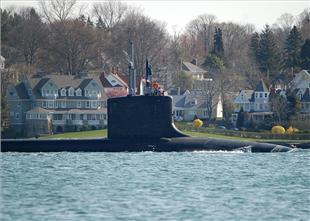
USS Mississippi in River Thames

USS Mississippi in River Thames

General Dynamics Electric Boat awarded a US$ 51.7-million Navy contract for maintenance work on the submarine ‘USS Mississippi’.

The contract is to to plan and perform the post-shakedown availability (PSA) on the nuclear submarine USS Mississippi (SSN-782). (Electric Boat is a wholly owned subsidiary of General Dynamics).

The PSA includes maintenance, repairs, alterations and testing. It will be performed at Electric Boat’s Groton shipyard. Up to 400 employees will be engaged in the work, which is scheduled for completion by December 2013. Initially awarded in April 2012, the contract has a total potential value of $67 million.

In May 2012, Electric Boat delivered Mississippi to the U.S. Navy a year ahead of contract schedule and more than US$60-million below target cost.
Mississippi is the ninth ship of the Virginia Class, the most advanced submarines in the world. These ships are providing the Navy with the capabilities it requires to retain its undersea dominance well into the 21st century.

Source – Marine Link

USA – Clamagore veterans want more time to raise money to save aging submarine

USS Clamagore riding in her new berth next to the Charleston Harbor Resort & Marina and Castle Pinckney (War of 1812) in the background.

That’s what the Clamagore Veterans Association pleaded for Friday to keep the aging submarine parked at Patriots Point from making one final mission to the bottom of the sea as an artificial reef.

The veterans group raised about $40,000 since Patriots Point first announced last summer it could no longer afford the upkeep or repair on the retired Cold War vessel.

Patriots Point gave them until June to come up with the money.

“We are not going to raise $3 million by June,” Clamagore Association President Bob Dewar of Florida frankly told the Patriots Point board.

The group wants to use some of the money already raised to enlist a professional fundraiser and have him under contract by Feb. 28.

Patriots Point has no problem with them trying to raise the money and hiring a fundraiser, but the board didn’t answer their plea for a one-year extension. Instead, the board decided to ask the group back in July for a status report on their fundraising efforts, according to Mac Burdette, Patriots Point executive director.

That left the veterans group scratching its head over whether to hire the fundraiser, not knowing if their efforts would be cut short in July.

“We would have to take a blind leap and go forward,” said Jackie Heard of the Save the Clamagore Committee after the meeting. The Huntsville, Ala., resident’s father, Jack F. Heard, served as commanding officer of the Clamagore from 1956 to 1958. She presented the latest Clamagore proposal Friday to Patriots Point.

“Do you throw the towel in now, or do you press on”? she said. “We won’t know until those lists are studied.”

Heard was referring to the lists of Clamagore veterans that the fundraiser would analyze to see the best potential for raising money.

“We would like nothing more than to have that money raised and keep the Clamagore where she is,” Burdette said. “But you have to do what is right for the long-term benefit of the museum.”

The waterfront tourist attraction intends to press on with the lengthy federal process of turning the Clamagore into a reef or finding another suitor for the submarine, board Chairman Ray Chandler said.

Citing an independent engineer’s assessment, Burdette is worried that rising water from a strong hurricane could swamp the submarine’s open hatches, causing it to sink and creating an environmental disaster in Charleston Harbor because of fluids and batteries still on the sub.

The naval and maritime museum in Mount Pleasant doesn’t have the money to repair the rusting vessel that’s been sitting in the harbor’s salt water for more than three decades beside the World War II aircraft carrier Yorktown, the centerpiece attraction that is staring at an estimated $81 million overhaul.

Under an agreement worked out last summer, the veterans group was to hire a qualified marine engineer to survey the vessel, but to save money the group deferred to a study commissioned by Patriots Point.

Speaking by phone during the meeting from Seattle, former Clamagore commander Don Ulmer said he had spoken with Boeing about committing $1.5 million in matching funds if the group raised the rest, but he said it was not a firm commitment and would revisit the aerospace giant if the time extension is granted.

Ulmer said also the group has been in contact with author and marine archaeologist Clive Cussler, who has offered support but no money. The group is also in talks with the Seattle Museum of Flight to see if it is interested in taking the submarine, Heard said.

If the extension is granted, the association pledged to shore up the open hatches as an interim measure against hurricanes.

The group has also contacted United States Submarine Veterans Inc., which has offered to handle monetary collections for the group because it’s a nonprofit organization.

If the final decision is to turn the submarine into a reef, Dewar asked that the sail and periscope be removed so they could be become part of a permanent memorial.

Some vestige of the vessel would remain as part of Patriots Point, Chandler said.

Source – The Post & Courier

Australia – Nuclear not an option for next generation of submarines

Current – The Australian Collins-class submarine, HMAS Rankin (SSK 78), enters Pearl Harbor for a port visit after completing exercises in the Pacific region

By Paul Dibb

LATER this year, the government will make a decision to narrow the choice for Australia’s future submarines. Contrary to opinions expressed in The Weekend Australian (“Past sub mistakes make a case for going nuclear”, January 5-6) the preferred option will certainly not be a nuclear submarine.

And – contrary to recent views in other media – whichever submarines we choose, they will not be built overseas.

So why not get American nuclear submarines? As the Minister for Defence Materiel, Jason Clare, has noted, the US has never exported or leased a naval nuclear reactor. The US will not simply hand over sensitive nuclear military knowledge, even to its close ally. The US ambassador has observed we don’t have a nuclear energy program and that unless we get that kind of infrastructure, “it’s very, very difficult to maintain any sort of other nuclear industries”. If you don’t have a nuclear industry, you don’t know how to operate nuclear submarines safely.

In the event of a safety problem with the nuclear reactor, who would fix it? Britain had exactly such a problem 12 years ago with one of its nuclear attack submarines, which had to spend 12 months in Gibraltar with a potentially serious leaking weld in the primary reactor circuit that involved partially draining the re-actor coolant. How would we cope with that sort of event in Fremantle if we didn’t have properly trained and experienced nuclear engineers?

The fact that we have no experience with nuclear propulsion means we would be totally dependent on the US for the submarines’ regular and safe maintenance. This could be a big problem if we ever wanted to use these submarines in a regional conflict where Australian and US interests were not aligned.

My understanding is that at the highest levels, the US has indicated very firmly to us that it prefersAustralia to have conventional submarines that can go places and do things that large nuclear submarines cannot do so easily. That was certainly my experience with Australian covert submarine operations in the Cold War.

Whichever submarine we choose, it will have a US combat system, which will give us a crucial operational advantage over potential regional adversaries. We are the only other country in the world to have the US AN/BYG-1 combat system and advanced US weapons such as the ADCAP Mark 48 torpedo on our Collins-class submarines. Washington will not allow European submarine builders to integrate such a highly secret capability in their shipbuilding yards. It would have to be done in Australia.

So what options does that leave us with? They are as follows:

We could simply buy a European military off-the-shelf solution, unmodified except for Australian regulatory and environmental requirements. That would be the cheapest solution. But if it was built in Europe, it would come with a European combat system that would give us no operational advantage over similar origin submarines that might be exported into our region.

A more attractive option would be to choose a significantly modified European vessel that would accommodate our requirement for greater range and endurance, given our demanding strategic geography. It is conceivable that were such a European submarine to be built in Australia, the US would agree to us integrating their combat system. That is clearly one option for consideration.

The third option is for an evolved Collins-class once the government is satisfied that the present operational problems of these submarines have been resolved.

The chief executive of Defence acquisition, Warren King, is of the view that important lessons have been learnt from building the Collins. The key lesson is that we can construct world-class submarines in Australia, but next time we will need to choose a proven combat system and propulsion.

The fourth option, which I consider to be highly unlikely, is to have a brand-new, large conventional submarine designed especially for us. That would be both the highest risk and cost and should not be considered.

Whichever submarine we choose, I do not believe we should calculate the number of boats we require based on highly unlikely scenarios of war with China. That was the fatal flaw in the 2009 Defence white paper. We require submarines optimised for our own strategic requirements, which means an operational area extending from the eastern Indian Ocean to the South China Sea and defending our vast maritime approaches.

The bottom line is that we need a submarine that is capable of supporting our sovereign requirement for independent submarine operations. The sort of money involved ranges anywhere from $10 billion to $30bn. That may suggest we end up with a preferred option and another option held in reserve as more reliable cost, schedule and technological risk data are developed.

Paul Dibb is emeritus professor of strategic studies at the Australian National University. He is a former deputy secretary of Defence and director of the Defence Intelligence Organisation. He is an adviser to the SA government on defence policy issues.

Source – The Australian

US Navy’s next-gen stealth sub could run silently for 50 years

The

In this file photo, the Ohio-class ballistic missile submarine USS Maryland transits the Saint Marys River. Details are emerging about the ship’s replacement, scheduled for deployment in 2031.

The Navy’s next-generation nuclear submarine may have an electric drive and new reactor plant that allow it to patrol the seas with near-silent stealth for half a century, according to emerging details about the secretive program.

The electric drive would replace a direct mechanical connection between the nuclear-powered steam turbines and the submarine’s propellers. In the new configuration, the nuclear power source will run electric motors that propel the ship.

“Electric drives could prove to be much quieter than the current direct-drive method,” the U.S. Naval Institute explained in a brief detailing the new design. The institute is an independent, non-profit forum on national defense.

The military tried electric drives in the 1960s and ’70s, but found them to be too slow and maintenance needy. Technological advancements over the past few decades could provide the hassle-free speed required.

Since Navy submarines rely on stealth to hide from enemies, a nearly silent engine will make them harder to find. The Ohio-class replacement nuclear-powered ballistic missile submarine will also be covered in echo-free tiles that reduce detection from active sonars.

In addition, the program is aiming for a newly designed reactor plant “that will last the life of the boat,” Sean Stackley, Assistant Secretary of the Navy for Research, Development, and Acquisition, said in an interview with the U.S. Naval Institute.

“That’s important because what it does is effectively eliminate the midlife refueling associated with the current Ohio class.”

That is, current nuclear subs are hauled out for mid-life overhaul that can keep a sub out of the water for three years. To compensate for the downtime, the Navy has 14 Ohio-class ships.

The new design will still require a mid-life checkup and update, but should be out of the water for a shorter period. This would mean that the Navy only needs to have 12 ships. “That’s a significant cost improvement over the life of the program at the expense of the development for that new reactor-plant design,” Stackley said.

The Navy is under budget pressure to keep the cost of the boats to $4.9 billion each; that’s down from the $6 or $7 billion price tag proposed in 2009. Current plans call for construction of the next-generation submarine to begin in 2021, with first deployment in 2031.

Source – NBC News

USS Hartford & USS San Juan Sailors receive dolphins

John Carcioppolo, president, Submarine Veterans Groton Chapter laughs with Sailors from USS Hartford (SSN 768) during a recognition ceremony. Carcioppolo congratulated thirty officers and enlisted Sailors from Los Angeles class attack submarines USS Hartford and USS San Juan (SSN 751), who were recognized for earning their gold and silver “dolphins” onboard their respective submarines at the Submarine Veteran’s Clubhouse in Groton, Jan. 7.


Thirty officers and enlisted Sailors from the Los Angeles class attack submarines USS Hartford (SSN 768) and USS San Juan (SSN 751) were recognized under the SUBVETS Submarine Qualification Recognition Program, at the Submarine Veterans Clubhouse in Groton, Jan. 7.

The Sailors, who previously received their coveted gold and silver “dolphins” onboard their respective submarines, were recognized by former submariners, many of them Holland Club veterans in attendance, who warmly welcomed the newest submarine warfare qualifiers into the special community.

“We had never recognized Sailors from two boats at one meeting,” said John Carcioppolo, president, Submarine Veterans Groton chapter.

Commander Steve Wilkinson, commanding officer, USS Hartford attended the rite of passage ceremony and reflected on the caliber of the Sailors serving in the submarine force today.

“As you can see, your legacy is in good hands. These men represent all the best of our nation,” said Wilkinson.

Groton Base Member Phil Marshall from Narragansett, R.I., who served on 13 submarines, called out his submarine qualification, which was earned in 1955 aboard USS Sterlet (SS 392), reflected on how great it was to see the newly qualified Sailors referring to them as “our future.”

Master Chief Machinist’s Mate (SS) Eric Mathley, chief of the boat, USS Hartford also reflected on the legacy of the submarine force.

“It’s great that these young Sailors, who worked so hard to earn their dolphins, have an opportunity to see the long legacy of the submarine service,” said Mathley. “I think it means more to them, having seen that. They can really appreciate the lineage of their service.”

Master Chief Electronics Technician (SS) Gaylord Humphries, chief of the boat, USS San Juan, also sounded off his qualification date, providing his solid support to the next generation of submariners.

“This is the new generation of submariners and the submarine force is in good hands,” said Humphries.

Source – Dolphin News

Columbia uses submarines to smuggle drugs

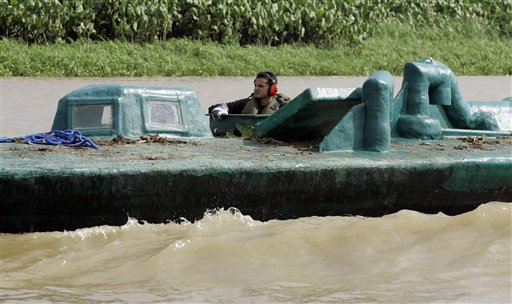
A Navy sailor drives a seized submarine, used by drug-traffickers to smuggle drugs, while displaying it to the media in Atrato River, coast of Turbo, Colombia

A Navy sailor drives a seized submarine, used by drug-traffickers to smuggle drugs, while displaying it to the media in Atrato River, coast of Turbo, Colombia

On January 8th the Colombian Navy captured its first drug smuggling submersible vessel of the year. This one was 18 meters (56 feet) long and capable of carrying over four tons of cocaine. It had been abandoned at sea and was towed back by a Colombian Navy ship to try and find out what happened. Last year the Colombians captured eight of these. Naval forces from the United States and other nations along the Pacific coast and the Caribbean caught even more. But the detection system, run mainly by the United States, locates a lot more of these cocaine subs than there are warships available to run them all down.

For two decades the United States has used a special interagency (Departments of Homeland Security, Justice, State, and Defense) and international (over a dozen nations participate) intelligence sharing/analysis operation (Joint Interagency Task Force-South) to track drug smuggling from South America. For the last decade the task force has become quite expert at tracking the submarines and submersibles built in South America for smuggling cocaine to North America and, recently, all the way to Europe. Some of these long range subs are apparently going all the way from Ecuador to the United States, bypassing the Mexican cartels (who have been fighting each other, in a big way, for the last five years).

A makeshift submarine is lifted out of the water at Bahía Malaga on the Pacific coast,

Particularly worrisome are the larger boats headed for Europe. Little is known about these, expect that they exist. These subs would be more at risk of being lost because of accident or bad weather than being spotted. European navies (especially Portugal and Spain) and coast guards have been alerted and are looking.

Despite losing over a hundred of these vessels to the U.S. and South American naval forces (and dozens more to accidents and bad weather) the drug gangs have apparently concluded that the subs are the cheapest and most reliable way to ship the drugs. It’s currently estimated that over 80 percent of the cocaine smuggled into the United States leaves South America via these submarines or semi-submersible boats.

Most of these craft are still “semi-submersible” type vessels. These are 10-20 meter (31-62 foot) fiberglass boats, powered by a diesel engine, with a very low freeboard and a small “conning tower” providing the crew (of 4-5), and engine, with fresh air and permitting the crew to navigate. A boat of this type was, since they first appeared in the early 1990s, thought to be the only practical kind of submarine for drug smuggling. But in the last decade the drug gangs have developed real submarines, capable of carrying 5-10 tons of cocaine that cost a lot more and don’t require a highly trained crew. These subs borrow a lot of technology and ideas from the growing number of recreational submarines being built.

The Colombian security forces and other Latin American navies have been responsible for most of these vessel captures. Usually these boats are sunk by their crews when spotted but the few that were captured intact revealed features like an extensive collection of communications gear, indicating an effort to avoid capture by monitoring many police and military frequencies. The Colombians have captured several of these vessels before they could be launched. In the last few years the Colombians have been collecting a lot of information on those who actually build these subs for the drug gangs and FARC (leftist rebels that provide security and often transportation for moving cocaine). That includes finding out where the construction takes place.

Colombian police have arrested dozens of members of gangs that specialized in building submarines and semisubmersible boats. As police suspected, some of those arrested were retired or on active duty with the Colombian Navy (which operates two 1970s era German built Type 209 submarines). These arrests were part of an intense effort to find the people responsible for building subs for cocaine gangs. Find the builders and you stop the building efforts. In this case it has only delayed some construction and made it more expensive to build these boats.

Ecuadoran police found the first real diesel-electric cocaine carrying submarine three years ago. It was nearly completed and ready to go into a nearby river, near the Colombian border, and move out into the Pacific Ocean. The 23.5 meter (73 foot) long, three meter (nine feet) in diameter boat was capable of submerging. The locally built boat had a periscope, conning tower, and was air conditioned. It had commercial fish sonar mounted up front so that it could navigate safely while underwater. There was a toilet on board but no galley (kitchen) or bunks. Submarine experts believed that a five man crew could work shifts to take care of navigation and steering the boat. The boat could submerge to about 16 meters (50 feet). At that depth the batteries and oxygen on board allowed the sub to travel up 38 kilometers in one hour, or at a speed of 9 kilometers an hour for 5-6 hours. This would be sufficient to escape any coastal patrol boats that spotted the sub while it moved along on the surface (its normal travel mode). The boat could also submerge to avoid very bad weather. The sub carried sufficient diesel fuel to make a trip from Ecuador to Mexico. There was a cargo space that could hold up to seven tons of cocaine.

The sub was captured where it was being assembled and a nearby camp for the builders appeared to house about fifty people. A lot of evidence was collected, and apparently the U.S. DEA (Drug Enforcement Agency) used that to develop clues about who was involved. It was the DEA that put together the pieces that led to identifying key people.

The Ecuadoran boat was the first such sub to be completed but not the first to be attempted. Back in the 1990s Russian naval architects and engineers were discovered among those designing and building a similar, but larger, boat. However, that effort did not last, as the Russian designs were too complex and expensive. It was found easier to build semi-submersible craft. But more and more of these new type subs are being found.

Source – Strategy Page