Monthly Archives: January 2013

CSC set to supply gas cylinders for Astute nuclear submarines

Chesterfield Special Cylinders (CSC) has won a £2m contract by BAE Systems  Submarine Solutions to provide high-pressure gas cylinders for the Royal Navy’s  sixth Astute-class nuclear submarine — the HMS Agamemnon.

The cylinders are critical to a number of operations within the Astute  vessels, including breathing gas storage, hydraulic and valve actuation back-up,  ballast operation and missile launch systems.

The order takes the value of CSC’s contracts for the Astute-class submarines  to more than £12m, having already supplied gas and oxygen systems for the Astute and Ambush submarines, which are already in the water,  and the next three (Artful, Audacious and Anson)  being built by BAE in Barrow-In-Furness. A seventh and final Astute, Ajax, is due to enter service in 2024.

Source – TheEngineer

Chinese Submarine Training

Submarine flotilla in training
Recently, the officers and men of a submarine flotilla under the North China Sea Fleet of the Navy of the Chinese People's Liberation Army (PLA) conducted routine training. The photo features the scene of the training. (chinamil.com.cn/Li Zhikai)
Recently, the officers and men of a submarine flotilla under the North China Sea Fleet of the Navy of the Chinese People’s Liberation Army (PLA) conducted routine training. The photo features the scene of the training. (chinamil.com.cn/Li Zhikai)
.
Recently, the officers and men of a submarine flotilla under the North China Sea Fleet of the Navy of the Chinese People's Liberation Army (PLA) conducted routine training. The photo features the scene of the training. (chinamil.com.cn/Li Zhikai)
Recently, the officers and men of a submarine flotilla under the North China Sea Fleet of the Navy of the Chinese People’s Liberation Army (PLA) conducted routine training. The photo features the scene of the training. (chinamil.com.cn/Li Zhikai)
.
Recently, the officers and men of a submarine flotilla under the North China Sea Fleet of the Navy of the Chinese People's Liberation Army (PLA) conducted routine training. The photo features the scene of the training. (chinamil.com.cn/Li Zhikai)
Recently, the officers and men of a submarine flotilla under the North China Sea Fleet of the Navy of the Chinese People’s Liberation Army (PLA) conducted routine training. The photo features the scene of the training. (chinamil.com.cn/Li Zhikai)
.
Recently, the officers and men of a submarine flotilla under the North China Sea Fleet of the Navy of the Chinese People's Liberation Army (PLA) conducted routine training. The photo features the scene of the training. (chinamil.com.cn/Li Zhikai)
Recently, the officers and men of a submarine flotilla under the North China Sea Fleet of the Navy of the Chinese People’s Liberation Army (PLA) conducted routine training. The photo features the scene of the training. (chinamil.com.cn/Li Zhikai)
.
Recently, the officers and men of a submarine flotilla under the North China Sea Fleet of the Navy of the Chinese People's Liberation Army (PLA) conducted routine training. The photo features the scene of the training. (chinamil.com.cn/Li Zhikai)
Recently, the officers and men of a submarine flotilla under the North China Sea Fleet of the Navy of the Chinese People’s Liberation Army (PLA) conducted routine training. The photo features the scene of the training. (chinamil.com.cn/Li Zhikai)
.
Recently, the officers and men of a submarine flotilla under the North China Sea Fleet of the Navy of the Chinese People's Liberation Army (PLA) conducted routine training. The photo features the scene of the training. (chinamil.com.cn/Li Zhikai)
Recently, the officers and men of a submarine flotilla under the North China Sea Fleet of the Navy of the Chinese People’s Liberation Army (PLA) conducted routine training. The photo features the scene of the training. (chinamil.com.cn/Li Zhikai)
.
Recently, the officers and men of a submarine flotilla under the North China Sea Fleet of the Navy of the Chinese People's Liberation Army (PLA) conducted routine training. The photo features the scene of the training. (chinamil.com.cn/Li Zhikai)
Recently, the officers and men of a submarine flotilla under the North China Sea Fleet of the Navy of the Chinese People’s Liberation Army (PLA) conducted routine training. The photo features the scene of the training. (chinamil.com.cn/Li Zhikai)
.
Recently, the officers and men of a submarine flotilla under the North China Sea Fleet of the Navy of the Chinese People's Liberation Army (PLA) conducted routine training. The photo features the scene of the training. (chinamil.com.cn/Li Zhikai)
Recently, the officers and men of a submarine flotilla under the North China Sea Fleet of the Navy of the Chinese People’s Liberation Army (PLA) conducted routine training. The photo features the scene of the training. (chinamil.com.cn/Li Zhikai)
Source – Global times

Electric Boat Puts Forward Strong Outlook With Plans To Continue Hiring

GROTON — Electric Boat, southeastern Connecticut’s giant naval business that employs thousands in the state, ended the year with an expanded payroll and revenues holding firm at around $4 billion.

Kevin Poitras, the president of Electric Boat, a division of General Dynamics, spoke confidently about the future of sub-making, even as one round of defense cuts have already hit the Pentagon earlier in 2012 and another waits on the horizon.

“There is much uncertainty in federal spending,” Poitras told a conference room full of company executives and legislators at the Mystic Marriot on Thursday. “Many people believe that the overall defense budget will trend down in the next several years.”

That being said, he expects budgets for submarine programs to increase inasmuch as they have been identified as vital to the future national defense strategy. And in short-term, Electric Boat’s contracts are coming through. In December, Congress approved spending to continue the usual work on two Virginia-class submarines as well as design work on the Ohio-class replacement submarine.

If the across-the-board defense cuts that Congress delayed until March go into effect, it wouldn’t necessarily mean layoffs at Electric Boat, Poitras said. The company could possibly manage cost-savings by simply not filling positions emptied through attrition.

The company ended the year with 11,926 employees. Poitras, who took over Electric Boat in May, said that this was the first time in four years that the company has hired in all its divisions, with expectations to hire 300 more tradespeople in Groton to supplement repair work, like the fire-damaged USS Miami. The company also plans to hire about 500 to balance employees lost through attrition.

New hires more than compensated for the company’s 2012 layoffs, pushing Electric Boat’s Connecticut employment at the end of the year up by about 500 employees at 8,900 — 6,100 in Groton and 2,800 in New London.

“To fully appreciate the impact submarine production has and will continue to have in our region, you have to look not just at 2012’s excellent workforce numbers, but at the future of submarines in our national security strategy,” Congressman Joe Courtney, who represents eastern Connecticut and serves on the House Armed Services Committee, said in a written statement.

For 2012, about 61 percent of Electric Boat’s revenues came from production of Virginia-class submarines. Design made up about 28 percent of the company’s revenues, which included preliminary work on an Ohio-class replacement. Maintenance and modernization programs made up 8 percent of revenues.

In December, Electric Boat responded to a request for proposals for the fifth block of Virginia-class submarines, which would be built 2014-2023 and generate about $18 billion in future work, Poitras said. These “stretched” versions of the original Virginia-class include an extra 90-foot section for precision-strike, Tomahawk missile capabilities.

The company also landed a $390 million research and development contract for the Ohio-class replacement submarine, a program that aims to build 12 submarines that will be in service until 2080 and carry about 70 percent of the country’s deployed nuclear weapons.

To state and federal legislators, the message was not unlike the type heard throughout the wider business community: take care of deficit issues, continue to stimulate business development, build on education reform and support jobs.

Hank Teskey, Electric Boat’s director of taxes, said that cuts to jobs programs and incentives would have a negative impact on the state and that the company’s future workforce depends on a strong science and math education.

Source – Courant.com

US Sea Cadets tour submarine at Point Loma

Sea Cadets tour submarine at Point LomaU.S. Naval Sea Cadet Corps participants stand in formation prior to boarding  the Los Angeles-class attack submarine USS Jefferson City (SSN 759) for a tour.  Since 1958, NSCC has been committed to providing American youth with a drug and  alcohol-free environment to foster their leadership abilities, broaden their  horizons through hands-on training, and guide them to becoming mature young  adults.

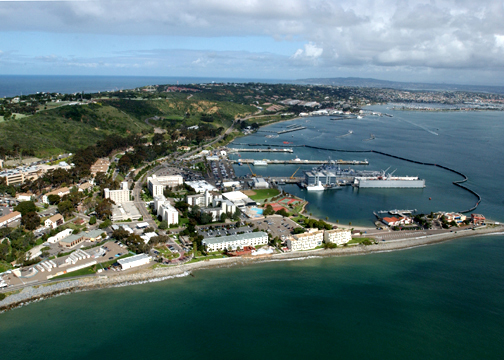
SAN DIEGO – Participants from the U.S. Naval Sea Cadet Corps toured the Los  Angeles-class attack submarine USS Jefferson City (SSN 759) aboard Naval Base  Point Loma to see what life is like aboard a U.S. Navy submarine.

Point Loma - Submarine base (San Diego, California)

Point Loma – Submarine base (San Diego, California)

Click Point Loma for more information

Submariner tour guides taught the students how the ship moves through the water  and how it stays balanced, heated, and defensive, along with how the crew  lives.

“I enjoy telling people what we do,” said Logistics Specialist 2nd  Class Jared Sainz, one of Jefferson City’s appointed tour guides. “Most people  don’t understand what happens in a submarine or how a submarine works on a basic  level.”

Twenty-three children, ranging in age from 11 to 17, toured the  vessel along with their chaperones in an effort to better understand what a  career as a submariner would be like.

“It’s a good eye-opener for these  guys to pinpoint what they want to do when they graduate from high school,” said  Ginny Fessler, a chaperone and parent volunteer. “Some of them said, ‘Yeah, I  could do this,’ and others were like, ‘No, I think I’m too tall!’”

The  tour allowed the visitors to see virtually all of the unclassified spaces on the  nuclear-powered submarine including the control center, sleeping quarters,  galley, torpedo space and wardroom.

Hannah Lockmann, a 14-year-old  student at Hill Creek Elementary School, said she enjoyed the firsthand  experience. “Today was a lot of fun and I learned a lot.” Lockmann said. She  added that her career ambition is to become a Navy Corpsman, but not on a sub. “It’s just too small!” she said.

Sainz, the tour guide, said there was  real value for the touring children in familiarizing themselves with actual Navy  equipment and culture.

“I wish these opportunities existed when I was  younger,” Sainz said. “They get to see what’s going on in the Navy and they’ll  understand a little bit better what they’re getting into if they do decide to  join.”

Since 1958, the Naval Sea Cadet Corps has been committed to  providing American youth with a drug and alcohol-free environment to foster  their leadership abilities, broaden their horizons through hands-on training,  and guide them to becoming mature young adults.

For more information on  the U.S. Naval Sea Cadet Corps visit http://www.seacadets.org

For more  news from Commander, Submarine Force, U.S. Pacific Fleet, visit  www.navy.mil/local/subpac

Source – Dvids

Verdict – Royal Navy officer ‘unlawfully killed’ in submarine shooting

Lt Cdr Ian Molyneux, who was shot dead

Father-of-four Lt Cdr Ian Molyneux was shot in the head at close range

A navy officer was unlawfully killed by a junior rating on board a nuclear submarine, a coroner has said.

Able Seaman Ryan Donovan, 23, shot Lt Cdr Ian Molyneux, 36, of Wigan, Greater Manchester, at close range on HMS Astute in Southampton.

He had been on a two-day drinking binge before the attack in April 2011.

Recording a narrative verdict, Coroner Keith Wiseman said he would recommend that random breath testing for Royal Navy personnel be implemented.

Donovan was jailed for life in September 2011 with a minimum term of 25 years after pleading guilty at Winchester Crown Court to the murder of the father-of-four.

The 23-year-old, of Hillside Road, also admitted the attempted murders of Lt Cdr Hodge, 45, Petty Officer Christopher Brown, 36, and Chief Petty Officer David McCoy, 37.

Vodka and cocktails

Mr Wiseman said a culture of drinking to excess had to stop, and a system of alcohol testing prior to duty should be introduced.

// Captain Phil Buckley said the Royal Navy had “learnt lessons”

The inquest at Southampton Civic Centre heard Donovan had drunk more than 20 pints of cider and lager over two days prior to the attack.

He had also drunk vodka and cocktails before being put on guard duty with a gun while more than three times above the alcohol limit for driving.

Tests revealed Donovan’s blood would have contained 139mg of alcohol per 100ml – 76% above the drink-drive limit.

Police investigating the murder were so concerned about binge drinking by the crew while ashore, that the senior officer wrote to Hampshire Constabulary Chief Constable Alex Marshall to highlight the issue and it was passed to military authorities.

The Royal Navy has since tightened its rules on alcohol consumption before duty.

At the time sailors were allowed 10 units in 24-hours with no alcohol in the 10 hours before duty. This has now been changed to five units.

Source – BBC News

Submariner has his long service in the Royal Navy recognised

A DEVONPORT submariner has been given an award in recognition of his long service in the Royal Navy.

Warrant Officer Jeff Griffiths has been handed the award for dedication, professionalism and leadership after concluding his 33-year career as a submariner.

 ​Warrant Officer Jeff Griffiths receives his award
Warrant Officer Jeff Griffiths receives his award

Griffiths, who left the Royal Navy in 2012, had been a key member of the team working on the UK’s strategic missile deterrent submarines. He had also been a vital part of the successful overhaul of HMS vigilant.

A veteran of the Falklands Conflict, Jeff joined the Royal Navy in 1979, working his way up to the highest non-commissioned rank.

Jeff said, “I have thoroughly enjoyed serving in the Royal Navy submarine service and I’m pleased that I will be able to continue supporting the submarine fraternity in my new civilian post.”

Captain Paul Methven, Superintendent Submarines for Royal Navy at Devonport, presented the certificate at a ceremony on Tuesday.

He praised Jeff’s outstanding service. “Jeff has made an immense contribution over many years.

“His knowledge of the systems and how to get things done is second to none and we shall miss him.”

But I’m delighted that he is remaining part of the submarine enterprise and that he’ll be able to use and pass on his experience in others in his new job”.

Source – Plymouth Herald

Russia to build 2 nuclear Borei submarines

АПЛ борей подводная лодка борей 2011 декабрь коллаж

Russia is to start building two new advanced nuclear-powered Borei class submarines before year’s end. Once complete, they will be lurking under the sea with 20 Bulava nuclear intercontinental ballistic missiles each.

One of the submarines may be named Aleksandr Suvorov after one of the most decorated generals of the Russian Empire, a source in the defense industry told the media. Its construction is expected to start on July 28, which is Russian Navy Day.

The second vessel is likely to be named after Mikhail Kutuzov, the iconic Russian general of the Napoleonic Wars. Its keel is to be laid down in November.

The vessels are to be built by the shipbuilder Sevmash in Severodvinsk in the north of Russia.

Both submarines are of the Borei class, the most modern strategic nuclear-powered submarines in the Russian Navy. The lead vessel of the class, Yury Dolgoruky, officially entered service on Thursday, with two of his sister-ships currently afloat and undergoing trials.

The two new vessels are distinct from those three, being of an advanced Borei-A version of the same design. They will carry 20 nuclear ICBMs each, as opposed to 16 on the older submarines. They will also have improved maneuverability and better weapon control systems and will generate less noise.

Russia plans to build five Borei-A submarines. The first of them, Knyaz Vladimir, is already in construction.

Russia’s new submarine: arming for peace

From December 10, Russia is starting to exploit a new military submarine, called “Yuri Dolgoruky”. This is a long-standing project that had been suspended for some time. Then, the old project underwent some modifications. The new submarine has already been successfully tested. It is expected that the submarine will defend Russia’s borders.

This submarine is only a small part of Russia’s large-scale program of rearming itself with military equipment of the newest generation.

Russia’s President Vladimir Putin was visiting the city of Severomorsk in Russia’s north, when Defense Minister Sergey Shoygu connected with him through video communication and reported that the new submarine had undergone testing and would soon be exploited.

“This is good news,” the President answered. “But this is not enough. I hope that Russia will continue to further strengthen its navy.”

“It is one of Russia’s top priorities to have a modern, well-developed nuclear navy,” Mr. Putin said. “I hope that we’ll develop both new surface-water ships and submarines. It is planned that in the next few years, Russia will build and start to exploit more than 100 new ships and submarines of various types. I have no doubts that we’ll cope with this task.”

“Yuri Dolgoruky” is a nuclear submarine of the “Borey” type, armed with ballistic missiles. It was built in the Russian city of Severodvinsk, one of Russia’s largest centers of producing nuclear military ships.

Another 3 submarines of the “Borey” type, all named after well-known personalities of old Russian history – “Alexander Nevsky”, “Vladimir Monomakh” and “Knyaz Vladimir” – are still being built. Their equipment will be mainly Russian-made, including radio electronic systems of the latest generation and unique noise reduction transducers.

At present, Russian military submarines are, as a rule, equipped with Russian-made ocean-spanning ballistic missiles “Bulava”. The range capability of such a missile is more than 8,000 kms. One submarine of the “Borey” type can be equipped with 16 “Bulava” missiles.

“It can be said that Russia’s nuclear “shield” consists of three parts – aircraft, navy and land-based missile systems,” Russian military expert Igor Korotchenko says. “Until now, from the point of view of new nuclear equipment, the Russian navy lagged behind the air and the land components of this “triad”. Now, the balance between them will be leveled.”

“The equipment of submarines of the “Borey” type allows to examine the situation under water, to trace and attack various kinds of underwater targets,” Igor Korotchenko continues. “The submarines’ systems of weapons control are also of the latest generation.”

The “Borey” submarines are also more advanced from the point of view of safety than their earlier analogues. In particular, they have a break surface camera where the submarine’s entire crew can be placed in case of emergency.

Russia is planning to build 8 such submarines in the next few years. The construction of each will cost Russia about $ 700 mln.

Speaking about plans for the more distant future, Russia’s Defense Minister Sergey Shoygu says that Russia will have 15 new nuclear submarines before 2012. These submarines will be of various types and meant for various purposes, but all of them will be of the latest generation.

Russian expert in military technologies Ruslan Pukhov says that it is mainly sea-based missiles that make Russia resistant to possible aggression, because land-based missile systems are more vulnerable.

By arming itself with weapons of the latest generation, Russia strengthens its feeling of safety. After all, it is hard to argue with an old saying that goes, “if you want to live in peace, always be ready for a possible war”.

Source – The Voice of Russia

HMS Artemis: A Voyage North – Video Clip

Official British government film.

Impressionistic account of life on the submarine HMS Artemis, told partly through the eyes of Lt. Ellison, a new submarine officer (fifth hand). Includes footage of training at HMS Dolphin, passage aboard HMS Artemis (Amphion class submarine), hydrographic survey on edge of the ice field, and a run ashore in Copenhagen.

Source – Youtube

Australia – 1942 Submarine attack on Newcastle (Book)

A  NEW book about Japanese submarine attacks on Australia in 1942 provides perhaps the most detailed account yet published of Newcastle under fire.

Artwork by Monty Wedd.

A Parting Shot, by Terry Jones and Steven Carruthers, delves into military archives and old records and uses interviews with witnesses to put together a compelling narrative that helps lay to rest some old myths and Novocastrian urban legends.

The authors have disproven, for example, the old story that some of the shells fired by the Japanese submarine I-21 had been made years before in Britain.

The mark in Parnell Place made by a shelling from the submarine.The mark in Parnell Place made by a shelling from the submarine.

And the same close examination of the surviving shells and their distinctive markings has led to the authors’ theory that one shell at the Australian War Memorial – long thought to have been one of those fired on Sydney – is actually a star shell that was fired on Newcastle.

The authors have also taken issue with reports that as many as 34 shells fell on Newcastle.

This estimate was mistaken, they write, insisting that the number can have been no higher than 21 and was probably fewer.Rare photo of the Japanese 121 submarine, believed to be the type of vessel used in the attack on Newcastle.Rare photo of the Japanese 121 submarine, believed to be the type of vessel used in the attack on Newcastle.

Most were high explosive shells, several of which failed to explode.

Some were star shells, designed to illuminate the target area.

The book states that the Japanese were mainly intent on sowing fear in the population and had little real expectation of doing major damage.

Their targets in Newcastle were the BHP steelworks and the old Walsh Island dockyard – which they appeared not to realise had been dismantled years before.

The authors speculate that the submarine switched its attention to the direction of Fort Scratchley and Newcastle East in an attempt to douse the searchlights that had caught it in their beams.

History records that Fort Scratchley successfully frightened the submarine away.

But according to the book, chaos and confusion reigned in Newcastle on June 8, 1942, when the submarine opened fire. Inspecting a terrace with blown-out windows in Parnell Place after the attack.Inspecting a terrace with blown-out windows in Parnell Place after the attack.

The city’s defences were plagued by poor communication and, in some cases, uneasy relationships caused by the conflicting priorities of defence authorities and industry bosses.

A Parting Shot quotes an eyewitness account of the shelling by Lieutenant Ken Robin, aboard HMAS Allenwood, berthed at Kings Wharf in Newcastle Harbour.

‘‘I had a good view to the north, up the river to the steelworks,’’ Lieutenant Robin wrote. ‘‘The flare was white with a yellowish tinge and it floated down slowly on a parachute.

The idea was to illuminate the target for a business round, but they had got the range wrong.

‘‘The star shells burst to the seaward side of the steelworks and didn’t silhouette anything of importance. I would say a maximum of six star shells were fired. They burst over the river, working from north to south from the steelworks to the Horseshoe, opposite the Custom House.

‘‘We heard the case from the last one splash down in the river about 100metres off our starboard beam. There was a slight delay – perhaps 30seconds – after the star shells exploded. Then we heard three or four proper shells coming in. I don’t know where they would have gone. One explosion seemed to come from the seaward side of Fort Scratchley, the next somewhere in the city, south from the station.’’

The good news was that the submarine was frightened away.

The bad news was that the city’s defence communications were shown to be shaky, with the official censor’s report concluding that ‘‘the whole show was a disgrace and should be investigated’’.

ALMOST as interesting as the account of the night of the submarine attack is the book’s description of events a week later, at about 6.30pm on June 14.

Jumpy searchlight operators saw what they thought was a periscope entering Newcastle Harbour and issued a report ‘‘that led to panic and confusion’’.

The book relates that a gun at ‘‘Rail Battery’’ near Nobbys fired at the suspected periscope shortly after 7pm.

‘‘This was followed by light and heavy gunfire from Rail and Wave batteries as the object drifted backwards and forwards at the harbour entrance.

Located on opposite sides of the harbour entrance, both batteries were in each other’s crossfire at various times during the night as they fired at suspicious objects in the water.

The last shot was fired about 2335 hours.’’

During the scare Rail Battery fired five rounds and Wave Battery fired 17.

‘‘One shell ricocheted off the harbour waters and hit the Zaara Street power station, about 75feet above the ground level of No.2 boiler house, fracturing the buttress and making a large hole in the brickwork,’’ the book states.

‘‘Another struck the embankment protecting a petrol supply tank near the pilot station adjacent to HMAS Maitland and Shortland army camp. Several reports record a fragment from this shell made a small hole in the iron roof of a nearby drill hall.’’

The book also reports that a Lewis machine-gun on the northern wave trap at the harbour entrance slipped while being readied for action, firing a stream of bullets towards Newcastle East and forcing troops there to take cover.

The gun fired tracer bullets to illuminate the suspected periscope, but the bullets ricocheted off the water and passed over the army camp.

Searchlight operators and gun crews reported seeing the periscope and also a conning tower, and Wave Battery fired. One of its shells ‘‘struck a metal pole on the perimeter of the battery, cutting a cable, extinguishing the searchlight and slicing through communication lines to the fire commander on Shepherds Hill.’’

A shell fragment hit one artillery spotter’s steel helmet.

According to the book: ‘‘In a move that was either courageous or foolhardy, the RAAF launch Norlan, which was entering harbour when the shelling began, headed down the searchlight beam to look for the submarine during the gunfire.’’

The last shots were fired just before midnight, but the harbour was full of explosions for hours to come, as navy launches and a minesweeper raced around dropping grenades into the water at random intervals.

There appears to have been no submarine, but searchers found a steel drum, some driftwood and a large wooden case.

A Parting Shot will be launched at the Newcastle Maritime Centre on Thursday, January 17, 10 am to noon.

Source – Newcastle Herald

HMCS VICTORIA – A Long Beginning – Video Clip

A Long Beginning shows highlights of making HMCS VICTORIA “in all respects ready” for sea in late 2011 and 2012, culminating in her successful SINKEX at RIMPAC12. The CO shares the challenges faced by his boat and her crew along the way — and their accomplishments.

Source – Royal Canadian Navy Videos