Category Archives: The world’s submarines

News, views and stories about the rest of the world’s submarines

Australia – Defence tenders for a $2 million supercomputer

High performance computer cluster will be used for computational fluid dynamics modelling to assist in submarine designs

The Department of Defence plans to deploy a high-performance computer (HPC) cluster to execute computational fluid dynamics simulations that support its Future Submarine program, in a project set to begin in March this year.

Defence Science & Technology organisation (DSTO) issued a tender for the rollout of a supercomputer with associated software and services, which is expected to cost between $2 million and $2.4 million.

“The DSTO high performance supercomputer will support and conduct of science and technologies studies for the Future Submarine program,” a Defence spokesperson told CIO.

“These studies will assist with the development of requirements and provide technical advice to government aimed at reducing risk in critical areas for the project,” the spokesperson said.“
The computer system will enable numerically-intensive computational fluid dynamics (CFD) modelling required to assist in the understanding of the manoeuvring and signature performance of existing and potential submarine designs.”

The supercomputer will also be used to solve equations representing the time-dependent fluid flow around a submarine, its propeller and associated appendages, the Defence spokesperson said.

“The CFD simulations will involve discretising the volume of fluid about the submarine geometries to create meshes. The fluid equations are solved for each discrete point or cell in the mesh and the new system will be used to solve mesh sizes ranging [from] five million cells to greater than 100 million cells,” the spokesperson said.

The system will process the largest 100 million cell CFD simulations in days rather than months using existing DSTO computing facilities, Defence said.

The DSTO said it would deploy OpenFOAM-based solvers and, to a lesser extent, ANSYS Fluent/CFX software packages on the supercomputer “that are capable of efficiently solving problems in parallel across several thousand CPU cores.”

The HPC cluster will be integrated with DSTO’s existing hardware, which is networked using a quad data rate (QDR) Infiniband switch, and provides connectivity speeds of up to 40Gbps.

A network-attached storage node, running the Red Hat Enterprise 6 operating system, will provide storage for the HPC cluster; while a high-end HP Z800 workstation, running Centos 6, will act as a login node the cluster, the department said.

In September 2012, the government announced that it was establishing a Future Submarine Systems Centre in Adelaide, the home of the Future Submarine program. The government wants to acquire 12 new submarines, which will be assembled in South Australia.

Source – CIO

Russia plans to sell multipurpose submarines abroad

Russia’s military-industrial complex is increasing arms exports through Rosoboronexport, year after year, and the naval component is no exception. However, the latest contract for the supply of non-nuclear submarines is unique.

Russia plans to sell multipurpose submarines abroad
Russia’s military-industrial complex is increasing arms exports through Rosoboronexport, year after year, and the naval component is no exception.

Rosoboronexport is in continued talks with Italy on the supply of S1000 submarines. However, these boats will not see action in either the Russian or the Italian navy. Instead, they will be sold exclusively to third-party countries.

Experts at the Rubin Central Design Bureau for Marine Engineering and Italy’s Fincantieri completed the conceptual design of the S1000 a few years ago. The submarine was always intended for third-party countries. The Italian shipbuilding company presented a mockup in 2008, at the 21st International Naval Defense and Maritime Exhibition and at the Conference Euronaval 2008.

According to Fincantieri Commercial Director Enrico Bonnetti, “the submarine’s architecture has been determined, equipment has been positioned, and an integrated combat system has been designed.”

The S1000 is 56-meters long, with an outside hard-hull diameter of 5.5 meters (18 feet), a submerged displacement of around 1100 tons, a maximum depth of more than 250 meters (820 feet), and a top underwater speed of more than 14 knots. The submarine can carry a crew of 16, plus six special operations troops.

The propulsion system includes two diesel generators, a battery, an electric motor and an AIP system with an electrochemical generator. Both Russian- and Italian-made equipment will be installed in equal amounts.

The S1000 non-nuclear submarine is designed for anti-submarine warfare, reconnaissance missions, special operations support and transporting underwater subversive troops. The submarine can perform these tasks both in shallow coastal waters and in deep-sea conditions. Secondary objectives include anti-ship warfare, mining and naval aircraft support.

The Soviet Union —and later Russia — have traditionally sold non-nuclear, diesel-electric submarines abroad.

“Our key product in this global market segment is the Project 636 submarine, which is the current bestseller. But we are also promoting the new Amur-1500 submarine,”said Rosoboronexport head Anatoly Isaykin.

“This is not a replacement for Project 636; it is an entirely new submarine that we will be promoting in parallel with Project 636. The Amur-1500 will also be in demand from international buyers, as it will be offered in different versions —including a version with an air-independent propulsion system that is becoming increasingly popular in the naval market,” Isaykin said.

He added that sales of naval hardware through Rosoboronexport amounted to 20 percent of total military exports last year and were slightly higher than in 2011.

The Russian navy will soon receive Project 636 submarines, as well.

A keel-laying ceremony for a large diesel-electric Project 636.3 submarine named Stary Oskol was held at the end of last summer, at the Admiralty Shipyard. These submarines are now being built for the Russian navy, after being exported for 20 years.

This submarine is expected to get a version of the new Kalibr missile system (exported as the Club-S) with a range of 1,500 kilometers (932 miles). There is one hitch though: to use this missile complex, a new combat command and control system is needed; its flaws have become one of the reasons behind the delays in building and deploying the Lada-class submarines for Russia’s navy.

Project 636 submarines are armed with six torpedo launchers located in the bow; six torpedoes sit in shafts that are automatically reloaded after each launch. The torpedoes can be replaced with 24 mines, two in each launcher. Two torpedo launchers have been designed to fire high-precision, remotely controlled torpedoes. All launchers and their service systems can fire from both periscope and tactical operating depths.

The launchers can be reloaded within 15 seconds.

According to expert assessments, the submarine is low noise and “sees” better underwater than the most widespread American-made, Los Angeles-class submarines.

Source – Russia Beyond the Headlines

Taiwan’s Navy conducts anti-submarine drill

A Hai Lung diesel-electric submarine (SS-793) emerges from the sea

The latest minehunters added to the Taiwan’s arsenal were shown in public for the first
time as the country’s Navy held an anti-submarine drill Tuesday to highlight its
combat readiness.

The exercise, which was open to the media, simulated an
emergency in which the Navy dispatched a frigate from Tsoying naval base in
Kaohsiung to counter a potential submarine attack by enemy forces.

The Dyihuah frigate — one of six Lafayette-class ships purchased from France in the
1990s — sailed into the Taiwan Strait accompanied by two retrofitted U.S.-made
coastal minehunters deployed to keep the sea free of mines and two
Chengkung-class frigates.

Taiwan received the minehunters last August and
were exposing them to public scrutiny for the first time Tuesday.

An S-2T anti-submarine aircraft was then dispatched to locate the opposing submarine,
followed by an anti-submarine S-70C helicopter sent out to deploy dipping sonar
systems to confirm the location of the submarine.

The submarine was finally pushed to the surface after the S-70C launched a simulated attack by
firing a torpedo, concluding the drill.

Naval officials said the exercise was held to highlight the military’s efforts to stay alert and strengthen combat readiness ahead of the upcoming Lunar New Year break in February.

Source – Focus Taiwan

Australia – Nuclear not an option for next generation of submarines

Current – The Australian Collins-class submarine, HMAS Rankin (SSK 78), enters Pearl Harbor for a port visit after completing exercises in the Pacific region

By Paul Dibb

LATER this year, the government will make a decision to narrow the choice for Australia’s future submarines. Contrary to opinions expressed in The Weekend Australian (“Past sub mistakes make a case for going nuclear”, January 5-6) the preferred option will certainly not be a nuclear submarine.

And – contrary to recent views in other media – whichever submarines we choose, they will not be built overseas.

So why not get American nuclear submarines? As the Minister for Defence Materiel, Jason Clare, has noted, the US has never exported or leased a naval nuclear reactor. The US will not simply hand over sensitive nuclear military knowledge, even to its close ally. The US ambassador has observed we don’t have a nuclear energy program and that unless we get that kind of infrastructure, “it’s very, very difficult to maintain any sort of other nuclear industries”. If you don’t have a nuclear industry, you don’t know how to operate nuclear submarines safely.

In the event of a safety problem with the nuclear reactor, who would fix it? Britain had exactly such a problem 12 years ago with one of its nuclear attack submarines, which had to spend 12 months in Gibraltar with a potentially serious leaking weld in the primary reactor circuit that involved partially draining the re-actor coolant. How would we cope with that sort of event in Fremantle if we didn’t have properly trained and experienced nuclear engineers?

The fact that we have no experience with nuclear propulsion means we would be totally dependent on the US for the submarines’ regular and safe maintenance. This could be a big problem if we ever wanted to use these submarines in a regional conflict where Australian and US interests were not aligned.

My understanding is that at the highest levels, the US has indicated very firmly to us that it prefersAustralia to have conventional submarines that can go places and do things that large nuclear submarines cannot do so easily. That was certainly my experience with Australian covert submarine operations in the Cold War.

Whichever submarine we choose, it will have a US combat system, which will give us a crucial operational advantage over potential regional adversaries. We are the only other country in the world to have the US AN/BYG-1 combat system and advanced US weapons such as the ADCAP Mark 48 torpedo on our Collins-class submarines. Washington will not allow European submarine builders to integrate such a highly secret capability in their shipbuilding yards. It would have to be done in Australia.

So what options does that leave us with? They are as follows:

We could simply buy a European military off-the-shelf solution, unmodified except for Australian regulatory and environmental requirements. That would be the cheapest solution. But if it was built in Europe, it would come with a European combat system that would give us no operational advantage over similar origin submarines that might be exported into our region.

A more attractive option would be to choose a significantly modified European vessel that would accommodate our requirement for greater range and endurance, given our demanding strategic geography. It is conceivable that were such a European submarine to be built in Australia, the US would agree to us integrating their combat system. That is clearly one option for consideration.

The third option is for an evolved Collins-class once the government is satisfied that the present operational problems of these submarines have been resolved.

The chief executive of Defence acquisition, Warren King, is of the view that important lessons have been learnt from building the Collins. The key lesson is that we can construct world-class submarines in Australia, but next time we will need to choose a proven combat system and propulsion.

The fourth option, which I consider to be highly unlikely, is to have a brand-new, large conventional submarine designed especially for us. That would be both the highest risk and cost and should not be considered.

Whichever submarine we choose, I do not believe we should calculate the number of boats we require based on highly unlikely scenarios of war with China. That was the fatal flaw in the 2009 Defence white paper. We require submarines optimised for our own strategic requirements, which means an operational area extending from the eastern Indian Ocean to the South China Sea and defending our vast maritime approaches.

The bottom line is that we need a submarine that is capable of supporting our sovereign requirement for independent submarine operations. The sort of money involved ranges anywhere from $10 billion to $30bn. That may suggest we end up with a preferred option and another option held in reserve as more reliable cost, schedule and technological risk data are developed.

Paul Dibb is emeritus professor of strategic studies at the Australian National University. He is a former deputy secretary of Defence and director of the Defence Intelligence Organisation. He is an adviser to the SA government on defence policy issues.

Source – The Australian

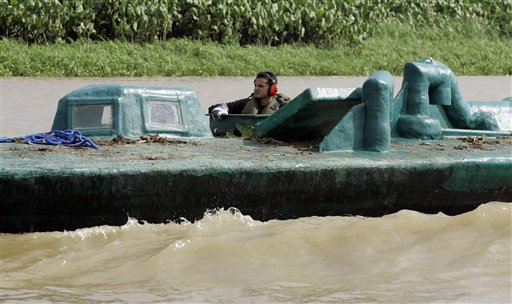
Columbia uses submarines to smuggle drugs

A Navy sailor drives a seized submarine, used by drug-traffickers to smuggle drugs, while displaying it to the media in Atrato River, coast of Turbo, Colombia

A Navy sailor drives a seized submarine, used by drug-traffickers to smuggle drugs, while displaying it to the media in Atrato River, coast of Turbo, Colombia

On January 8th the Colombian Navy captured its first drug smuggling submersible vessel of the year. This one was 18 meters (56 feet) long and capable of carrying over four tons of cocaine. It had been abandoned at sea and was towed back by a Colombian Navy ship to try and find out what happened. Last year the Colombians captured eight of these. Naval forces from the United States and other nations along the Pacific coast and the Caribbean caught even more. But the detection system, run mainly by the United States, locates a lot more of these cocaine subs than there are warships available to run them all down.

For two decades the United States has used a special interagency (Departments of Homeland Security, Justice, State, and Defense) and international (over a dozen nations participate) intelligence sharing/analysis operation (Joint Interagency Task Force-South) to track drug smuggling from South America. For the last decade the task force has become quite expert at tracking the submarines and submersibles built in South America for smuggling cocaine to North America and, recently, all the way to Europe. Some of these long range subs are apparently going all the way from Ecuador to the United States, bypassing the Mexican cartels (who have been fighting each other, in a big way, for the last five years).

A makeshift submarine is lifted out of the water at Bahía Malaga on the Pacific coast,

Particularly worrisome are the larger boats headed for Europe. Little is known about these, expect that they exist. These subs would be more at risk of being lost because of accident or bad weather than being spotted. European navies (especially Portugal and Spain) and coast guards have been alerted and are looking.

Despite losing over a hundred of these vessels to the U.S. and South American naval forces (and dozens more to accidents and bad weather) the drug gangs have apparently concluded that the subs are the cheapest and most reliable way to ship the drugs. It’s currently estimated that over 80 percent of the cocaine smuggled into the United States leaves South America via these submarines or semi-submersible boats.

Most of these craft are still “semi-submersible” type vessels. These are 10-20 meter (31-62 foot) fiberglass boats, powered by a diesel engine, with a very low freeboard and a small “conning tower” providing the crew (of 4-5), and engine, with fresh air and permitting the crew to navigate. A boat of this type was, since they first appeared in the early 1990s, thought to be the only practical kind of submarine for drug smuggling. But in the last decade the drug gangs have developed real submarines, capable of carrying 5-10 tons of cocaine that cost a lot more and don’t require a highly trained crew. These subs borrow a lot of technology and ideas from the growing number of recreational submarines being built.

The Colombian security forces and other Latin American navies have been responsible for most of these vessel captures. Usually these boats are sunk by their crews when spotted but the few that were captured intact revealed features like an extensive collection of communications gear, indicating an effort to avoid capture by monitoring many police and military frequencies. The Colombians have captured several of these vessels before they could be launched. In the last few years the Colombians have been collecting a lot of information on those who actually build these subs for the drug gangs and FARC (leftist rebels that provide security and often transportation for moving cocaine). That includes finding out where the construction takes place.

Colombian police have arrested dozens of members of gangs that specialized in building submarines and semisubmersible boats. As police suspected, some of those arrested were retired or on active duty with the Colombian Navy (which operates two 1970s era German built Type 209 submarines). These arrests were part of an intense effort to find the people responsible for building subs for cocaine gangs. Find the builders and you stop the building efforts. In this case it has only delayed some construction and made it more expensive to build these boats.

Ecuadoran police found the first real diesel-electric cocaine carrying submarine three years ago. It was nearly completed and ready to go into a nearby river, near the Colombian border, and move out into the Pacific Ocean. The 23.5 meter (73 foot) long, three meter (nine feet) in diameter boat was capable of submerging. The locally built boat had a periscope, conning tower, and was air conditioned. It had commercial fish sonar mounted up front so that it could navigate safely while underwater. There was a toilet on board but no galley (kitchen) or bunks. Submarine experts believed that a five man crew could work shifts to take care of navigation and steering the boat. The boat could submerge to about 16 meters (50 feet). At that depth the batteries and oxygen on board allowed the sub to travel up 38 kilometers in one hour, or at a speed of 9 kilometers an hour for 5-6 hours. This would be sufficient to escape any coastal patrol boats that spotted the sub while it moved along on the surface (its normal travel mode). The boat could also submerge to avoid very bad weather. The sub carried sufficient diesel fuel to make a trip from Ecuador to Mexico. There was a cargo space that could hold up to seven tons of cocaine.

The sub was captured where it was being assembled and a nearby camp for the builders appeared to house about fifty people. A lot of evidence was collected, and apparently the U.S. DEA (Drug Enforcement Agency) used that to develop clues about who was involved. It was the DEA that put together the pieces that led to identifying key people.

The Ecuadoran boat was the first such sub to be completed but not the first to be attempted. Back in the 1990s Russian naval architects and engineers were discovered among those designing and building a similar, but larger, boat. However, that effort did not last, as the Russian designs were too complex and expensive. It was found easier to build semi-submersible craft. But more and more of these new type subs are being found.

Source – Strategy Page

Chinese Submarine Training

Submarine flotilla in training
Recently, the officers and men of a submarine flotilla under the North China Sea Fleet of the Navy of the Chinese People's Liberation Army (PLA) conducted routine training. The photo features the scene of the training. (chinamil.com.cn/Li Zhikai)
Recently, the officers and men of a submarine flotilla under the North China Sea Fleet of the Navy of the Chinese People’s Liberation Army (PLA) conducted routine training. The photo features the scene of the training. (chinamil.com.cn/Li Zhikai)
.
Recently, the officers and men of a submarine flotilla under the North China Sea Fleet of the Navy of the Chinese People's Liberation Army (PLA) conducted routine training. The photo features the scene of the training. (chinamil.com.cn/Li Zhikai)
Recently, the officers and men of a submarine flotilla under the North China Sea Fleet of the Navy of the Chinese People’s Liberation Army (PLA) conducted routine training. The photo features the scene of the training. (chinamil.com.cn/Li Zhikai)
.
Recently, the officers and men of a submarine flotilla under the North China Sea Fleet of the Navy of the Chinese People's Liberation Army (PLA) conducted routine training. The photo features the scene of the training. (chinamil.com.cn/Li Zhikai)
Recently, the officers and men of a submarine flotilla under the North China Sea Fleet of the Navy of the Chinese People’s Liberation Army (PLA) conducted routine training. The photo features the scene of the training. (chinamil.com.cn/Li Zhikai)
.
Recently, the officers and men of a submarine flotilla under the North China Sea Fleet of the Navy of the Chinese People's Liberation Army (PLA) conducted routine training. The photo features the scene of the training. (chinamil.com.cn/Li Zhikai)
Recently, the officers and men of a submarine flotilla under the North China Sea Fleet of the Navy of the Chinese People’s Liberation Army (PLA) conducted routine training. The photo features the scene of the training. (chinamil.com.cn/Li Zhikai)
.
Recently, the officers and men of a submarine flotilla under the North China Sea Fleet of the Navy of the Chinese People's Liberation Army (PLA) conducted routine training. The photo features the scene of the training. (chinamil.com.cn/Li Zhikai)
Recently, the officers and men of a submarine flotilla under the North China Sea Fleet of the Navy of the Chinese People’s Liberation Army (PLA) conducted routine training. The photo features the scene of the training. (chinamil.com.cn/Li Zhikai)
.
Recently, the officers and men of a submarine flotilla under the North China Sea Fleet of the Navy of the Chinese People's Liberation Army (PLA) conducted routine training. The photo features the scene of the training. (chinamil.com.cn/Li Zhikai)
Recently, the officers and men of a submarine flotilla under the North China Sea Fleet of the Navy of the Chinese People’s Liberation Army (PLA) conducted routine training. The photo features the scene of the training. (chinamil.com.cn/Li Zhikai)
.
Recently, the officers and men of a submarine flotilla under the North China Sea Fleet of the Navy of the Chinese People's Liberation Army (PLA) conducted routine training. The photo features the scene of the training. (chinamil.com.cn/Li Zhikai)
Recently, the officers and men of a submarine flotilla under the North China Sea Fleet of the Navy of the Chinese People’s Liberation Army (PLA) conducted routine training. The photo features the scene of the training. (chinamil.com.cn/Li Zhikai)
.
Recently, the officers and men of a submarine flotilla under the North China Sea Fleet of the Navy of the Chinese People's Liberation Army (PLA) conducted routine training. The photo features the scene of the training. (chinamil.com.cn/Li Zhikai)
Recently, the officers and men of a submarine flotilla under the North China Sea Fleet of the Navy of the Chinese People’s Liberation Army (PLA) conducted routine training. The photo features the scene of the training. (chinamil.com.cn/Li Zhikai)
Source – Global times

Russia to build 2 nuclear Borei submarines

АПЛ борей подводная лодка борей 2011 декабрь коллаж

Russia is to start building two new advanced nuclear-powered Borei class submarines before year’s end. Once complete, they will be lurking under the sea with 20 Bulava nuclear intercontinental ballistic missiles each.

One of the submarines may be named Aleksandr Suvorov after one of the most decorated generals of the Russian Empire, a source in the defense industry told the media. Its construction is expected to start on July 28, which is Russian Navy Day.

The second vessel is likely to be named after Mikhail Kutuzov, the iconic Russian general of the Napoleonic Wars. Its keel is to be laid down in November.

The vessels are to be built by the shipbuilder Sevmash in Severodvinsk in the north of Russia.

Both submarines are of the Borei class, the most modern strategic nuclear-powered submarines in the Russian Navy. The lead vessel of the class, Yury Dolgoruky, officially entered service on Thursday, with two of his sister-ships currently afloat and undergoing trials.

The two new vessels are distinct from those three, being of an advanced Borei-A version of the same design. They will carry 20 nuclear ICBMs each, as opposed to 16 on the older submarines. They will also have improved maneuverability and better weapon control systems and will generate less noise.

Russia plans to build five Borei-A submarines. The first of them, Knyaz Vladimir, is already in construction.

Russia’s new submarine: arming for peace

From December 10, Russia is starting to exploit a new military submarine, called “Yuri Dolgoruky”. This is a long-standing project that had been suspended for some time. Then, the old project underwent some modifications. The new submarine has already been successfully tested. It is expected that the submarine will defend Russia’s borders.

This submarine is only a small part of Russia’s large-scale program of rearming itself with military equipment of the newest generation.

Russia’s President Vladimir Putin was visiting the city of Severomorsk in Russia’s north, when Defense Minister Sergey Shoygu connected with him through video communication and reported that the new submarine had undergone testing and would soon be exploited.

“This is good news,” the President answered. “But this is not enough. I hope that Russia will continue to further strengthen its navy.”

“It is one of Russia’s top priorities to have a modern, well-developed nuclear navy,” Mr. Putin said. “I hope that we’ll develop both new surface-water ships and submarines. It is planned that in the next few years, Russia will build and start to exploit more than 100 new ships and submarines of various types. I have no doubts that we’ll cope with this task.”

“Yuri Dolgoruky” is a nuclear submarine of the “Borey” type, armed with ballistic missiles. It was built in the Russian city of Severodvinsk, one of Russia’s largest centers of producing nuclear military ships.

Another 3 submarines of the “Borey” type, all named after well-known personalities of old Russian history – “Alexander Nevsky”, “Vladimir Monomakh” and “Knyaz Vladimir” – are still being built. Their equipment will be mainly Russian-made, including radio electronic systems of the latest generation and unique noise reduction transducers.

At present, Russian military submarines are, as a rule, equipped with Russian-made ocean-spanning ballistic missiles “Bulava”. The range capability of such a missile is more than 8,000 kms. One submarine of the “Borey” type can be equipped with 16 “Bulava” missiles.

“It can be said that Russia’s nuclear “shield” consists of three parts – aircraft, navy and land-based missile systems,” Russian military expert Igor Korotchenko says. “Until now, from the point of view of new nuclear equipment, the Russian navy lagged behind the air and the land components of this “triad”. Now, the balance between them will be leveled.”

“The equipment of submarines of the “Borey” type allows to examine the situation under water, to trace and attack various kinds of underwater targets,” Igor Korotchenko continues. “The submarines’ systems of weapons control are also of the latest generation.”

The “Borey” submarines are also more advanced from the point of view of safety than their earlier analogues. In particular, they have a break surface camera where the submarine’s entire crew can be placed in case of emergency.

Russia is planning to build 8 such submarines in the next few years. The construction of each will cost Russia about $ 700 mln.

Speaking about plans for the more distant future, Russia’s Defense Minister Sergey Shoygu says that Russia will have 15 new nuclear submarines before 2012. These submarines will be of various types and meant for various purposes, but all of them will be of the latest generation.

Russian expert in military technologies Ruslan Pukhov says that it is mainly sea-based missiles that make Russia resistant to possible aggression, because land-based missile systems are more vulnerable.

By arming itself with weapons of the latest generation, Russia strengthens its feeling of safety. After all, it is hard to argue with an old saying that goes, “if you want to live in peace, always be ready for a possible war”.

Source – The Voice of Russia

Australia – 1942 Submarine attack on Newcastle (Book)

A  NEW book about Japanese submarine attacks on Australia in 1942 provides perhaps the most detailed account yet published of Newcastle under fire.

Artwork by Monty Wedd.

A Parting Shot, by Terry Jones and Steven Carruthers, delves into military archives and old records and uses interviews with witnesses to put together a compelling narrative that helps lay to rest some old myths and Novocastrian urban legends.

The authors have disproven, for example, the old story that some of the shells fired by the Japanese submarine I-21 had been made years before in Britain.

The mark in Parnell Place made by a shelling from the submarine.The mark in Parnell Place made by a shelling from the submarine.

And the same close examination of the surviving shells and their distinctive markings has led to the authors’ theory that one shell at the Australian War Memorial – long thought to have been one of those fired on Sydney – is actually a star shell that was fired on Newcastle.

The authors have also taken issue with reports that as many as 34 shells fell on Newcastle.

This estimate was mistaken, they write, insisting that the number can have been no higher than 21 and was probably fewer.Rare photo of the Japanese 121 submarine, believed to be the type of vessel used in the attack on Newcastle.Rare photo of the Japanese 121 submarine, believed to be the type of vessel used in the attack on Newcastle.

Most were high explosive shells, several of which failed to explode.

Some were star shells, designed to illuminate the target area.

The book states that the Japanese were mainly intent on sowing fear in the population and had little real expectation of doing major damage.

Their targets in Newcastle were the BHP steelworks and the old Walsh Island dockyard – which they appeared not to realise had been dismantled years before.

The authors speculate that the submarine switched its attention to the direction of Fort Scratchley and Newcastle East in an attempt to douse the searchlights that had caught it in their beams.

History records that Fort Scratchley successfully frightened the submarine away.

But according to the book, chaos and confusion reigned in Newcastle on June 8, 1942, when the submarine opened fire. Inspecting a terrace with blown-out windows in Parnell Place after the attack.Inspecting a terrace with blown-out windows in Parnell Place after the attack.

The city’s defences were plagued by poor communication and, in some cases, uneasy relationships caused by the conflicting priorities of defence authorities and industry bosses.

A Parting Shot quotes an eyewitness account of the shelling by Lieutenant Ken Robin, aboard HMAS Allenwood, berthed at Kings Wharf in Newcastle Harbour.

‘‘I had a good view to the north, up the river to the steelworks,’’ Lieutenant Robin wrote. ‘‘The flare was white with a yellowish tinge and it floated down slowly on a parachute.

The idea was to illuminate the target for a business round, but they had got the range wrong.

‘‘The star shells burst to the seaward side of the steelworks and didn’t silhouette anything of importance. I would say a maximum of six star shells were fired. They burst over the river, working from north to south from the steelworks to the Horseshoe, opposite the Custom House.

‘‘We heard the case from the last one splash down in the river about 100metres off our starboard beam. There was a slight delay – perhaps 30seconds – after the star shells exploded. Then we heard three or four proper shells coming in. I don’t know where they would have gone. One explosion seemed to come from the seaward side of Fort Scratchley, the next somewhere in the city, south from the station.’’

The good news was that the submarine was frightened away.

The bad news was that the city’s defence communications were shown to be shaky, with the official censor’s report concluding that ‘‘the whole show was a disgrace and should be investigated’’.

ALMOST as interesting as the account of the night of the submarine attack is the book’s description of events a week later, at about 6.30pm on June 14.

Jumpy searchlight operators saw what they thought was a periscope entering Newcastle Harbour and issued a report ‘‘that led to panic and confusion’’.

The book relates that a gun at ‘‘Rail Battery’’ near Nobbys fired at the suspected periscope shortly after 7pm.

‘‘This was followed by light and heavy gunfire from Rail and Wave batteries as the object drifted backwards and forwards at the harbour entrance.

Located on opposite sides of the harbour entrance, both batteries were in each other’s crossfire at various times during the night as they fired at suspicious objects in the water.

The last shot was fired about 2335 hours.’’

During the scare Rail Battery fired five rounds and Wave Battery fired 17.

‘‘One shell ricocheted off the harbour waters and hit the Zaara Street power station, about 75feet above the ground level of No.2 boiler house, fracturing the buttress and making a large hole in the brickwork,’’ the book states.

‘‘Another struck the embankment protecting a petrol supply tank near the pilot station adjacent to HMAS Maitland and Shortland army camp. Several reports record a fragment from this shell made a small hole in the iron roof of a nearby drill hall.’’

The book also reports that a Lewis machine-gun on the northern wave trap at the harbour entrance slipped while being readied for action, firing a stream of bullets towards Newcastle East and forcing troops there to take cover.

The gun fired tracer bullets to illuminate the suspected periscope, but the bullets ricocheted off the water and passed over the army camp.

Searchlight operators and gun crews reported seeing the periscope and also a conning tower, and Wave Battery fired. One of its shells ‘‘struck a metal pole on the perimeter of the battery, cutting a cable, extinguishing the searchlight and slicing through communication lines to the fire commander on Shepherds Hill.’’

A shell fragment hit one artillery spotter’s steel helmet.

According to the book: ‘‘In a move that was either courageous or foolhardy, the RAAF launch Norlan, which was entering harbour when the shelling began, headed down the searchlight beam to look for the submarine during the gunfire.’’

The last shots were fired just before midnight, but the harbour was full of explosions for hours to come, as navy launches and a minesweeper raced around dropping grenades into the water at random intervals.

There appears to have been no submarine, but searchers found a steel drum, some driftwood and a large wooden case.

A Parting Shot will be launched at the Newcastle Maritime Centre on Thursday, January 17, 10 am to noon.

Source – Newcastle Herald

HMCS VICTORIA – A Long Beginning – Video Clip

A Long Beginning shows highlights of making HMCS VICTORIA “in all respects ready” for sea in late 2011 and 2012, culminating in her successful SINKEX at RIMPAC12. The CO shares the challenges faced by his boat and her crew along the way — and their accomplishments.

Source – Royal Canadian Navy Videos

Russia Sails New Nuclear Submarine While U.S. Continues Fleet Delays


Last week, after long delays, Russia made operational a new ballistic missile submarine (SSBN), or nuclear submarine, for the first time in over 20 years. This marks a significant step forward for the Russian Navy, which has pledged tens of billions of dollars to revitalize its fleet in the near future. The U.S. Navy unfortunately has had trouble both in revitalizing its SSBNs as well as its overall naval fleet.

The Russian navy made the announcement that the Yury Dolgoruky (Project 955)—the first-in-class of the new Borey-class SSBN—made operational status as it prepares for one of its largest naval exercises since the end of the Cold War. In fact, Russia’s commitment to increasing naval strength has been a central theme during Russian President Vladimir Putin’s tenure as president—despite Russia’s historically meager performance as a naval power. The Borey-class subs were first designed in the 1980s and the Yury Dolgoruky construction was launched in 1996.

Meanwhile, the U.S. navy has shrunk significantly since the Reagan years. The days of the 600-ship fleet have long since ended, and now U.S. naval leaders are struggling to find ways to meet a new requirement of around 300 ships. Currently around 285, the fleet will shrink further if more investment isn’t made in naval modernization.

The U.S. fleet was eroding long before the Budget Control Act and sequestration became part of the equation. In 2010, the Congressional Budget Office (CBO) reported that actual funding levels for 2005–2010 fell below the CBO’s and the Navy’s estimates to achieve fleet goals. Predictions show current funding levels would reduce the fleet to 263 ships. While the sequestration cuts to defense have been temporarily delayed as part of the fiscal cliff deal, they are still a looming possibility and would shrink the fleet to its lowest level since 1915.

While Russia has shown improvements in its strategic SSBN fleet (two more Borey-class subs are under construction), the U.S. has fallen behind its own standards. The legal minimum for the U.S. Navy’s SSBN fleet is 12 boats. Given this fleet’s status as the most survivable leg of the U.S. nuclear triad, the requirement should not be taken lightly. However, the Obama Administration delayed the development of an Ohio-class SSBN replacement for two years, which will in turn cause the fleet to fall below 12 boats for a 14-year period. As rogue states such as Iran and North Korea get closer to having nuclear weapons and increasing ballistic missile technology, the significance of this fleet is certainly not shrinking.

The President has downplayed the size of the fleet by making oversimplified arguments that each ship’s capability makes strength in numbers less significant. Yet with Russia aggressively growing its naval capability, resulting in a greater presence on the high seas, as well as China paying increased attention to naval capability, the U.S. must continue to uphold its status as the dominant global naval power. The fiscal year 2013 National Defense Authorization Act states that “the continuous at-sea deterrence provided by a robust and modern fleet of nuclear-powered ballistic missile submarines is critical to maintaining nuclear deterrence and assurance and therefore is a central pillar of the national security of the United States.”

Both Congress and the President need to keep this support up to maintain America’s robust naval

Source – The Foundry