Category Archives: UK Submarines

News, views and stories about UK submarines

Apprentice boost for BAE Systems yard in Barrow

Ambush in Barrow

Astute Class submarines are built in Barrow


Defence giant BAE Systems is to recruit 140 engineering and business apprentices in Cumbria over the course of the year, the company has announced.

They will join the firm’s submarine-building business in Barrow, with a further 100 at its shipbuilding sites in Portsmouth and Glasgow.

The company is building the Navy’s latest Astute Class nuclear submarines.

A spokesman said attracting suitable apprentices was vital in generating the company’s “workforce of the future”.

Source – BBC News

UK – Ruling on submarine facility costs

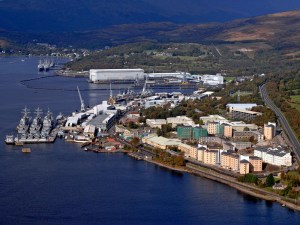
Faslane Naval Base (Scotland)

The cost of creating a nuclear submarine support facility at a Royal Navy base could be £145 million more than the initial estimate, a High Court judge has said.

Experts originally quoted an £89 million target figure for the facility at the Faslane base in Argyll and Bute, said Mr Justice Coulson.

The current “agreed maximum price” was around £140 million, said the judge. But engineers thought that the “ultimate cost” could be as much as £235.7 million.

Details emerged after lawyers debated terms of a contract, drawn up when the Ministry of Defence (MoD) engaged engineering firm Amec in 2000, at the High Court in London.

Mr Justice Coulson said the MoD and Amec could not agree on who should foot the “extensive overrun” bill.

The judge said a difficulty had arisen out of “badly worded” contract provisions.

He decided that the MoD should pay a “reasonable” amount but not costs incurred as a consequence of Amec’s contract breaches.

His ruling did not specify exactly how much of the overspend would be footed by the MoD and how much by Amec.

He had heard legal argument at a hearing in December and published a written judgment.

Source – Paisley Daily Express

Can you help? – Search on for family of missing WW2 submariner

YOUR RELATIVE? Hugh McDonald

YOUR RELATIVE? Hugh McDonald

A SEARCH is underway for the Dorset relatives of a missing Second World War submariner.

Leading telegraphist Hugh Phimster McDonald was lost when the Dutch submarine O13 (Onderzeeboot 13) mysteriously disappeared while on war patrol in the North Sea in 1940.

Researchers believe descendants of Mr McDonald could be living in the Weymouth area.

O13 is the last Dutch submarine lost during the war that has still to be found and protected as a war grave.

The Dutch Navy will be mounting a search operation for the wreck later this year.

It will feature in a Dutch TV documentary and the production team are keen to trace relatives of the three Royal Navy personnel who disappeared with the submarine.

Mr McDonald was the son of John and Maggie McDonald of Fareham in Hampshire and was married to Winifred in 1938.

Researcher Dr Andrew Jeffrey said: “We believe there were two sons, Brian and Graham and that descendants may still be living in the Weymouth area.

“If so, we would be delighted to hear from them.”

O13 escaped from under the noses of German troops invading the Netherlands in May 1940 and had patrolled the English Channel to protect the Dunkirk evacuation.

The submarine then moved north to join the Royal Navy’s ninth flotilla based in Dundee, Scotland, and vanished while patrolling south of occupied Norway in June 1940.

To view a trailer for the O13 documentary visit vimeo.com/57093011 Relatives or anyone with information about lost submariner Hugh Phimster McDonald should contact emma.walker@dorsetecho.co.uk

Source – Dorset Echo

French authorities clear Plymouth submarine over sinking off Cornish coast

The Royal Navy nuclear submarine Turbulent has been formally cleared of any involvement in the mystery sinking of a Breton trawler and the deaths of its five crew off the Lizard in Cornwall.

Nine years after the five fishermen died in the Bugaled Breizh tragedy, French authorities have finally ruled out the possibility that the British submarine was responsible.

 ​submarines
Two expert reports have been published that dismiss a theory that HMS Turbulent, or any other submarine, could have been caught up in the trawler’s cables and dragged it down.

Despite questions in the House of Commons and assurances  by the Ministry of Defence that the submarine was docked at Plymouth on the day the Bugaled Breizh sank, a lawyer for French  families of the victims called for its captain Commander Andy Coles to be placed under investigation for manslaughter.

//

Make your visit even better value. Present this voucher at reception and save £1 off per person on standard prices on entry between 10am and 3pm. Open from 10am daily.

Terms: Cannot be used in conjunction with any other offer or saver ticket.

Cdr Coles has repeatedly denied that his submarine was responsible for snagging the Bugaled’s trawl cables and dragging her below the waves in less than a minute.

A lawyer for the families had accused him and the Royal Navy of lying and claimed one mystery witness heard a “confession” by Cdr Coles and two others, neither of whom were ever named, had heard a radio message from the Turbulent saying she had suffered damage following a collision at the time of the accident and was returning to port.

A French journalist attempted to interview Commander Coles at his home in Devon last month. Commander Coles said he was unavailable but the journalist reported that the Commander’s wife had spoken to him and denied that her husband had anything to do with the sinking of the French trawler.

Now a report by a submarine specialist handed to judges investigating the accident has confirmed that HMS Turbulent was nowhere near the Bugaled Breizh  on January 15,  2004 when other submarines from Britain and other Nato countries were taking part in war games in the area where the trawler was sunk.

“On the basis of technical documents relating to the position of naval vessels at the time of the sinking, the specialist considers that the submarine accused of  involvement was definitely in port,” said Nantes  prosecutor Brigitte Lamy in a statement.

A second separate  report by experts commissioned by the judges casts doubt on the theory that the Bugaled fell victim to a submarine at all.

Traces of titanium found on salvaged trawl cables of the trawler “are not significative of the involvement of a submarine” as “apart from two Russian submarines built in the sixties the protective coating of submarines is exempt of any kind of titanium”, their report said.

The experts point out that paint containing titanium in dioxide form is widely used as protective coating for hulls of fishing vessels and submerged port equipment and suggest the titanium found on the trawl cables was caused by the Bugaled having come into contact with other fishing gear.

Families of the five lost fishermen who live in western Brittany close to the Bugaled Breizh’s home port of Loctudy have always believed that a submarine was responsible for the accident.

A year after the tragedy, a  judge accepted an initial report by marine experts who considered that because the Bugaled Breizh sank so rapidly, the culprit could only have been a nuclear submarine moving at high speed below the waves.

Source – This is Cornwall

UK – Fears of Navy cuts and dock job losses in nuclear debate

The £100 billion price tag of   a “like-for-like” replacement for Britain’s Trident nuclear weapon would mean more cuts to the Royal Navy, a former armed forces minister has warned.

Sir Nick Harvey, Liberal Democrat MP for North Devon, said he believed Britain could not afford, and did not need, a further generation of nuclear weapons on such a scale, and that an “open mind” should be kept on doing something at a lesser cost.

 ​submarines

But speaking during a  Commons debate on the issue, fellow Westcountry MPs raised fears over the impact on jobs at Devonport dockyard – the biggest private sector employer in Devon and Cornwall – of a scaled-back nuclear deterrent. The Plymouth yard boasts the only UK licence to refit, repair and refuel submarines that carry the Trident missile.

Sir Nick, sacked as a Ministry of Defence minister in last year’s  reshuffle, said the UK had to decide by the middle of 2016 whether or not to proceed with a replacement of the existing Trident nuclear deterrent. He said: “I do not believe that we need to have a further generation of nuclear weapons based on the scale we thought we needed in 1980 at the height of the Cold War, and I don’t think that we can afford to do so either.”

Sir Nick said he did not   believe that Britain’s national   security assessment and strategy suggested the country needed it.

When Britain had a known nuclear adversary in the shape of the former Soviet Union, there had been a “logic” to having continuous at-sea deterrents, he said, but the circumstances of today were “very different”.

Sir Nick outlined the capital investment of a further generation of submarines, the running costs and decommissioning.

He said: “When you begin to total this out and factor in decommissioning at the end, what we are talking about is an expenditure of over £100 billion and we need to look closely at whether that is justified.”

The impact of committing to such sums, he argued, would be felt “above all else by the Royal Navy”.

Of the three Armed Forces, the Navy has the strongest presence in the Westcountry, from commandos in Plymouth, Taunton and North Devon to warships based at Devonport Naval Base. There are sharp differences between the Tories and Lib Dems over the future of a replacement for Trident, with most Conservative ministers and backbenchers reluctant to reduce its capability.

Oliver Colvile, Tory MP for Plymouth Sutton and Devonport, said in the Commons: “The nuclear licence is vital to my constituency. It is our stake in the ground and we must ensure that lots of work comes out of it.”

Sheryll  Murray, Conservative MP for South East Cornwall, added: “I was concerned at our going into coalition with partners who stated in their last election manifesto that they would be saying no to like-for-like replacement of the Trident nuclear weapons system.

“I am still concerned that they might scale down our vital nuclear deterrent in increasingly uncertain times.”

Source – This is Cornwall

CSC set to supply gas cylinders for Astute nuclear submarines

Chesterfield Special Cylinders (CSC) has won a £2m contract by BAE Systems  Submarine Solutions to provide high-pressure gas cylinders for the Royal Navy’s  sixth Astute-class nuclear submarine — the HMS Agamemnon.

The cylinders are critical to a number of operations within the Astute  vessels, including breathing gas storage, hydraulic and valve actuation back-up,  ballast operation and missile launch systems.

The order takes the value of CSC’s contracts for the Astute-class submarines  to more than £12m, having already supplied gas and oxygen systems for the Astute and Ambush submarines, which are already in the water,  and the next three (Artful, Audacious and Anson)  being built by BAE in Barrow-In-Furness. A seventh and final Astute, Ajax, is due to enter service in 2024.

Source – TheEngineer

Verdict – Royal Navy officer ‘unlawfully killed’ in submarine shooting

Lt Cdr Ian Molyneux, who was shot dead

Father-of-four Lt Cdr Ian Molyneux was shot in the head at close range

A navy officer was unlawfully killed by a junior rating on board a nuclear submarine, a coroner has said.

Able Seaman Ryan Donovan, 23, shot Lt Cdr Ian Molyneux, 36, of Wigan, Greater Manchester, at close range on HMS Astute in Southampton.

He had been on a two-day drinking binge before the attack in April 2011.

Recording a narrative verdict, Coroner Keith Wiseman said he would recommend that random breath testing for Royal Navy personnel be implemented.

Donovan was jailed for life in September 2011 with a minimum term of 25 years after pleading guilty at Winchester Crown Court to the murder of the father-of-four.

The 23-year-old, of Hillside Road, also admitted the attempted murders of Lt Cdr Hodge, 45, Petty Officer Christopher Brown, 36, and Chief Petty Officer David McCoy, 37.

Vodka and cocktails

Mr Wiseman said a culture of drinking to excess had to stop, and a system of alcohol testing prior to duty should be introduced.

// Captain Phil Buckley said the Royal Navy had “learnt lessons”

The inquest at Southampton Civic Centre heard Donovan had drunk more than 20 pints of cider and lager over two days prior to the attack.

He had also drunk vodka and cocktails before being put on guard duty with a gun while more than three times above the alcohol limit for driving.

Tests revealed Donovan’s blood would have contained 139mg of alcohol per 100ml – 76% above the drink-drive limit.

Police investigating the murder were so concerned about binge drinking by the crew while ashore, that the senior officer wrote to Hampshire Constabulary Chief Constable Alex Marshall to highlight the issue and it was passed to military authorities.

The Royal Navy has since tightened its rules on alcohol consumption before duty.

At the time sailors were allowed 10 units in 24-hours with no alcohol in the 10 hours before duty. This has now been changed to five units.

Source – BBC News

Submariner has his long service in the Royal Navy recognised

A DEVONPORT submariner has been given an award in recognition of his long service in the Royal Navy.

Warrant Officer Jeff Griffiths has been handed the award for dedication, professionalism and leadership after concluding his 33-year career as a submariner.

 ​Warrant Officer Jeff Griffiths receives his award
Warrant Officer Jeff Griffiths receives his award

Griffiths, who left the Royal Navy in 2012, had been a key member of the team working on the UK’s strategic missile deterrent submarines. He had also been a vital part of the successful overhaul of HMS vigilant.

A veteran of the Falklands Conflict, Jeff joined the Royal Navy in 1979, working his way up to the highest non-commissioned rank.

Jeff said, “I have thoroughly enjoyed serving in the Royal Navy submarine service and I’m pleased that I will be able to continue supporting the submarine fraternity in my new civilian post.”

Captain Paul Methven, Superintendent Submarines for Royal Navy at Devonport, presented the certificate at a ceremony on Tuesday.

He praised Jeff’s outstanding service. “Jeff has made an immense contribution over many years.

“His knowledge of the systems and how to get things done is second to none and we shall miss him.”

But I’m delighted that he is remaining part of the submarine enterprise and that he’ll be able to use and pass on his experience in others in his new job”.

Source – Plymouth Herald

HMS Artemis: A Voyage North – Video Clip

Official British government film.

Impressionistic account of life on the submarine HMS Artemis, told partly through the eyes of Lt. Ellison, a new submarine officer (fifth hand). Includes footage of training at HMS Dolphin, passage aboard HMS Artemis (Amphion class submarine), hydrographic survey on edge of the ice field, and a run ashore in Copenhagen.

Source – Youtube

Consett submarine commander presented with MBE at Palace

A RETIRED submarine commander surfaced at Buckingham Palace to be presented with an honour for service to his country.

Lieutenant Commander Stuart Hobson, from Consett, in County Durham, collected an MBE announced during the Queen’s Birthday Honours.

The 55-year-old was given the award for his dedication to the UK’s continuous at sea deterrent and helping to promote relations between the Royal Navy and US Navy.

After leaving Blackfyne Secondary School, Lieutenant Commander Hobson embarked on a 38-year career with the Royal Navy, serving on the Polaris submarines HMS Renown, HMS Repulse and HMS Resolution followed by tours with Vanguard submarines HMS Victorious and HMS Vengeance.

He ended his military career on shore as officer-in-charge of HMNB Clyde’s Strategic Weapons Support Building.

He said: “The investiture was a unique experience which made me and my wife very proud, yet humble. It made me feel that my 38-years before the mast was not in vain.”

Since retirement, Mr Hobson has started a new career in the private sector with Lockheed Martin UK Strategic Systems.

Accompanying him to the Buckingham Palace ceremony were his wife, Wendy, and their three children, Chris, Nick and Emma.

Source – The Northern Echo