Monthly Archives: February 2013

UK – Ruling on submarine facility costs

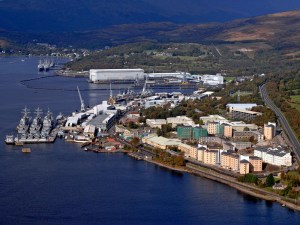
Faslane Naval Base (Scotland)

The cost of creating a nuclear submarine support facility at a Royal Navy base could be £145 million more than the initial estimate, a High Court judge has said.

Experts originally quoted an £89 million target figure for the facility at the Faslane base in Argyll and Bute, said Mr Justice Coulson.

The current “agreed maximum price” was around £140 million, said the judge. But engineers thought that the “ultimate cost” could be as much as £235.7 million.

Details emerged after lawyers debated terms of a contract, drawn up when the Ministry of Defence (MoD) engaged engineering firm Amec in 2000, at the High Court in London.

Mr Justice Coulson said the MoD and Amec could not agree on who should foot the “extensive overrun” bill.

The judge said a difficulty had arisen out of “badly worded” contract provisions.

He decided that the MoD should pay a “reasonable” amount but not costs incurred as a consequence of Amec’s contract breaches.

His ruling did not specify exactly how much of the overspend would be footed by the MoD and how much by Amec.

He had heard legal argument at a hearing in December and published a written judgment.

Source – Paisley Daily Express

USA (New London) Submarine Birthday Ball Sing-off entries due 1st March

New London, Conn. —

The Southeastern Connecticut Submarine Force seeks singers to compete at its second annual Submarine Birthday Ball Sing-off auditions, set for 6 p.m. March 22 at the Dealey Center, New London.

The singer who best sings the National Anthem during the auditions will perform at the 113th Southeastern Connecticut Submarine Force Birthday Ball April 13 at the MGM Grand Hotel at Foxwoods Resort, Mashantucket. In addition, the winner will receive two complimentary tickets to attend the ball as well as a one-night stay at the hotel during the night of the event.

The contest is open to all active duty military, reservists, retirees, dependents, Navy civilians and individuals at least 18 years old. To enter, record a video singing any song and upload it to facebook.com/SubmarineBallSingOff or send it to submarineballsingoff@gmail.com. Deadline is March 1.

 Source – Norwich Bulletin

Corac Group wins contract to supply equipment to submarines

UK engineering group Corac Group has secured a contract extension to supply air purification equipment to an overseas submarine programme.

The company, which serves oil and gas, defence and industrial
markets, said its subsidiary Atmosphere Control International (ACI) will
make the delivery during the fourth quarter of 2013.

The order is worth over £0.7m and will increase ACI’s revenue visibility for the year.

The contract, which furthers ACI’s participation in a long-established programme,
reflects demand in the global submarine market. Recent reports indicate that
more than 80 boats will be launched in the Asia Pacific region over the next 10
years.

Phil Cartmell, Chairman of Corac said: “This order represents a
good start to the year for ACI, and confirms our confidence that the combined
current order book places Corac in a good position.

“Long term supply relationships are a key feature of the ACI business and this order demonstrates
how the company can benefit from building business in expanding markets.
Encouraging signs from global programmes offer ACI an increasing pipeline of
opportunities for 2013 and beyond.”

Source – Sharecast

North Korea’s Submarine Bases

Taken from Matthew Aid’s own Website – http://www.matthewaid.com/about

All credit for the article goes to Matthew. I have merely lifted if from his site so that others might gain insight through his efforts.

Some interesting Google earth imagery on the links within the text.

Earlier today I posted a blog about the release of satellite imagery about North Korea’s naval bases. In going through the imagery, I discovered that the author of the original piece on cryptome.org missed the North Korean navy’s two most important facilities – the heavily protected submarine bases on the island of Mayang-do at the village of Mayangdori (40.0 N 128-10-36E); and the second sub base which located outside the coastal village of Chahonodongjagu, a/k/a Ch’aho (40-12-56N 128-38-39E). Both bases are situated on the east coast of North Korea.

Estimates vary somewhat, but the North Korean is estimated to have ben 60 and 70 submarines, all of which are diesel-powered coastal subs unsuited for deepwater operations. According to the Defense Intelligence Agency (DIA), the North Korean Navy possesses 4 1960s-vintage Whiskey-class attack subs that rarely go to sea these days, 22 Chinese-made Romeo-class submarines(1,800 tons) which were delivered in the 1970s, 40 domestically produced Sang-O class small coastal submarines (300 tons), and 10 midget submarines used for the clandestine infiltration of agents into South Korea.

Most of these subs are clearly visible in currently available Google Earth satellite imagery. For example, look at this cluster of four Romeo-class subs sharing the same berth at the Mayang-do sub base. If you look just to the south of this berth, you will see two more subs, one of which possibly a Romeo-class sub, docked at the base. About 1,000-meters to the southwest is another heavily protected dock complex housing another cluster of four Romeo-class submarines and possibly two of the smaller Sango-class subs.

Source – Matthew Aid

Another US Navy submarine arrives amid unsolved Tubbataha grounding

USS Guardian to be dismantled after running aground on Philippines’ Tubbataha Reef

    The U.S. Navy minesweeper USS Guardian, top, is seen stranded on the Tubbataha Reef, a World Heritage Site in the Sulu Sea 400 miles southwest of Manila, Philippines, Jan. 25, 2013, in this picture released by the Tubbataha Management Office.

The U.S. Navy minesweeper USS Guardian, top, is seen stranded on the Tubbataha Reef, a World Heritage Site in the Sulu Sea 400 miles southwest of Manila, Philippines, Jan. 25, 2013, in this picture released by the Tubbataha Management Office. / AP Photo/Tubbataha Management Office

MANILA, Philippines The U.S. Navy said Wednesday that it would dismantle a minesweeper that ran aground on a coral reef in the Philippines after carefully studying all options on how to remove the damaged ship.

Navy spokesman Lt. Cmdr. James Stockman said dismantling the USS Guardian was determined to be the solution that would involve the least damage to the Tubbataha Reef, a protected marine sanctuary where the ship got stuck Jan. 17.

He said the Philippine coast guard was reviewing the plan, but gave no other details.

The Navy had said previously that the Guardian would be lifted by crane onto a barge and taken to a shipyard, but apparently the damage was too extensive and it will have to be cut up and removed in pieces. Stockman gave no time frame for the operation.

The grounding caused no casualties to the ship’s 79 crew and officers, who were taken off the vessel after it crashed into the reef in shallow waters. The ship began listing and taking on water through holes in the wooden hull. The Navy’s support vessels siphoned off remaining fuel and salvage teams removed heavy equipment and hazardous material.

The Navy is investigating the incident, which caused Philippine government agencies and environmentalists to express concern about the extent of damage to the coral reef.

Philippine President Benigno Aquino III said last week that the U.S. Navy must explain how the ship got off course. He said the Navy would face fines for damaging the environment.

Rear Adm. Thomas Carney, commander of the Navy’s Logistics Group in the Western Pacific, told reporters last week that the investigation would look into all the factors that may have led to the grounding, including a reported faulty digital chart, sea conditions, weather and the state of the ship’s navigational equipment.

The Navy and the U.S. ambassador to the Philippines, Harry K. Thomas, have apologized for the grounding and promised to cooperate with its close ally.

Source – CBS News

USS Cheyenne comes alongside

MANILA – The problem with the grounded US Navy ship is still ongoing, and many questions as to why it had sailed there in the first place and what will happen to it and the reef are still unanswered, yet, here comes another US military ship, a nuclear-powered submarine, docking in Subic Bay, Zambales, the former US military base shuttered by popular demand in 1992. The docking, as expected, drew protests.

“The presence of a US nuclear-powered ship at Subic clearly violates the nuclear- free provision of the 1987 Philippine Constitution as well as Art. II sec. 7, which requires an independent foreign policy that prioritizes national interest,” said Bayan Muna Partylist Rep. Neri Colmenares.

The USS Cheyenne is described by the US Pacific Command as a Los Angeles-class nuclear attack submarine capable of launching Tomahawk missiles, which are long- range rockets that can be armed with nuclear warheads. In fact, it is being described as one of the most capable nuclear attack submarines in the world today. For Malacañang to grant it a diplomatic pass to enter Philippine waters and dock at Subic Bay, is viewed by various groups as “callous.”
Malacañang justifies this by saying that it merely a “nuclear-powered” ship and, thus, not covered by the prohibition of the 1987 Constitution against the entry and stockpiling of nuclear weapons.

“Aquino’s callous permission for and defense of the entry of this nuclear-powered submarine into our country shows the world just how unthinking his obedience to the US is,” said Elmer “Bong” Labog, chairman of Kilusang Mayo Uno, in a statement. As the USS Cheyenne is also headed to the same path taken by the USS Guardian, critics such as the KMU now ask: “What is the US up to this time?”

“Every American warship that docks in the Philippines reduces the country to a military outpost of the US in the Asia-Pacific region and likewise reveals the farcical claims of Philippine sovereignty by the puppet Philippine government,” the CPP said in a statement. They warned that the rising number of US naval vessels that dock and patrol in Philippine seas increases as well the possibility of more environmental damage such as the destruction of the Tubbataha corals and the reported dumping of human and toxic waste off the coast of Subic last year.

In 2012, US ships made 197 port calls in the Philippines, while some 444 American aircraft were cleared for landing in the country’s airports, the Department of Foreign Affairs said. It represented a more than four- fold increase from the recorded arrivals in 2010 and 2011.

Source – Bulatlat

China – Naval officer questioned over submarine espionage probe

// TAIPEI–A rear admiral was questioned by military prosecutors last week in connection with an investigation into alleged leaks of submarine nautical charts to China, the Ministry of National Defense (MND) said Monday.

//

The rear admiral was summoned as part of an inquiry into a suspected espionage case involving Chang Chih-hsin, a former chief officer in charge of political warfare at the Naval Meteorology Oceanography (METOC) Office, MND spokesman Maj. Gen. Luo Shou-he said.

Luo did not reveal the name or position of the naval officer or further details of the case, because of the need to maintain confidentiality in the ongoing legal case.

The Chinese-language United Daily News (UDN) first reported the new twist in the case Monday.

It said that a senior naval officer in active service was questioned for a full day and overnight last week and has since been transferred to Navy Command Headquarters to facilitate follow-up inquiries after serving as commander of a fleet.

Military sources said the Navy has assigned another officer to take over the rear admiral’s job.

The Defense Ministry confirmed last October that Chang Chih-hsin was arrested a month earlier on suspicion of obtaining classified information through former military colleagues and using it for illegal gains, but it denied that his actions had resulted in the exposure of military secrets.

According to the latest UDN report, Chang, along with a lieutenant at the Naval Fleet Command and a retired missile officer in the Navy, has been detained and indicted on charges of leaking military secrets for illegal gains.

The report further said the trio had told prosecutors that they interacted closely with an active service naval real admiral.

After investigating the claims and collecting evidence for several months, military prosecutors decided to summon the suspect for questioning last week, the report said.

Although the senior officer was released after questioning, military prosecutors are still investigating his possible role in the case, the report said.

The newspaper quoted military sources as saying that if the officer was found to have been involved in spying, it would represent the worst espionage scandal since the “Lo Hsien-che” case.

Lo, an Army general who was lured by a honey trap into spying for China during his time at Taiwan’s representative office in Thailand, was sentenced to life in prison and has been in jail since July 2011.

Although relations across the Taiwan Strait have improved significantly over the past five years, China has not renounced the use of force against Taiwan, and it continues to actively spy on the self-governed island it claims as its own, often through active or retired Taiwanese military officers.

Source – The China Post

India – Submarine import trap

INS_Arihant_SSBN

The Indian Navy needs to  spearhead the amalgamation of nuclear and  conventional submarine design and manufacturing capabilities

The Indian Navy has quietly and without fuss built up a great reputation for itself as a strategic-minded service. Its plans for distant defence are the best articulated, and its procurement of naval hardware mission-appropriate, reason why the government has accorded it the pivotal role in the strategic defence of the country.

As commendable is the Navy’s role in driving the country’s agenda for self-sufficiency in armaments in the teeth of sustained efforts over the years by the bumbling Indian government with the defence ministry and its department of defence production (DPP) to undermine it.

The DPP conceives its remit as only ensuring custom for defence public sector units while trying to trip up the private sector whose built-up capacity and capability can more quickly and substantively attain for the country the goal of self-reliance, which has so far only remained rhetoric. The Navy is the only service to have had a main weapon design directorate, generating designs for 43 of the 45 warships under construction in the country.

The Navy, moreover, has prevented indigenous projects such as the Tejas Light Combat Aircraft programme from sinking, by investing in the development of a navalised variant, managing a technical consultancy with US Navy’s aviation experts to iron out design kinks and shepherding this aircraft to the prototype stage. But the singular success story and its greatest accomplishment is the strategic submarine project. Starting from scratch, it has got to a point where the basic Russian Charlie-II class nuclear-powered ballistic missile firing submarine (SSBN) design has been enhanced, which changes will be reflected in the second and third units of the Arihant-class boats, and a nuclear-powered hunter-killer submarine (SSN) as follow-on to the Akula-II class boat (INS Chakra) on lease from Russia, is in the works. Continue reading

Canada – Subs headed back under water

Ill-fated Chicoutimi to be operational by year-end

The naval submarine HMCS Chicoutimi , shown here in 2009 prior to being hauled to the west coast via the Panama Canal, is undergoing extensive work. Despite a tragic past that saw a Halifax naval officer die in a fire, the Defence Department says a refit in Victoria, B.C., will have the sub ready for operation later this year.(TED PRITCHARD/Staff)

The naval submarine HMCS Chicoutimi , shown here in 2009 prior to being hauled to the west coast via the Panama Canal, is undergoing extensive work. Despite a tragic past that saw a Halifax naval officer die in a fire, the Defence Department says a refit in Victoria, B.C., will have the sub ready for operation later this year.

OTTAWA — Three of Canada’s four Victoria-class, diesel-electric submarines are to be operational by the end of the year.

But there are still questions about whether Canada still has the personnel to handle a submarine fleet, and if the subs are even worth fixing.

HMCS Victoria, which has been docked since 2005, was declared operational last year on the West Coast after sinking a decommissioned United States navy ship in a live torpedo test.

HMCS Windsor, docked since 2007, has already started live tests in Halifax Harbour. Last November, it completed a live diving exercise in the harbour, known as a camber dive. It made its first run out to sea in December.

HMCS Chicoutimi, on which a navy officer died after it caught fire during its 2004 maiden voyage, is also undergoing extensive work. Despite its tragic past, the Defence Department says the refit in Victoria, B.C., will have it ready for operation later this year.

“What that is is really heavy maintenance on more than 200 systems,” said department spokeswoman Jocelyn Sweet. “So absolutely everything gets looked at and either replaced or fixed or repaired or overhauled.”

With three of the four subs operational, the Defence Department will consider it at a “steady state” of operation.

The fourth submarine, HMCS Corner Brook, ran aground in a test last year. It will undergo repairs until 2016.

But some analysts say it’s a waste of money to repair the submarines, which were bought second-hand from the British navy for $750 million in 1998.

Since they started sailing in 2003, the subs have been at sea for a combined 1,083 days. That means the sticker price alone works out to almost $700,000 per day.

“These things aren’t submarines, they’re lemons,” said Steven Staples, president of the Rideau Institute, a defence and foreign policy think-tank in Ottawa.

Staples said the submarines will never live up to their billing, which is why the British government originally intended to mothball them. He said the submarines are not needed for defence and are in fact sucking resources from more valuable projects.

“The first thing you do when you find yourself in a hole is you stop digging,” he said.

The Defence Department says the subs will be used for various activities, including patrols, intelligence gathering and acting as a deterrent.

While the vessels might work soon, some wonder if Canada still has the staffing capacity to run three submarines after years of very limited testing ability.

In November 2011, Vice-Admiral Paul Maddison, commander of the Royal Canadian Navy, said the number of submariners who are active and ready had fallen to 80 from 300. An internal report in early 2012 raised concerns about the navy’s ability to train enough officers in time.

In April, Defence Minister Peter MacKay said the navy had 278 submariners who were working within the program, with 60 more on the way.

Source – Herald News

USS San Francisco arrives in S. Korea

U.S. nuclear-powered submarine arrives in S. Korea for joint drill
A U.S. nuclear-powered submarine arrived in the southeastern port city of Jinhae for joint naval drills with South Korea, military officials said Friday, in a move seen as a warning to North Korea ahead of what may be an imminent nuclear test.

USS San Francisco (SSN-711), a 6,800-ton Los Angeles-class submarine, has been anchored at a naval base in Jinhae, 410 kilometers southeast of Seoul, since Thursday to prepare for joint drills slated for next week, the Joint Chiefs of Staff (JCS) said.

A 9,800-ton cruiser equipped with missiles and torpedoes as well as naval combat helicopters also arrived in the southern port city of Busan, on the same day, it said.

USS SAn Francicos (SSN-711) anchored at a naval base in Jinhae for joint drills with South Korea ahead of North Korea’s planned nuclear test. (Yonhap)

The port call came as tensions rose on the Korean Peninsula after the North last month warned of a nuclear test in response to the U.N. Security Council’s increased sanctions on Pyongyang for its December rocket launch.

A new nuclear test would mark the North’s third since two previous tests in 2006 and 2009.

The two U.S. ships and 10 Korean warships, including Aegis destroyers and battle ships, will carry out the joint exercises in the East Sea to test combat readiness between the two sides, the JCS said, though a specific date has not yet been confirmed.

In a visit to the naval base in Jinhae, JCS Chairman Jung Seung-jo said Thursday the North has nearly completed its preparations for a nuclear test at its Punggye-ri testing location, noting increased activity spotted by satellites near the nuclear site.

“We are closely looking into whether (increased activity) is a manipulating tactic or preparations for a nuclear test indeed,” Jung told reporters, during a tour of the submarine. “The North is ready to conduct an atomic test at any time if the leadership makes a decision.”

Jung Seung-jo, the Chairman of Joint Chiefs of Staff, visits a naval base in the southeastern city of Jinhae. (Yonhap)

Although U.S. nuclear-powered submarines have occasionally made port calls in the past, Jung said the latest visit is “meaningful because it is for joint drills.”

“The upcoming drill, which had already been planned, is not targeted for (North Korea’s) nuclear test,” Jung told reporters, adding that the exercise is aimed at coping with possible North Korean provocations involving submarines.

Jung did not elaborate when the two sides had agreed on the exercise plan.

Military officials in Seoul expect the exercise will show their determination to respond sternly if the communist nation defies a chorus of international warnings.

“Although it is a pre-planned exercise, this upcoming joint drill will send a message to North Korea that any misbehavior will not be overlooked,” the official said, asking for anonymity due to sensitivity of the issue.

After the North warned of “substantial and high-profile important state measures,” senior military officials have visited front-line units to order vigilance in an effort to add pressure on the isolated state to drop the test plan, which is feared to raise tensions on the Korean Peninsula.

In a meeting with top security ministers Thursday, President Lee Myung-bak warned of “grave consequences” if Pyongyang moves forward with the test, urging the defense minister, spy chief and national security advisers to maintain strong military preparedness against any provocations from the North.
About 28,500 American troops are stationed in South Korea as a deterrence against North Korea, after the 1950-53 Korean War ended in a truce, not a peace treaty.
U.S. submarines and remote troops will get to watch the Super Bowl

This Sunday, U.S. troops based on submarines and ships in the Persian Gulf, the Pacific Ocean and the Mediterranean, will be receiving classified drone video feeds in order to get in on this year’s Super Bowl action. The high tech video feed will also be transferred to remote outposts in Afghanistan, so the troops there won’t have to miss out on the big game either.

US Sumbarine

Although missing out on the expensive hyped up commercials because of contractual rules, this allows thousands of remote personnel to see Joe Flacco and his team take on Colin Kaepernick and his team, at the Mercedes-Benz Superdome in New Orleans.

The technology involves hopping from satellite to satellite resulting in a one or two second delay of the signal, nary a concern for a TV-deprived group of football fans. This broadcast, leveraging the Global Broadcast Service (GBS), in parnterhip with the American Forces Radio and Television Service, Raytheon and the U.S. Air Force, is a great way to boost morale for the troops.

Other major sporting events have been trasmitted using this Global Broadcast Service in the past including World Series, NCAA Tournament final four and the Alabama vs. Notre Dame National Championship game.

The Super Bowl feed will be transferred to a receiver from an antenna atop the masts, then ported to flat panel screens around the submarine or ship.

Besides having the ability to watch major games to “stay connected” with their country, the GBS technology, more importantly allows the troops, regardless of where they are on the Earth (including above or below), to communicate with each other and pass along much needed data for security and safety.

It is Raytheon’s Navy Multiband Terminal’s (NMT), one of three types of terminals that support the Army, Navy and Air Force, that communicate with the satellites allowing the transmission of text, voice and video data.

Advanced Extremely High Frequency satellites, the military’s newest satellite technology, has increased data transfer rates to more than five times their predecessors. All three of Raytheon’s terminal types, including the Navy Multiband Terminal’s mentioned previously, have tested well with this new satellite technology.

With the intent on adding terminals to over 300 U.S. Navy ships, subs and shore stations in the future, the “big game” can be seen by more people in more places, hopefully in time to boost much needed morale and provide the home-connection they long for.

Source – DTV USA Forum