Category Archives: The world’s submarines

News, views and stories about the rest of the world’s submarines

Raytheon’s 5th generation hull mounted sonar to enable anti-submarine, undersea warfare

Raytheon Company was awarded a sub-contract from Science Applications International Corporation (SAIC) to deliver its first 5th generation medium frequency hull mounted sonar system as part of the Defense Advanced Research Projects Agency (DARPA) Anti-Submarine Warfare Continuous Trail Unmanned Vessel (ACTUV) program.

According to the U.S. Navy, 43 nations operate more than 600 submarines; the steady increase in undersea vessels makes tracking a challenge. Raytheon’s Modular Scalable Sonar System (MS(3)) will integrate into SAIC’s prototype trimaran vessel as the primary search and detection sonar. The system( )is designed to provide search, detection, passive-threat filtering, localization and tracking capabilities without requiring human operation.

MS(3 )enables anti-submarine warfare (ASW) and undersea warfare with capabilities such as active and passive search, torpedo detection and alertment, and small object avoidance. Data from multiple sonars may be fed to a central command and control node, providing a common operating picture as part of the ASW mission. By integrating a host of capabilities in a single sonar system, Raytheon delivers an affordable solution that addresses critical naval challenges.

“Historically, manned sonars were central to anti-submarine warfare missions. However, the growing number of submarines traversing the world’s oceans makes this model unsustainable,” said Joe Biondi, vice president of Advanced Technology for Raytheon’s Integrated Defense Systems business. “By leveraging Raytheon’s heritage in developing undersea sensors, MS(3 )can be configured to provide the capabilities required for ASW in an autonomous environment.”

About RaytheonRaytheon Company, with 2012 sales of $24 billion and 68,000 employees worldwide, is a technology and innovation leader specializing in defense, homeland security and other government markets throughout the world. With a history of innovation spanning 91 years, Raytheon provides state-of-the-art electronics, mission systems integration and other capabilities in the areas of sensing; effects; and command, control, communications and intelligence systems; as well as a broad range of mission support services. Raytheon is headquartered in Waltham, Mass. For more about Raytheon, visit us at www.raytheon.com

Source – Providence Journal

Taiwan to study building own submarine fleet

Osprey-class coastal minehunting ship

Taiwan Tuesday confirmed it plans to study  the feasibility of building a submarine fleet on its own in a move which  suggests it is running out of patience over a long-stalled US offer to supply  eight of the warships.

The navy hopes to come up with an in-depth report in four years on items  ranging from design and acquisition of equipment, to construction capabilities  and product tests and evaluation, according to a defence ministry statement.

The report will cost around Tw$140 million ($4.7 million) to be financed by  a defence ministry-controlled fund, it said.
“The move is a crucial sign showing that the navy has dropped the idea of  purchasing submarines from the United States and decided to build them at  home,” a naval source was quoted by the Liberty Times as saying.
The paper said an initial naval evaluation report indicated that the  island’s leading shipyard CSBC Corporation had acquired expertise to build the  sophisticated warships.
But Taiwan is still short of critical know-how on development of submarine  fighting systems, sonars and torpedo launch tubes, it said.
In April 2001, then US president George W. Bush approved the sale of eight  conventional submarines as part of Washington’s most comprehensive arms package  to the island since 1992.
Since then, however, there has been little progress as the United States  has not built conventional submarines for more than 40 years and Germany and  Spain have reportedly declined to offer their designs for fear of offending  China.
The Taiwanese navy currently operates a fleet of four submarines, but only  two of them, Dutch-built, could be deployed in the event of war. The other two  were built by the United States in the 1940s.
Tensions between Taiwan and China have eased markedly since President Ma  Ying-jeou came to power on a platform of beefing up trade links and allowing  more Chinese tourists to visit. Ma was re-elected in January 2012.
But Taiwan, which has governed itself since 1949, still sees a need to  modernise its armed forces because China regards the island as part of its  territory awaiting reunification, by force if necessary. — AFP

Australian Navy considers Japan technology to repair submarine fleet – Radio Clip

Click on picture to hear the radio broadcast interview.

The Australian Navy says it hopes to secure a deal that would allow it to rebuild its troubled Collins-class fleet with Japanese submarine technology.
Aust Navy considers Japan technology to repair submarine fleet (Credit:  ABC)

The deal could postpone the spending of an estimated $40 billion to build 12 new submarines proposed by the Australian Government.

Australia’s Future Submarine project was discussed during the Australia-Japan Conference in Tokyo this month.

Presenter: Joanna McCarthy

Speaker: Alan Dupont, security specialist, University of NSW

DUPONT: Well it’s not a question of whether Australia wants it, Australia is looking to replace an existing fleet of Collins-class submarines and Japan is one of the options. And it could be an off-the-shelf Japanese design which is a Soryu class submarine, this is an advanced conventional submarine which the Japanese have only actually added to their fleet in the last three or four years, or it could be just some components of the system the Japanese use which might be compatible with our own requirements. So there are two options there and the Japanese Soryu class submarine of course would be considered along with other potential candidates, such as a German submarine which is comparable with lesser range, or in building the Collins-class follow-on submarines within Australia indigenously. So they’re the kind of options on the table for the government.

MCCARTHY: So the deal is far from done although it does have some high profile advocates in Tokyo. How likely do you think that it will go ahead?

DUPONT: Look I’d have to say at the moment it’s probably no better than a one in three chance of going ahead for two reasons; one is because it’s not clear yet what kind of submarine Australia’s going to end up with, and I suspect that will be dependent on the next government, which is as you are well aware there’s an election in six months. The other problem with the Japanese option is the constraints on the export of defence technology by the Japanese government. So this has prevented them from exporting submarines in the past and essentially all defence related technology they produce. However these constraints are actually being loosened and it appears the door is now open for potential cooperation with Australia on a range of defence technologies, including the submarine. But at the moment it’s still a little unclear as to where this is going to take us.

MCCARTHY: And assuming Japan does ease this ban that it’s had on defence technology, what’s in it for them?

DUPONT: Well there’s a lot in it for Japan. First of all they need to be world’s best practice in their defence sector too, and they can’t do it just confining themselves to their own capabilities, so cooperation with other partners with leading edge defence technologies is essential for the development for Japan’s own defence industry. Second, this has become much more important for Japan now as geo-political tensions are ratcheting up in north-east Asia, and particularly with China. So the Japanese are very concerned now about making sure that they can have the best technology possible for the development of their own defence force. So that means that they’re going to have to cooperate with friends and allies. Now previously Japan has had a pretty close relationship with the United States and has been able to export some of its own technology to the United States and receive some in return. But I think Japan is looking for other partners that it can do with and this is where Australia comes into the picture, because we are a leading edge country in many of these sectors as well, and there would be some benefits for Japan in building cooperation with Australia through the defence sector.

MCCARTHY: So it’s fair to say then that Japan sees strategic value in this kind of relationship with Australia, rather than it simply Australia being the only country lining up and asking to buy these subs?

DUPONT: Absolutely, you have to see it in the context of a broader more ambitious relationship between Japan and Australia which transcends the old trade relationship.

MCCARTHY: And if Japan’s motive here is about building strategic alliances to try and counter the growing might of China, what’s that going to mean for Australia’s relationship with China, how will they view these closer military ties between Canberra and Tokyo?

DUPONT: Yes well look there are some obvious sensitivities around all this, so even if it was technically feasible and politically feasible for Australia and Japan to do this in terms of their own domestic audiences, obviously both countries have to give consideration to the likely regional response, particularly that of China. But not only China, because other countries too might be a bit nervous about the implications. So I think all of this is doable and manageable, but there would have to be a considered political strategy, a narrative around this which would basically reduce and lessen any potential tensions with other countries, especially China.

Source – Radio Australia

How did Israel’s Dakar submarine sink 45 years ago? – Video Clip

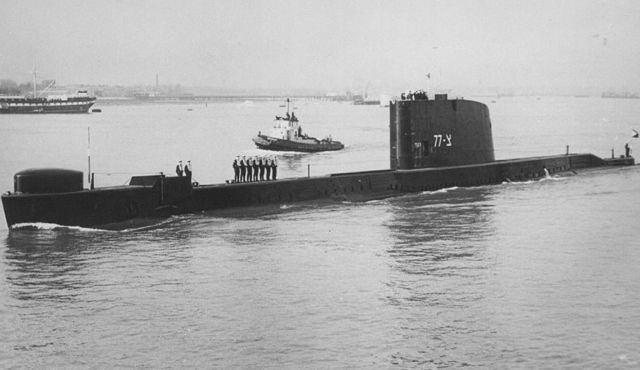
Israel’s archive is allowing the publication of 16 historic documents relating to the submarine’s disappearance and the subsequent search operation, but the answers are not surfacing easily.

The Dakar Submarine 1968

The Dakar Submarine 1968

The State Archives is slated to release a series of secret documents today related to the sinking of the Israel Navy’s Dakar submarine in 1968, which caused the death of 69 Israeli sailors. These documents include an Israel Navy report from 1968 that does not disqualify a “hostile act by the Soviet fleet,” and Foreign Ministry correspondence which notes that Turkey refused to allow Israel to search along its coastline “out of Turkish pride.”

Remnants of the submarine were discovered on the Mediterranean seabed 14 years ago, “but the question as to the circumstances of the sinking remain open to this day,” according to sources at the State Archives.

Now, almost exactly 45 years after the disaster, the archive is allowing the publication of 16 historic documents relating to the submarine’s disappearance and the subsequent search operation. This includes Foreign Ministry cables and the minutes of cabinet meetings beginning on January 26, 1968 − one day after communication was lost with the submarine, which was on a training mission on its way to Haifa.

Even after all these years, there still remain some classified documents that cannot be published in full. These include the classified 87-page report handed over to Dayan by then-navy commander Maj. Gen. Shlomo Harel on March 1, 1968.

That report is on track to be published in its entirety in five years. In the meantime, the State Archives and Israel Defense Forces archives department have cooperated to publish the main findings now.

From the material cleared for publication, it appears that the navy pointed to three possible reasons for the submarine’s sinking. First on the list is “technical fault or human error,” second is “hostile action by the Soviet fleet − a possibility that cannot be fully discarded,” and third is “a collision with another seagoing craft.”

In 45 years, there has been no confirmation that the Soviets were involved in sinking the submarine.

The complete report − of which only a few, secret copies were distributed − is currently stored in the IDF’s archives department. It has not been made available to the public because 50 years have not yet passed since it was drafted.

Other documents released by the State Archives reveal Turkey’s refusal to allow Israel to scour its coastline to search for remnants of the submarine.

On February 2, 1968, Daniel Laor, Israel’s diplomatic representative in Ankara, reported that Israel’s military attache had asked the Turkish chief of staff to allow Israel Navy ships and planes to search along part of Turkey’s southern coastline. The Turks refused, but agreed to conduct their own search operation with Israel’s guidance.

“I expressed disappointment that they raised difficulties,” Laor wrote.

In another cable sent to the Foreign Ministry, Laor offered several explanations for why the Turks refused to allow Israel to search for the submarine. The first was security-related: “It is a sensitive area between Cyprus and Turkey where air, sea and ground forces were gathering prior to an invasion of Cyprus. Turkey is not interested in having foreign ships searching its waters without its supervision,” he wrote.

Cyprus was invaded in 1974, six years later.

Laor noted another possible reason: “Turkish pride, based on the pretense that they could do it better than us.” Eventually, however, Turkey helped facilitate Israel’s extensive search operation. Last week marked the 45th anniversary since then-Defense Minister Moshe Dayan proclaimed that the Dakar and its crew were “missing.” A memorial now stands in the Mount Herzl military cemetery for the Dakar’s 69 crew members who perished.

Source – Haaretz

Suspicious buoy drop highlights Asian submarine tensions

Chinese People’s Liberation Army–Navy (PLA-N) ships earlier this week dropped a number of mysterious buoys around a group of islands in the East China Sea, and although Beijing says they are to monitor ocean conditions, suspicions abound.

The islands are the disputed string called Senkaku by Japan and Diaoyu by China and have for many years been the centre of an increasingly nationalistic tussle between the two powers.

Multiple military planes and ships belligerently traverse the area, inflaming tensions, but submarines have mainly been overlooked.

The buoys may really be for a scientific experiment, as Chinese foreign ministry officials claim, but it is more likely they are part of an expanding system of submarine detectors or sonobuoys China is using to monitor Japanese submarines.

Some were dropped just 300m from Japanese-controlled waters.

While surface tension and conflicts are featured in the news media, beneath the waves submarines are almost forgotten.

Submarines more active

Submarine detection is difficult in the noisy and shallow waters typical of the South China Sea and the East China Sea. Acoustic energy from passive and active sonar technology is more likely to reflect off the seabed than in deeper waters, such as in the Philippine Sea.

Both countries have a number of different classes of submarines but the Chinese diesel-electric vessels are noisier than Japan’s more advanced similarly powered craft.

But the PLA-N’s newest Jin-class nuclear-powered ballistic missile submarines (SSBNs) are a mighty addition to Chinese undersea capabilities. While only two are assumed to be operational, and China is struggling with nuclear power at sea, they add serious firepower to its fleet.

And they may soon be equipped with JL-2 nuclear-tipped ballistic missiles, which, according to initial estimates, can reach the United States, meaning America’s nuclear deterrence strategy would be undermined.

A submarine’s stealth makes it ideally suited for operating in restricted or sensitive waters, making them ideal for the tense waters around the Senkaku/ Diaoyu islands.

The reason for such tension becomes very clear on a map. Geographically, they occupy an extremely strategic position for both Japan and China.

They are a gateway for China into the greater Western Pacific. Controlling them would effectively allow the PLA-N to break out of the claustrophobic South China Sea, a result they desperately desire.

Likewise, keeping them in Tokyo’s hands would help Japan pen China into their territorial waters and put a temporary lid on Beijing’s expansionist dreams.

Beijing’s strategy

China’s development of a world-class submarine fleet is in its infancy, but even now Beijing can quietly project power a significant distance from its shores.

This is why the outcome of the Senkaku/Diaoyu islands dispute is so important for both nations. Controlling them would give Chinese submarines unfettered access to the Western Pacific and increase Beijing’s strategic options in the Eastern Pacific.

It would also open up the rest of the Pacific for exploration by its submarines, possibly sailing with nuclear-tipped ballistic missiles.

Only the US and Russia possess similar capabilities. Adding a third nation to the list will radically alter the strategic nuclear leverage America has enjoyed in the Pacific since the end of the Cold War.

Ultimately, Tokyo will not end its submarine patrols around the disputed islands, despite the Chinese sonobuoy drop. Submarines are an integral part of the monitoring of major sea routes to Japan.

With heightened military movements in the region the chance of an accident increases. And with so much firepower in close proximity should the US become involved – along with widespread and popular nationalism in both Japan and China – the need to tread carefully to avoid escalating hostilities is paramount.

Source – National Business Review

Russia, Vietnam agree on submarine fleet deal

cam_ranh_naval_base_concept__si

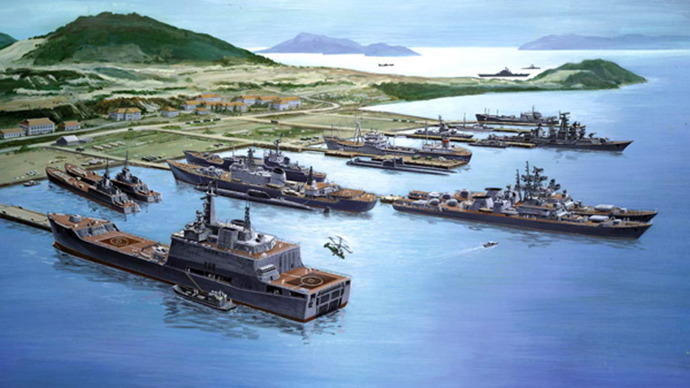
Artist’s concept of ships in port at Cam Ranh Bay, Vietnam.

Vietnam will get its own submarine fleet as soon as this year, said Russia’s defense minister while on a visit to Hanoi.

This year a new page will be opened in the history of the Vietnamese Navy – it will get a fleet of submarines,” Sergey Shoigu told reporters following the meeting with the Vietnamese Defense Minister Phung Quang Thanh.

The Russian minister said that they reached an agreement on synchronization in preparing both the submarines and their crews, and also decided that Russian military schools would train more Vietnamese specialists in the nearest future.

In earlier comments Shoigu called the cooperation with Vietnam one of the priorities of Russia’s foreign policy and promised that Moscow would renew active military cooperation with Hanoi.

In particular, the two sides discussed the possibility for Russian specialists to use the naval base and the military airport in Cam Rahn. All talks were held in secrecy, but Shoigu’s visit to Vietnam started from a trip to Cam Rahn, which was once used by Soviet and then by the Russian Navy, but was abandoned in 2002 due to lack of funds.

Russian experts are divided on the possibility and necessity of putting Russian military bases in Vietnam. Colonel-General Leonid Ivashov, former head of the foreign cooperation department of the Russian Defense Ministry, told the Nezavisimaya Gazeta daily that such a step is simply necessary as it would seriously strengthen Russia’s positions in the South East Asia.

At the same time, the Interfax news agency quoted an unnamed source in the Russian Navy HQ as saying that the return of the Cam Rahn base is not necessary and the issue is not even on the agenda.

News of Russia’s future role in the beefing up of the Vietnamese navy comes on the background of the major international row over the South China Sea and its major oil and gas deposits.

In the latest developments, Vietnam has commenced exploratory drilling on the sea shelf, but China replied with a note demanding it to stop. Soon after that China declared that the oil under the South China Sea was its national asset. Other neighboring countries, such as the Philippines and Malaysia also voiced claims to the resource-rich region.

Source – RT dot Com


India – Defence ministry sits on Navy request for six submarines

The navy is still awaiting defence ministry’s  approval for inviting bids for the new line of six submarines despite  indications that all the stumbling blocks in the way of the crucial project have  been cleared.

Navy chief admiral DK Joshi had even  announced in December last year that the request for proposal (RFP) for the  submarines were on the way “very soon”.

Sources said the ground work has been  completed by the navy, and it has sent the proposal to the defence ministry for  final approval.

The first submarine is expected to be ready in mid-2015 and the last in 2018The first submarine is expected to be ready in mid-2015  and the last in 2018

The project, named 75-India, is crucial to  augment navy’s under water capabilities which has taken a hit because of delays  in finding replacement for the existing fleet of ageing German and Russian  submarines.

It was expected that the RFP would now be  issued only in the next financial year beginning next month.

The navy had shown sense of urgency in  getting necessary approvals as the massive projects needs to get underway  without further delays.

The navy is looking to have Air Independent  Propulsion (AIP) system in the new line of submarines, which will provide the  capability to sustain under water longer decreasing the possibilities of  detection.

The AIP systems have become crucial feature  of conventional diesel electric submarines but at the moment, Indian fleet lacks  the capability.

Even the under construction French Scorpene  submarines would not have this feature.

The modalities for the construction of the  new line were debated upon.

It was felt that two submarines should be  purchased directly from a foreign vendor while the two would be constructed at  Hindustan Shipyard Limited (HSL) in Vishakhapatnam and the remaining at Mazgaon  Dock Limited (MDL) in Mumbai.

It was argued that the HSL had no experience  of building submarines while MDL has the capability because of the ongoing  construction of French Scorpene submarines in the shipyard.

The distribution of work among the shipyards  for the new line has been the biggest point of contention so far.

Navy chief’s announcement about the RFP being  floated very soon had indicated that issue had been sorted out.

Source – Mail online India

Brazil launches nuclear submarine building program

Brazil launches nuclear submarine building program

In an attempt to bolster national defense and spur the domestic arms industry, Brazil launched a program to build a submarine powered by a nuclear reactor developed entirely by Brazil.

Brazil advanced on Friday toward its target of joining the small club of nations that have nuclear-powered submarines with the opening of a naval shipyard installation that will build French-designed submarines.

President Dilma Rousseff inaugurated the factory that will make metal hull structures for four conventional diesel-electric Scorpene attack submarines and eventually a fifth submarine powered by a nuclear reactor developed entirely by Brazil. She said Brazil, one of the BRICS group of leading emerging nations and Latin America’s largest nation, was a peaceful country but a defense industry was needed to deter and prevent violent conflict. “This facility allows our country to affirm itself on the world stage and, above all, develop in an independent sovereign way,” Rousseff said.

The submarines will be made by French shipbuilder DCNS in a joint venture with Brazil’s Odebrecht at the Brazilian Navy base on Sepetiba Bay south of Rio de Janeiro. The 7.8 billion reais ($3.95 billion) program will turn out the first conventional submarine in 2015 and the nuclear-powered submarine will be commissioned in 2023 and enter operation in 2025, the Brazilian Navy said in a statement.

The submarines are a key part of Brazil’s effort to build a modern navy that can defend its oil and trade interests in the South Atlantic, a region long dominated by the British and U.S. navies. It is also a revival of nuclear development by the Brazilian military that was halted in 1990 with the end of the country’s nuclear bomb program. If successful, Brazil will join the United States, Russia, Britain, France and China – the five members of the permanent U.N. Security Council, a club Brazil aspires to join – as a country with a home-grown nuclear submarine capability.

The Indian Navy has a nuclear-powered attack submarine, the INS Chakra, that was leased from Russia, and India is building a nuclear submarine with its own technology that is expected to be in service by 2015.

BEEFING UP DEFENSES

The commander of the Brazilian Navy, Admiral Julio Soares de Moura Neto, said the purpose of building a nuclear-powered submarine was “deterrence” and stressed that the nuclear propulsion system will be built with entirely home-grown technology that was not transferred by France. The Brazilian-French submarine program was agreed to in 2008 by Presidents Luiz Inacio Lula da Silva and Nicolas Sarkozy and is Brazil’s most costly military project. “Brazil needs to modernize its national defenses because we have not invested in this for years,” said congressman Leonardo Gadelha, of the Social Christian Party, a member of the lower chamber’s International Relations and Defense Committee.

The Brazilian Air Force is seeking to renew its fleet with the purchase of 36 fighter jets, a coveted defense contract worth $4 billion initially. Boeing Co., France’s Dassault Aviation SA and Sweden’s Saab are in the running for the deal. Brazil is also boosting its air defenses, with an eye to dispelling the risk of terrorist attacks when hundreds of thousands of foreign tourists visit the country for the 2014 soccer World Cup and the 2016 Summer Olympic Games.

Brasilia recently announced plans to buy anti-aircraft batteries and mid-range surface-to-air missiles from Russia, and drones from Israel that will be used to patrol its long frontiers. It eventually plans to build the weapons locally. The Brazilian government has insisted on a maximum transfer of technology in such military deals to build up its emerging private defense industry that has become a major arms exporter. “Brazil has fully understood that national defense cannot be delegated to others and a country must have an autonomous capacity” that does not depend on foreign technology, Defense Minister Celso Amorim said at the naval base event. On Wednesday, the defense unit of Brazilian planemaker Embraer SA won its first-ever U.S. military contract for the sale of 20 Super Tucano light attack planes for use in counterinsurgency in Afghanistan

Source – World bulletin

Conventional (AIP) Submarine – a Weapon of Choice for the 21st Century, Says Frost & Sullivan

Example - Russian AMUR-1650 CONVENTIONAL SUBMARINE

Example – Russian AMUR-1650 CONVENTIONAL SUBMARINE

Demand for conventional submarines, mainly with AIP on board, set to grow despite defence budget cuts

The modern non-nuclear, conventional diesel-electric submarine (SSK) with air-independent propulsion systems (AIP) is a complex, multi-role and extremely powerful weapon system. The submarine is able to deploy a wide range of weapons and conducting various missions ranging from anti-submarine, anti-surface vessels warfare to intelligence, surveillance and reconnaissance.

According to Frost & Sullivan, despite the implementation of austerity measures and defence budget reductions in many countries, the demand for conventional submarines, mainly with AIP on board, will grow at a compound annual growth rate (CAGR) of 1.8 per cent globally during 2013–2022 and present revenue opportunities of up to USD 34.80 billion.

“The naval operations environment has changed significantly; operations at sea have moved from the ‘blue water’ open ocean to the ‘brown water’ shallow costal environment,” noted Frost & Sullivan Aerospace, Defence & Security Industry Analyst, Dominik Kimla. “The importance of smaller and quieter conventional submarines, rather than larger, nuclear-powered, has increased significantly.”

However, the submerge endurance of AIP SSK cannot as yet be compared with that of nuclear-powered attack submarines (SSN). Nevertheless, AIP technology is evolving rapidly with more reliable and powerful AIP solutions expected within a decade. The AIP system is seen as a must-have capability for newly procured SSKs. Moreover, the through-life cost of SSK AIP, in comparison to SSN, is three to four times lower, not to mention the high cost related to the deactivation of SSN.

Asia-Pacific (APAC) and Europe appear to be the two most attractive markets at present. Frost & Sullivan forecasts that the SSK market in APAC will grow at a CAGR of 2.1 per cent and account for 47.2 per cent of the global demand for conventional submarines (2013-2022). “APAC countries are in the process of expanding their underwater capabilities with stealthy SSK,” added Mr. Kimla. “All major Navies in the region are implementing submarine programmes.”

Europe, with a CAGR of 1.5 per cent and a 22.4 per cent global market share, will retain its status as the second largest SSK market over the forecast period. The most prominent ongoing SSK projects are underway in Germany and Italy (type-212), Greece and Turkey (type-214) and Spain (S-80). Additionally, Sweden has been developing its new submarine – A26 project, Norway is looking to replace its Ula class SSK while Poland wants to enter two modern AIP submarines into service by 2022.

“Navies are increasingly looking at modern SSK due to its multi-role capacities and semi-strategic potential. Consequently, modern conventional submarines present significant market opportunities for the submarine sector to sell new boats as well as to retrofit standard SSK with AIP plug in section,” summarised Mr. Kimla. “The Pacific region has experienced the most heavy sea-lane traffic in the world, which needs to be constantly secured. It therefore offers considerable business growth prospects for submarine solutions providers.”

If you would like to learn more about the modern submarine market and/or obtain a Market Insight on the conventional (AIP) submarine market, please contact Joanna Lewandowska, Corporate Communications, at joanna.lewandowska@frost.com. Please include your full contact details in the query. The Market Insight is also available on Slide Share.

About Frost & Sullivan

Frost & Sullivan, the Growth Partnership Company, works in collaboration with clients to leverage visionary innovation that addresses the global challenges and related growth opportunities that will make or break today’s market participants.

Source – PR Newswire

Bangladesh Navy to get 2 submarines


Prime Minister Sheikh Hasina yesterday said her government had moved to purchase two submarines and a coast guard cutter for Bangladesh Navy to modernise and strengthen the force.

“Activities are going on to purchase two submarines from a friendly country,” she told parliament while replying to a lawmaker’s scripted query on her government’s efforts to modernise the navy, army and air force.

Hasina, however, did not mention the name of the country friendly to Bangladesh and the timeframe for completing the purchase.

The coast guard cutter will be purchased from the USA, she said.

According to a report prepared by the navy in early 2009, the force has planned to introduce an aviation wing and a submarine to its fleet to obtain capability of a three-dimensional force.

The force has already taken steps to build infrastructure and train up its personnel, said the report sent to the armed forces division, a wing under the prime minister’s office.

In her scripted answer, the premier said her government has already purchased missile, torpedo for destroying ship and submarine, depth charge, rocket launcher, canon, radar and other weapons for the navy.

Earlier on June 13 last year, Planning Minister AK Khandker, who is in charge of the defence ministry in the parliamentary affairs, told parliament that the government has moved to purchase two off-the-shelf [readymade] frigates, two large patrol crafts, two maritime patrol aircrafts and five patrol crafts for the navy.

In scripted answer to the query, the premier also described her government’s various measures to modernise and strengthen the army and air force.

She said two new army commands and an infantry division, two air defence brigades, more than one armoured, artillery and engineering battalions and other necessary supportive units will be added to the army to strengthen the force as part of implementation of the forces goal-2030.

The forces goal will be implemented in four phases in light of the defence policy formulated by the then Bangabandhu-led government in 1974, Hasina told the House.

Besides, she said, the government has moved to purchase fourth generation MBT-2000 tanks, multi-launcher rocket system, weapon locating radar, automatic grenade launcher, anti-tank weapon, non-guided anti-tank weapon, anti-tank guided missiles etc for the army.

“The activities will begin this financial year to buy multiple rocket launch system, weapon locating radar, ground surveillance radar and aircrafts carrying soldiers,” said Hasina, who also holds the defence portfolio.

She also mentioned that a process was underway to purchase modern euro-copter, light fixed-wing aircraft and armoured and anti-air weapons for the army.

“As part of expansion of the army and its modernisation, efforts are under way to establish an air defence regiment,” she added.

To modernise the air force under the forces goal-2030, she said her government has moved to buy air defence radar, fighter planes, air-to-air missiles, etc.

Hasina also informed the House about some other defence purchases already done for the armed forces.

Source – The Daily Star