Australia – Nuclear not an option for next generation of submarines

Current – The Australian Collins-class submarine, HMAS Rankin (SSK 78), enters Pearl Harbor for a port visit after completing exercises in the Pacific region

By Paul Dibb

LATER this year, the government will make a decision to narrow the choice for Australia’s future submarines. Contrary to opinions expressed in The Weekend Australian (“Past sub mistakes make a case for going nuclear”, January 5-6) the preferred option will certainly not be a nuclear submarine.

And – contrary to recent views in other media – whichever submarines we choose, they will not be built overseas.

So why not get American nuclear submarines? As the Minister for Defence Materiel, Jason Clare, has noted, the US has never exported or leased a naval nuclear reactor. The US will not simply hand over sensitive nuclear military knowledge, even to its close ally. The US ambassador has observed we don’t have a nuclear energy program and that unless we get that kind of infrastructure, “it’s very, very difficult to maintain any sort of other nuclear industries”. If you don’t have a nuclear industry, you don’t know how to operate nuclear submarines safely.

In the event of a safety problem with the nuclear reactor, who would fix it? Britain had exactly such a problem 12 years ago with one of its nuclear attack submarines, which had to spend 12 months in Gibraltar with a potentially serious leaking weld in the primary reactor circuit that involved partially draining the re-actor coolant. How would we cope with that sort of event in Fremantle if we didn’t have properly trained and experienced nuclear engineers?

The fact that we have no experience with nuclear propulsion means we would be totally dependent on the US for the submarines’ regular and safe maintenance. This could be a big problem if we ever wanted to use these submarines in a regional conflict where Australian and US interests were not aligned.

My understanding is that at the highest levels, the US has indicated very firmly to us that it prefersAustralia to have conventional submarines that can go places and do things that large nuclear submarines cannot do so easily. That was certainly my experience with Australian covert submarine operations in the Cold War.

Whichever submarine we choose, it will have a US combat system, which will give us a crucial operational advantage over potential regional adversaries. We are the only other country in the world to have the US AN/BYG-1 combat system and advanced US weapons such as the ADCAP Mark 48 torpedo on our Collins-class submarines. Washington will not allow European submarine builders to integrate such a highly secret capability in their shipbuilding yards. It would have to be done in Australia.

So what options does that leave us with? They are as follows:

We could simply buy a European military off-the-shelf solution, unmodified except for Australian regulatory and environmental requirements. That would be the cheapest solution. But if it was built in Europe, it would come with a European combat system that would give us no operational advantage over similar origin submarines that might be exported into our region.

A more attractive option would be to choose a significantly modified European vessel that would accommodate our requirement for greater range and endurance, given our demanding strategic geography. It is conceivable that were such a European submarine to be built in Australia, the US would agree to us integrating their combat system. That is clearly one option for consideration.

The third option is for an evolved Collins-class once the government is satisfied that the present operational problems of these submarines have been resolved.

The chief executive of Defence acquisition, Warren King, is of the view that important lessons have been learnt from building the Collins. The key lesson is that we can construct world-class submarines in Australia, but next time we will need to choose a proven combat system and propulsion.

The fourth option, which I consider to be highly unlikely, is to have a brand-new, large conventional submarine designed especially for us. That would be both the highest risk and cost and should not be considered.

Whichever submarine we choose, I do not believe we should calculate the number of boats we require based on highly unlikely scenarios of war with China. That was the fatal flaw in the 2009 Defence white paper. We require submarines optimised for our own strategic requirements, which means an operational area extending from the eastern Indian Ocean to the South China Sea and defending our vast maritime approaches.

The bottom line is that we need a submarine that is capable of supporting our sovereign requirement for independent submarine operations. The sort of money involved ranges anywhere from $10 billion to $30bn. That may suggest we end up with a preferred option and another option held in reserve as more reliable cost, schedule and technological risk data are developed.

Paul Dibb is emeritus professor of strategic studies at the Australian National University. He is a former deputy secretary of Defence and director of the Defence Intelligence Organisation. He is an adviser to the SA government on defence policy issues.

Source – The Australian

US Navy’s next-gen stealth sub could run silently for 50 years

The

In this file photo, the Ohio-class ballistic missile submarine USS Maryland transits the Saint Marys River. Details are emerging about the ship’s replacement, scheduled for deployment in 2031.

The Navy’s next-generation nuclear submarine may have an electric drive and new reactor plant that allow it to patrol the seas with near-silent stealth for half a century, according to emerging details about the secretive program.

The electric drive would replace a direct mechanical connection between the nuclear-powered steam turbines and the submarine’s propellers. In the new configuration, the nuclear power source will run electric motors that propel the ship.

“Electric drives could prove to be much quieter than the current direct-drive method,” the U.S. Naval Institute explained in a brief detailing the new design. The institute is an independent, non-profit forum on national defense.

The military tried electric drives in the 1960s and ’70s, but found them to be too slow and maintenance needy. Technological advancements over the past few decades could provide the hassle-free speed required.

Since Navy submarines rely on stealth to hide from enemies, a nearly silent engine will make them harder to find. The Ohio-class replacement nuclear-powered ballistic missile submarine will also be covered in echo-free tiles that reduce detection from active sonars.

In addition, the program is aiming for a newly designed reactor plant “that will last the life of the boat,” Sean Stackley, Assistant Secretary of the Navy for Research, Development, and Acquisition, said in an interview with the U.S. Naval Institute.

“That’s important because what it does is effectively eliminate the midlife refueling associated with the current Ohio class.”

That is, current nuclear subs are hauled out for mid-life overhaul that can keep a sub out of the water for three years. To compensate for the downtime, the Navy has 14 Ohio-class ships.

The new design will still require a mid-life checkup and update, but should be out of the water for a shorter period. This would mean that the Navy only needs to have 12 ships. “That’s a significant cost improvement over the life of the program at the expense of the development for that new reactor-plant design,” Stackley said.

The Navy is under budget pressure to keep the cost of the boats to $4.9 billion each; that’s down from the $6 or $7 billion price tag proposed in 2009. Current plans call for construction of the next-generation submarine to begin in 2021, with first deployment in 2031.

Source – NBC News

USS Hartford & USS San Juan Sailors receive dolphins

John Carcioppolo, president, Submarine Veterans Groton Chapter laughs with Sailors from USS Hartford (SSN 768) during a recognition ceremony. Carcioppolo congratulated thirty officers and enlisted Sailors from Los Angeles class attack submarines USS Hartford and USS San Juan (SSN 751), who were recognized for earning their gold and silver “dolphins” onboard their respective submarines at the Submarine Veteran’s Clubhouse in Groton, Jan. 7.


Thirty officers and enlisted Sailors from the Los Angeles class attack submarines USS Hartford (SSN 768) and USS San Juan (SSN 751) were recognized under the SUBVETS Submarine Qualification Recognition Program, at the Submarine Veterans Clubhouse in Groton, Jan. 7.

The Sailors, who previously received their coveted gold and silver “dolphins” onboard their respective submarines, were recognized by former submariners, many of them Holland Club veterans in attendance, who warmly welcomed the newest submarine warfare qualifiers into the special community.

“We had never recognized Sailors from two boats at one meeting,” said John Carcioppolo, president, Submarine Veterans Groton chapter.

Commander Steve Wilkinson, commanding officer, USS Hartford attended the rite of passage ceremony and reflected on the caliber of the Sailors serving in the submarine force today.

“As you can see, your legacy is in good hands. These men represent all the best of our nation,” said Wilkinson.

Groton Base Member Phil Marshall from Narragansett, R.I., who served on 13 submarines, called out his submarine qualification, which was earned in 1955 aboard USS Sterlet (SS 392), reflected on how great it was to see the newly qualified Sailors referring to them as “our future.”

Master Chief Machinist’s Mate (SS) Eric Mathley, chief of the boat, USS Hartford also reflected on the legacy of the submarine force.

“It’s great that these young Sailors, who worked so hard to earn their dolphins, have an opportunity to see the long legacy of the submarine service,” said Mathley. “I think it means more to them, having seen that. They can really appreciate the lineage of their service.”

Master Chief Electronics Technician (SS) Gaylord Humphries, chief of the boat, USS San Juan, also sounded off his qualification date, providing his solid support to the next generation of submariners.

“This is the new generation of submariners and the submarine force is in good hands,” said Humphries.

Source – Dolphin News

Columbia uses submarines to smuggle drugs

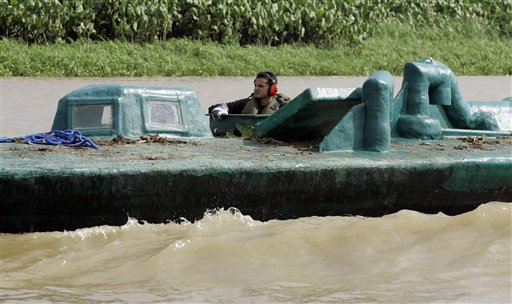
A Navy sailor drives a seized submarine, used by drug-traffickers to smuggle drugs, while displaying it to the media in Atrato River, coast of Turbo, Colombia

A Navy sailor drives a seized submarine, used by drug-traffickers to smuggle drugs, while displaying it to the media in Atrato River, coast of Turbo, Colombia

On January 8th the Colombian Navy captured its first drug smuggling submersible vessel of the year. This one was 18 meters (56 feet) long and capable of carrying over four tons of cocaine. It had been abandoned at sea and was towed back by a Colombian Navy ship to try and find out what happened. Last year the Colombians captured eight of these. Naval forces from the United States and other nations along the Pacific coast and the Caribbean caught even more. But the detection system, run mainly by the United States, locates a lot more of these cocaine subs than there are warships available to run them all down.

For two decades the United States has used a special interagency (Departments of Homeland Security, Justice, State, and Defense) and international (over a dozen nations participate) intelligence sharing/analysis operation (Joint Interagency Task Force-South) to track drug smuggling from South America. For the last decade the task force has become quite expert at tracking the submarines and submersibles built in South America for smuggling cocaine to North America and, recently, all the way to Europe. Some of these long range subs are apparently going all the way from Ecuador to the United States, bypassing the Mexican cartels (who have been fighting each other, in a big way, for the last five years).

A makeshift submarine is lifted out of the water at Bahía Malaga on the Pacific coast,

Particularly worrisome are the larger boats headed for Europe. Little is known about these, expect that they exist. These subs would be more at risk of being lost because of accident or bad weather than being spotted. European navies (especially Portugal and Spain) and coast guards have been alerted and are looking.

Despite losing over a hundred of these vessels to the U.S. and South American naval forces (and dozens more to accidents and bad weather) the drug gangs have apparently concluded that the subs are the cheapest and most reliable way to ship the drugs. It’s currently estimated that over 80 percent of the cocaine smuggled into the United States leaves South America via these submarines or semi-submersible boats.

Most of these craft are still “semi-submersible” type vessels. These are 10-20 meter (31-62 foot) fiberglass boats, powered by a diesel engine, with a very low freeboard and a small “conning tower” providing the crew (of 4-5), and engine, with fresh air and permitting the crew to navigate. A boat of this type was, since they first appeared in the early 1990s, thought to be the only practical kind of submarine for drug smuggling. But in the last decade the drug gangs have developed real submarines, capable of carrying 5-10 tons of cocaine that cost a lot more and don’t require a highly trained crew. These subs borrow a lot of technology and ideas from the growing number of recreational submarines being built.

The Colombian security forces and other Latin American navies have been responsible for most of these vessel captures. Usually these boats are sunk by their crews when spotted but the few that were captured intact revealed features like an extensive collection of communications gear, indicating an effort to avoid capture by monitoring many police and military frequencies. The Colombians have captured several of these vessels before they could be launched. In the last few years the Colombians have been collecting a lot of information on those who actually build these subs for the drug gangs and FARC (leftist rebels that provide security and often transportation for moving cocaine). That includes finding out where the construction takes place.

Colombian police have arrested dozens of members of gangs that specialized in building submarines and semisubmersible boats. As police suspected, some of those arrested were retired or on active duty with the Colombian Navy (which operates two 1970s era German built Type 209 submarines). These arrests were part of an intense effort to find the people responsible for building subs for cocaine gangs. Find the builders and you stop the building efforts. In this case it has only delayed some construction and made it more expensive to build these boats.

Ecuadoran police found the first real diesel-electric cocaine carrying submarine three years ago. It was nearly completed and ready to go into a nearby river, near the Colombian border, and move out into the Pacific Ocean. The 23.5 meter (73 foot) long, three meter (nine feet) in diameter boat was capable of submerging. The locally built boat had a periscope, conning tower, and was air conditioned. It had commercial fish sonar mounted up front so that it could navigate safely while underwater. There was a toilet on board but no galley (kitchen) or bunks. Submarine experts believed that a five man crew could work shifts to take care of navigation and steering the boat. The boat could submerge to about 16 meters (50 feet). At that depth the batteries and oxygen on board allowed the sub to travel up 38 kilometers in one hour, or at a speed of 9 kilometers an hour for 5-6 hours. This would be sufficient to escape any coastal patrol boats that spotted the sub while it moved along on the surface (its normal travel mode). The boat could also submerge to avoid very bad weather. The sub carried sufficient diesel fuel to make a trip from Ecuador to Mexico. There was a cargo space that could hold up to seven tons of cocaine.

The sub was captured where it was being assembled and a nearby camp for the builders appeared to house about fifty people. A lot of evidence was collected, and apparently the U.S. DEA (Drug Enforcement Agency) used that to develop clues about who was involved. It was the DEA that put together the pieces that led to identifying key people.

The Ecuadoran boat was the first such sub to be completed but not the first to be attempted. Back in the 1990s Russian naval architects and engineers were discovered among those designing and building a similar, but larger, boat. However, that effort did not last, as the Russian designs were too complex and expensive. It was found easier to build semi-submersible craft. But more and more of these new type subs are being found.

Source – Strategy Page

CSC set to supply gas cylinders for Astute nuclear submarines

Chesterfield Special Cylinders (CSC) has won a £2m contract by BAE Systems  Submarine Solutions to provide high-pressure gas cylinders for the Royal Navy’s  sixth Astute-class nuclear submarine — the HMS Agamemnon.

The cylinders are critical to a number of operations within the Astute  vessels, including breathing gas storage, hydraulic and valve actuation back-up,  ballast operation and missile launch systems.

The order takes the value of CSC’s contracts for the Astute-class submarines  to more than £12m, having already supplied gas and oxygen systems for the Astute and Ambush submarines, which are already in the water,  and the next three (Artful, Audacious and Anson)  being built by BAE in Barrow-In-Furness. A seventh and final Astute, Ajax, is due to enter service in 2024.

Source – TheEngineer

Chinese Submarine Training

Submarine flotilla in training
Recently, the officers and men of a submarine flotilla under the North China Sea Fleet of the Navy of the Chinese People's Liberation Army (PLA) conducted routine training. The photo features the scene of the training. (chinamil.com.cn/Li Zhikai)
Recently, the officers and men of a submarine flotilla under the North China Sea Fleet of the Navy of the Chinese People’s Liberation Army (PLA) conducted routine training. The photo features the scene of the training. (chinamil.com.cn/Li Zhikai)
.
Recently, the officers and men of a submarine flotilla under the North China Sea Fleet of the Navy of the Chinese People's Liberation Army (PLA) conducted routine training. The photo features the scene of the training. (chinamil.com.cn/Li Zhikai)
Recently, the officers and men of a submarine flotilla under the North China Sea Fleet of the Navy of the Chinese People’s Liberation Army (PLA) conducted routine training. The photo features the scene of the training. (chinamil.com.cn/Li Zhikai)
.
Recently, the officers and men of a submarine flotilla under the North China Sea Fleet of the Navy of the Chinese People's Liberation Army (PLA) conducted routine training. The photo features the scene of the training. (chinamil.com.cn/Li Zhikai)
Recently, the officers and men of a submarine flotilla under the North China Sea Fleet of the Navy of the Chinese People’s Liberation Army (PLA) conducted routine training. The photo features the scene of the training. (chinamil.com.cn/Li Zhikai)
.
Recently, the officers and men of a submarine flotilla under the North China Sea Fleet of the Navy of the Chinese People's Liberation Army (PLA) conducted routine training. The photo features the scene of the training. (chinamil.com.cn/Li Zhikai)
Recently, the officers and men of a submarine flotilla under the North China Sea Fleet of the Navy of the Chinese People’s Liberation Army (PLA) conducted routine training. The photo features the scene of the training. (chinamil.com.cn/Li Zhikai)
.
Recently, the officers and men of a submarine flotilla under the North China Sea Fleet of the Navy of the Chinese People's Liberation Army (PLA) conducted routine training. The photo features the scene of the training. (chinamil.com.cn/Li Zhikai)
Recently, the officers and men of a submarine flotilla under the North China Sea Fleet of the Navy of the Chinese People’s Liberation Army (PLA) conducted routine training. The photo features the scene of the training. (chinamil.com.cn/Li Zhikai)
.
Recently, the officers and men of a submarine flotilla under the North China Sea Fleet of the Navy of the Chinese People's Liberation Army (PLA) conducted routine training. The photo features the scene of the training. (chinamil.com.cn/Li Zhikai)
Recently, the officers and men of a submarine flotilla under the North China Sea Fleet of the Navy of the Chinese People’s Liberation Army (PLA) conducted routine training. The photo features the scene of the training. (chinamil.com.cn/Li Zhikai)
.
Recently, the officers and men of a submarine flotilla under the North China Sea Fleet of the Navy of the Chinese People's Liberation Army (PLA) conducted routine training. The photo features the scene of the training. (chinamil.com.cn/Li Zhikai)
Recently, the officers and men of a submarine flotilla under the North China Sea Fleet of the Navy of the Chinese People’s Liberation Army (PLA) conducted routine training. The photo features the scene of the training. (chinamil.com.cn/Li Zhikai)
.
Recently, the officers and men of a submarine flotilla under the North China Sea Fleet of the Navy of the Chinese People's Liberation Army (PLA) conducted routine training. The photo features the scene of the training. (chinamil.com.cn/Li Zhikai)
Recently, the officers and men of a submarine flotilla under the North China Sea Fleet of the Navy of the Chinese People’s Liberation Army (PLA) conducted routine training. The photo features the scene of the training. (chinamil.com.cn/Li Zhikai)
Source – Global times

Electric Boat Puts Forward Strong Outlook With Plans To Continue Hiring

GROTON — Electric Boat, southeastern Connecticut’s giant naval business that employs thousands in the state, ended the year with an expanded payroll and revenues holding firm at around $4 billion.

Kevin Poitras, the president of Electric Boat, a division of General Dynamics, spoke confidently about the future of sub-making, even as one round of defense cuts have already hit the Pentagon earlier in 2012 and another waits on the horizon.

“There is much uncertainty in federal spending,” Poitras told a conference room full of company executives and legislators at the Mystic Marriot on Thursday. “Many people believe that the overall defense budget will trend down in the next several years.”

That being said, he expects budgets for submarine programs to increase inasmuch as they have been identified as vital to the future national defense strategy. And in short-term, Electric Boat’s contracts are coming through. In December, Congress approved spending to continue the usual work on two Virginia-class submarines as well as design work on the Ohio-class replacement submarine.

If the across-the-board defense cuts that Congress delayed until March go into effect, it wouldn’t necessarily mean layoffs at Electric Boat, Poitras said. The company could possibly manage cost-savings by simply not filling positions emptied through attrition.

The company ended the year with 11,926 employees. Poitras, who took over Electric Boat in May, said that this was the first time in four years that the company has hired in all its divisions, with expectations to hire 300 more tradespeople in Groton to supplement repair work, like the fire-damaged USS Miami. The company also plans to hire about 500 to balance employees lost through attrition.

New hires more than compensated for the company’s 2012 layoffs, pushing Electric Boat’s Connecticut employment at the end of the year up by about 500 employees at 8,900 — 6,100 in Groton and 2,800 in New London.

“To fully appreciate the impact submarine production has and will continue to have in our region, you have to look not just at 2012’s excellent workforce numbers, but at the future of submarines in our national security strategy,” Congressman Joe Courtney, who represents eastern Connecticut and serves on the House Armed Services Committee, said in a written statement.

For 2012, about 61 percent of Electric Boat’s revenues came from production of Virginia-class submarines. Design made up about 28 percent of the company’s revenues, which included preliminary work on an Ohio-class replacement. Maintenance and modernization programs made up 8 percent of revenues.

In December, Electric Boat responded to a request for proposals for the fifth block of Virginia-class submarines, which would be built 2014-2023 and generate about $18 billion in future work, Poitras said. These “stretched” versions of the original Virginia-class include an extra 90-foot section for precision-strike, Tomahawk missile capabilities.

The company also landed a $390 million research and development contract for the Ohio-class replacement submarine, a program that aims to build 12 submarines that will be in service until 2080 and carry about 70 percent of the country’s deployed nuclear weapons.

To state and federal legislators, the message was not unlike the type heard throughout the wider business community: take care of deficit issues, continue to stimulate business development, build on education reform and support jobs.

Hank Teskey, Electric Boat’s director of taxes, said that cuts to jobs programs and incentives would have a negative impact on the state and that the company’s future workforce depends on a strong science and math education.

Source – Courant.com

US Sea Cadets tour submarine at Point Loma

Sea Cadets tour submarine at Point LomaU.S. Naval Sea Cadet Corps participants stand in formation prior to boarding  the Los Angeles-class attack submarine USS Jefferson City (SSN 759) for a tour.  Since 1958, NSCC has been committed to providing American youth with a drug and  alcohol-free environment to foster their leadership abilities, broaden their  horizons through hands-on training, and guide them to becoming mature young  adults.

SAN DIEGO – Participants from the U.S. Naval Sea Cadet Corps toured the Los  Angeles-class attack submarine USS Jefferson City (SSN 759) aboard Naval Base  Point Loma to see what life is like aboard a U.S. Navy submarine.

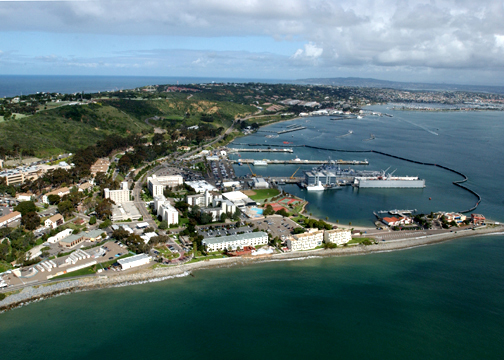
Point Loma - Submarine base (San Diego, California)

Point Loma – Submarine base (San Diego, California)

Click Point Loma for more information

Submariner tour guides taught the students how the ship moves through the water  and how it stays balanced, heated, and defensive, along with how the crew  lives.

“I enjoy telling people what we do,” said Logistics Specialist 2nd  Class Jared Sainz, one of Jefferson City’s appointed tour guides. “Most people  don’t understand what happens in a submarine or how a submarine works on a basic  level.”

Twenty-three children, ranging in age from 11 to 17, toured the  vessel along with their chaperones in an effort to better understand what a  career as a submariner would be like.

“It’s a good eye-opener for these  guys to pinpoint what they want to do when they graduate from high school,” said  Ginny Fessler, a chaperone and parent volunteer. “Some of them said, ‘Yeah, I  could do this,’ and others were like, ‘No, I think I’m too tall!’”

The  tour allowed the visitors to see virtually all of the unclassified spaces on the  nuclear-powered submarine including the control center, sleeping quarters,  galley, torpedo space and wardroom.

Hannah Lockmann, a 14-year-old  student at Hill Creek Elementary School, said she enjoyed the firsthand  experience. “Today was a lot of fun and I learned a lot.” Lockmann said. She  added that her career ambition is to become a Navy Corpsman, but not on a sub. “It’s just too small!” she said.

Sainz, the tour guide, said there was  real value for the touring children in familiarizing themselves with actual Navy  equipment and culture.

“I wish these opportunities existed when I was  younger,” Sainz said. “They get to see what’s going on in the Navy and they’ll  understand a little bit better what they’re getting into if they do decide to  join.”

Since 1958, the Naval Sea Cadet Corps has been committed to  providing American youth with a drug and alcohol-free environment to foster  their leadership abilities, broaden their horizons through hands-on training,  and guide them to becoming mature young adults.

For more information on  the U.S. Naval Sea Cadet Corps visit http://www.seacadets.org

For more  news from Commander, Submarine Force, U.S. Pacific Fleet, visit  www.navy.mil/local/subpac

Source – Dvids

Verdict – Royal Navy officer ‘unlawfully killed’ in submarine shooting

Lt Cdr Ian Molyneux, who was shot dead

Father-of-four Lt Cdr Ian Molyneux was shot in the head at close range

A navy officer was unlawfully killed by a junior rating on board a nuclear submarine, a coroner has said.

Able Seaman Ryan Donovan, 23, shot Lt Cdr Ian Molyneux, 36, of Wigan, Greater Manchester, at close range on HMS Astute in Southampton.

He had been on a two-day drinking binge before the attack in April 2011.

Recording a narrative verdict, Coroner Keith Wiseman said he would recommend that random breath testing for Royal Navy personnel be implemented.

Donovan was jailed for life in September 2011 with a minimum term of 25 years after pleading guilty at Winchester Crown Court to the murder of the father-of-four.

The 23-year-old, of Hillside Road, also admitted the attempted murders of Lt Cdr Hodge, 45, Petty Officer Christopher Brown, 36, and Chief Petty Officer David McCoy, 37.

Vodka and cocktails

Mr Wiseman said a culture of drinking to excess had to stop, and a system of alcohol testing prior to duty should be introduced.

// Captain Phil Buckley said the Royal Navy had “learnt lessons”

The inquest at Southampton Civic Centre heard Donovan had drunk more than 20 pints of cider and lager over two days prior to the attack.

He had also drunk vodka and cocktails before being put on guard duty with a gun while more than three times above the alcohol limit for driving.

Tests revealed Donovan’s blood would have contained 139mg of alcohol per 100ml – 76% above the drink-drive limit.

Police investigating the murder were so concerned about binge drinking by the crew while ashore, that the senior officer wrote to Hampshire Constabulary Chief Constable Alex Marshall to highlight the issue and it was passed to military authorities.

The Royal Navy has since tightened its rules on alcohol consumption before duty.

At the time sailors were allowed 10 units in 24-hours with no alcohol in the 10 hours before duty. This has now been changed to five units.

Source – BBC News

Submariner has his long service in the Royal Navy recognised

A DEVONPORT submariner has been given an award in recognition of his long service in the Royal Navy.

Warrant Officer Jeff Griffiths has been handed the award for dedication, professionalism and leadership after concluding his 33-year career as a submariner.

 ​Warrant Officer Jeff Griffiths receives his award
Warrant Officer Jeff Griffiths receives his award

Griffiths, who left the Royal Navy in 2012, had been a key member of the team working on the UK’s strategic missile deterrent submarines. He had also been a vital part of the successful overhaul of HMS vigilant.

A veteran of the Falklands Conflict, Jeff joined the Royal Navy in 1979, working his way up to the highest non-commissioned rank.

Jeff said, “I have thoroughly enjoyed serving in the Royal Navy submarine service and I’m pleased that I will be able to continue supporting the submarine fraternity in my new civilian post.”

Captain Paul Methven, Superintendent Submarines for Royal Navy at Devonport, presented the certificate at a ceremony on Tuesday.

He praised Jeff’s outstanding service. “Jeff has made an immense contribution over many years.

“His knowledge of the systems and how to get things done is second to none and we shall miss him.”

But I’m delighted that he is remaining part of the submarine enterprise and that he’ll be able to use and pass on his experience in others in his new job”.

Source – Plymouth Herald