Tag Archives: Submarine

Reactor of India’s first nuclear submarine INS Arihant goes ‘critical’

New Delhi: In a major step towards completing its nuclear triad, India activated the atomic reactor on board the indigenous nuclear submarine INS Arihant, paving the way for its operational deployment by the Navy.

“The nuclear reactor on board the INS Arihant has been made critical (activated) last night,” sources said on the development of the nuclear submarine.

Nuclear triad is the ability to fire nuclear-tipped missiles from land, air and sea.

After the nuclear reactor is activated, the agencies concerned can work towards readying the warship for operational deployments soon.

INS Arihant has been undergoing trials at Navy’s key submarine base in Vishakhapatnam and would be launched for sea trials soon since the nuclear reactor has gone critical.

The DRDO has also readied a medium-range nuclear missile BO-5 for being deployed on the Arihant and its last developmental trial was held on January 27 off the coast of Vishakhapatnam.

The nuclear submarine will help India achieve the capability of going into high seas without the need to surface the vessel for long durations.

Conventional diesel-electric submarines have to come up on surface at regular intervals for charging the cells of the vessel.

India is the only nation in the Indian Ocean region to have a nuclear submarine and the sixth in the world to have the capability to design and construct a nuclear submarine

The orange beacon atop the conning tower came to life on July 26, 2009, as Prime Minister Manmohan Singh’s wife Gursharan Kaur had pressed the button to symbolise the launching of the vessel into water.

In the middle of the body – comprising an outer hull through which the water goes in and an inner pressurised hull – on the starboard side are two rectangular vents, meant to take in water when the vessel dives into the sea. It is like a “cocoon within a cocoon”, an official had explained.

INS Arihant is longer than any of the submarine in the Indian Navy’s fleet so far. A nuclear submarine is powered by a nuclear reactor, which generates tremendous heat driving a steam turbine. It has unlimited underwater endurance and speed twice that of its conventional counterparts.

The submarine can carry 12 nuclear missiles K-15. Keeping in line with its “no first use policy”, the submarine will help India in developing a “credible second strike capability” in case of nuclear attack, said officials.

The Indian Navy has been operating conventional diesel-electric submarines, which have to surface to charge their batteries.

Source – Zee News

Diving deep to find some submarine film treasures

Actor Sean Connery played a Russian submarine commander in The Hunt For Red October.

Actor Sean Connery played a Russian submarine commander in The Hunt For Red October.

Submarine films.

Starting with a movie about early attempts to change how war at sea was conducted, and that was by designing the first submarine, the ‘Hunley’. The story concerns events from the American Civil War, and are recounted in the made-for-television movie The Hunley of 1999, starring Armand Assante and Donald Sutherland. The submarine killed 13 of its own Confederate soldiers during trials (including Horace Hunley, the sub designer) and eight more in combat, but it succeeded in sinking a Union warship, the first victim of underwater combat! Worth viewing.

A fine movie about submarines is 1981’s Das Boot starring Jurgen Prochnow in the role that made him a superstar. The movie details the combat patrols of the World War II German U-boat U-96 with some successes and a lot of danger. The movie was based on a 1973 German novel by Lothar-Gunther Buchheim. The film is an example of German film-making having a huge international success. Very definitely worth watching!

The Enemy Below is a 1957 production detailing a duel between an American destroyer escort commanded by Robert Mitchum and a U-boat commanded by Curt Jurgens, who in real life was imprisoned by the Nazis during World War II. The film won an Academy Award for Special Effects. It is an engaging but unreal story. Very definitely worth viewing for entertainment.

The Hunt For Red October is a 1990 major movie release starring Sean Connery, Alec Baldwin, Scott Glenn, and James Earl Jones: Fabulous cast! The Red October is a new type of Soviet submarine. Her commander plans to defect to the United States with all of the advanced technologies. Intrigue follows as plans go astray, making for some drama and action. Based on the novel by Tom Clancy and directed by John McTiernan, this movie is lots of fun. I recommend it.

Gray Lady Down, 1978, concerns the USS Neptune, commanded by Charlton Heston. This submarine is hit by a freighter in heavy fog. The sub sinks to a great depth, where it lodges on an undersea ledge. The attempts at rescue follow. The cast also includes Stacy Keach, David Carradine , Ned Beatty, and first-time movie appearance by Christopher Reeve! This isn’t a classic, but it is entertaining.

K-19: The Widowmaker is a 2002 thriller featuring Harrison Ford and Liam Neeson. K-19 is the first Soviet ballistic missile nuclear submarine commissioned, and, of course, trouble results. The sub has a minor malfunction, but problems just won’t stop. The ship’s officers even debate turning to NATO forces for help. This was a $100 million dollar independent production that succeeded in bringing in only some $75 million! So that was the real disaster!! It is worth seeing.

We Dive At Dawn was a 1943 British production about an English submarine in World War II which penetrates the Baltic Sea and sinks a major German battleship, The Brandenburg. The sub’s interior layout is silly; the mission ridiculous; the success most unlikely. But it is a great film for the acting (with John Mills) and the exploration of English ‘pluck’. I enjoyed it, even though I hesitate to endorse it.

Finally, what I consider the best submarine film of all: 1958’s Run Silent Run Deep.  The setting of this film is the Pacific not too long after the attack on Pearl Harbor. The movie stars Clark Gable and Burt Lancaster at their very best. There is a great supporting cast, including Don Rickles in his film debut!

A Japanese destroyer has sunk four American subs in the Bungo Straits, including Gable’s previous command. Gable takes command of Lancaster’s sub and goes on patrol. This is a tremendous film – see it!

Periscope down! More great submarine movies

Actor Sean Connery portrays Quatermain in a scene from the new action adventure film "The League of Extraordinary Gentlemen" in this undated publicity photograph.  The film is set in an alternate Victorian Age world where a group of famous contemporary fantasy and adventure characters team up on a secret mission.

Actor Sean Connery portrays Quatermain in a scene from the new action adventure film “The League of Extraordinary Gentlemen” in this undated publicity photograph.  The film is set in an alternate Victorian Age world where a group of famous contemporary fantasy and adventure characters team up on a secret mission.

We continue our look at submarine movies, as there are quite a number of them!

Crimson Tide, 1995, stars Gene Hackman and Denzel Washington, along with a list of fine supporting actors. The plot concerns an American nuclear submarine and the conflict between the Captain (Hackman) and his Executive Officer (Washington) about launching missiles at a Soviet missile base. I thought the plot was contrived, but the movie is enjoyable for the acting and action.

1951’s Submarine Command has submarines in it, but this fiction is really about the impact of World War II combat. It has a fine cast with William Holden, Nancy Olson, William Bendix and Darryl Hickman. The plot concerns a terrible incident near the end of the War, and the trauma this incident has left behind – sort of an early post-traumatic stress syndrome film before that malady was even diagnosed! I hesitate to recommend this film even though I enjoyed it. Not to everyone’s taste.

A truly fabulous sub movie is On The Beach, 1959, with Gregory Peck, Ava Gardner, and Fred Astaire, directed by Stanley Kramer, based on a Nevil Shute novel. This is a story about the end of the world after an atomic war. I loved both the book and the movie. The movie is fascinating, dramatic and thought-provoking. It was a huge hit. It is still fun to watch, even though much of it is quite passé. I strongly recommend it.

The League of Extraordinary Gentlemen (2003) is a mythic tale of superheroes fighting evil. It stars Sean Connery. His band of super heroes travels the world in a fantastic submarine, and they fight to end a horrible plot by Professor Moriarty of Sherlock Holmes’ fame. I liked the movie for its action, for Connery, for the Victorian era setting, and for the film’s originality. Worth watching if you are the kind who likes comic books, as I often do!

Yet another fine submarine movie is The Bedford Incident, 1965, with Richard Widmark, Sidney Poitier, and James MacArthur. This is the story of a fictional Cold War incident involving an American destroyer and a Soviet submarine. The two vessels are caught up in a standoff, and tension is high. This is a fine movie with a riveting plot, excellent acting, and superb setting. Dated, but still well worth watching!

In 1961, Voyage to the Bottom of the Sea was released, starring Walter Pidgeon, Barbara Eden, and Joan Fontaine, directed by Irwin Allen, who seemed to specialize in disaster films. The movie tells of the saving of the world by a state-of-the-art underwater vessel. It is sheer entertainment. I never did care for it, but it did well at the box office.

1966’s Fantastic Voyage was a similar science fiction film. It starred Stephen Boyd, Raquel Welch, and Donald Pleasance. This time, the submarine is a miniaturized version, which is injected in a human body to perform lifesaving surgery on a Cold War scientist. This film is as bad as Voyage, but somehow seems to work better. Try it; I think you will enjoy it.

Ice Station Zebra is a 1968 Cold War era movie about an American nuclear submarine tasked with travelling under the Arctic ice to retrieve a satellite capsule. The movie has stars such as Rock Hudson, Patrick McGoohan, and Ernest Borgnine, and is based on an Alistair MacLean novel. The movie has the requisite confrontation with Soviet forces. It is quite entertaining and was well made. It also seemed to strongly convey the sense of the Cold War. Still fun to watch, but drags a bit.

Finally, the submarine movie to end all sub movies! 1968’s Yellow Submarine is an animated, fantasy movie based on the Beatles and their music. The blue meanies attack a music-loving paradise under the sea, and they must be resisted by cartoon heroes with the voices of the Beatles at the height of their careers!

Source – Daily Herald Tribune


CHRIS’S Poignant Submarine Trip Down Under

CHRIS Davidson made a family trip to the other side of the world and was able to see a submarine his late father helped to build on the Clyde.


Chris from Greenock travelled with his wife Theresa to visit their daughter Pamela who emigrated to Australia just over a year ago.

During their stay they visited the maritime museum at Fremantle, south of Perth, which has former Australian Navy submarine HMAS Ovens on show. Chris enjoyed a tour of the vessel which was built at Scott’s of Greenock in the late 1960s.

He said: “I took photos of the engines with a tear in my eye, as my late dad Peter Davidson fitted them back in 1967.”

HMAS Ovens was one of six Oberon-class submarines built for Australia and remained in service until 1995.

More Information about HMAS Ovens Australian Navy Website

Source – Inverclyde Now

US – Navy abandons plan to fix nuclear sub burned in Maine

The repairs were expected to cost $450 million, after a man set fire to it at the Portsmouth Naval Shipyard in 2012.

The Navy has cancelled plans to repair the fire-damaged U.S.S. Miami submarine at Portsmouth Naval Shipyard in light of higher-than-anticipated costs and federal budget cuts, officials announced Tuesday.

Smoke rises from a Portsmouth Naval Shipyard dry dock as fire crews respond Wednesday, May 23, 2012 to a fire on the U.S.S Miami nuclear submarine at the Portsmouth Naval Shipyard on an island in Kittery, N.H in 2012. 

The Navy has cancelled plans to repair the fire-damaged U.S.S. Miami submarine at Portsmouth Naval Shipyard in light of higher-than-anticipated costs and federal budget cuts, officials announced Tuesday, Aug. 6, 2013. Above, a 2004 photo of the sub in Groton, Conn.

The Navy estimated it would take an additional $390 million in Fiscal Year 2014 to repair the Miami, a nuclear-powered submarine severely damaged at the Maine shipyard in 2012. As a result, the submarine will be permanently removed from service and the repair money diverted elsewhere.

“The decision to inactivate Miami is a difficult one, taken after hard analysis and not made lightly,” Rear Adm. Rick Breckenridge, director of Undersea Warfare with the Navy, said in a statement Tuesday evening.

“We will lose the five deployments that Miami would have provided over the remaining 10 years of her planned service life, but in exchange for avoiding the cost of repairs, we will open up funds to support other vital maintenance efforts, improving the wholeness and readiness of the fleet.”

The decision will likely come as a blow to Portsmouth Naval Shipyard, one of four public shipyards operated by the Navy. Located in Kittery, the shipyard employs roughly 4,700 civilian workers.

The repairs were expected to cost approximately $450 million and continue into the spring of 2015. The man who set fire to the sub, 25-year-old Casey James Fury, was sentenced to 17 years in prison and ordered to pay $400 million in restitution last month.

Fury wanted to get out early from work at the Portsmouth Naval Shipyard when he set the fire.

“This was the worst fire I’ve ever seen,” said Eric Hardy, a firefighter at the shipyardsaid. “If it weren’t for sheer luck, we would have had a death on that boat.”

Prosecutors said 50 people were aboard the submarine when the fire started, and five firefighters were injured fighting the blaze throughout the night.

Source – Portland Press Herald

Falklands War Admiral Sandy Woodward dies aged 81

Admiral Sandy Woodward at his home in Wimbledon in 1992

Adm Woodward was described as a “modern-day hero” by Falkland Islanders

An admiral who led Britain’s task force in the 1982 Falklands War has died after a long illness, aged 81, his daughter has told the BBC.

Adm Sir Sandy Woodward was commander of the carrier force sent by PM Margaret Thatcher to retake the Falklands.

He served as deputy chief of the defence staff from 1985 and was promoted to admiral in 1987.

David Cameron said the UK was “indebted” to Adm Woodward for his role in ensuring freedom for islanders.

“The admiral was a truly courageous and decisive leader, proven by his heroic command of the Royal Navy Taskforce during the Falklands conflict,” said the prime minister.

“We are indebted to him for his many years of service and the vital role he played to ensure that the people of the Falkland Islands can still today live in peace and freedom. My thoughts and prayers are with Adm Woodward’s family and friends at this difficult time.”

‘Inspirational leadership’

Daniel Allan, founder of the Falklands United Movement, which represents some islanders, said he was a “modern-day hero”.

“We owe him a debt of gratitude and he is in the thoughts of every islander, past and present, today,” he said.

A look back at the life and career of Admiral Sir Sandy Woodward (R)

Defence Secretary Philip Hammond said he would be remembered as the “Fighting Admiral”.

“Adm Woodward served his country with distinction throughout his career,” he said.

First Sea Lord Admiral Sir George Zambellas said: “Undaunted by the challenge of fighting a capable enemy over 8,000 miles from the UK, in the most demanding and extreme of weather conditions, and against uncertain odds, Admiral Woodward’s inspirational leadership and tactical acumen – meshing the realities of the higher political command at home with the raw and violent fight at sea – was a major factor in shaping the success of the British forces in the South Atlantic.

Analysis

image of Caroline Wyatt
Caroline Wyatt Defence correspondent, BBC News


A tall plain-speaking man, Adm Woodward will be best remembered in the Falklands – briefing his men with a blunt statement as they deployed: “People will die, ships will be lost, that’s the deal. Go to it.”

He made clear that, as a leader, it was more important to be respected than liked, writing that: “A truly good leader should seek respect and regard any liking simply as profit.”

It was Adm Woodward who wanted to torpedo the Argentine ship the Belgrano because of the threat he believed it posed to British forces, even though it was outside the exclusion zone when sunk – a decision agreed by Margaret Thatcher.

He did not regret the move, saying Britain never realised how close it came to losing the war.

After retirement, Adm Woodward continued to speak out for the navy, angered by the scrapping of the UK’s aircraft carriers and the Sea Harriers, which had proved so vital in retaking the Falklands.

He described the decision as appalling, and warned the UK would no longer be able to retake the islands as it did more than 30 years ago.

“Highly regarded and widely respected within the military, he will be sorely missed and our thoughts are with his family and friends at this difficult time.”

Sukey Cameron, the Falkland Islands’ government representative in the UK, tweeted: “Sad to learn of the death of Admiral Sir Sandy Woodward; remembering with gratitude the important part he played in #Falklands Liberation.”

Adm Woodward was born John Woodward in Penzance, Cornwall, on 1 May 1932, according to the Who’s Who database.

He trained at the Royal Naval College, Dartmouth, joining the navy in 1946 at the age of 13, and quickly rising through the ranks to command submarines.

During his time serving in submersibles, Adm Woodward married Charlotte Mary McMurtrie in 1960 and they had a son and a daughter.

When Argentina invaded the British overseas territory of the Falkland Islands on 2 April 1982, he was a newly appointed rear admiral and acted as commander of the Carrier Battle Group from the flagship HMS Hermes.

Three days later the first British task force ships left Britain, and by 14 June, following a number of key battles, the British had liberated the capital, Port Stanley.

Among the most controversial actions of the British during the war was the sinking of the Argentine cruiser General Belgrano, killing 368 crew.

BBC defence correspondent Caroline Wyatt said Adm Woodward had wanted to torpedo the ship because of the threat he believed it posed to British forces, even though it was outside the exclusion zone when sunk – a decision agreed by Mrs Thatcher.

During the conflict, an estimated 600 Argentines were killed along with 255 UK servicemen and three Falklands civilians.

Knighthood

Adm Woodward, who also went on to be the Flag Aide-de Camp to the Queen, was knighted for his service in the Falklands campaign in 1983.

He retired in 1989 but never forgot his time in the Falklands, later writing a book titled One Hundred Days on his experiences and chairing the Falkland Islands Memorial Chapel Trust, which raised money to build a chapel in Pangbourne, Berkshire, in memory of those who had died.

“Start Quote

I found her [Margaret Thatcher] to be the best top executive I’d ever met”

End Quote Adm Woodward April 2013

Robert Fox, defence editor of the London Evening Standard, said Adm Woodward had to take “some of the biggest risks of any commander in modern British history”.

“He knew how to take risks… the lack of air cover, the way the whole thing was conducted against the unknown – it would simply be deemed as unacceptable by Westminster today,” he said.

Writing for the Daily Telegraph earlier this year, Adm Woodward described working with Mrs Thatcher between 1985 and 1987, when he was the head of defence staff operations and would attend cabinet meetings.

He said their relationship was one of mutual respect, describing Mrs Thatcher as “the best top executive I’d ever met”.

In June 2011 Adm Woodward wrote in the Daily Mail that he feared the Falkland Islands were “now perilously close to being indefensible”.

“Twenty-nine years ago today, we reclaimed the Falklands for Britain in one of the most remarkable campaigns since the Second World War,” he wrote.

“The simple truth is without aircraft carriers and without the Americans, we would not have any hope of doing the same again today.”

And in written evidence to the Commons Defence Committee in May of this year, he warned Britain would be unable to defend itself if cuts to the navy continued to be made.

Source – BBC News

Bob’s tales of life on a submarine – New book

Bob Clarke

Bob Clarke

A MAN who grew up in Thurrock before joining the Royal Navy has written a book about his time as a submariner during the Cold War.

Bob Clarke, who was born in Chadwell St Mary, regales a host of fascinating stories logged during his time in the Navy in the book If You Can’t Take A Joke.

He was inspired to join the UK’s sea force when his interest was stirred when he found the wreck of HMS Truculent, a wartime submarine, on Grays Beach.

On leaving school at 15, Bob joined the Navy, where he found himself embroiled in one of the most tense periods in history as submarines circumnavigated the world, on call should a nuclear war begin.

If You Can’t Take A Joke covers a year spent at a boys training establishment, 18 months aboard a major warship in the East Indies as well as ten years of service in submarines during the Cold War era and during the Cuban Missile Crisis.

It also features 20 colour illustrations by up-and-coming Essex artist Shaun Stone.

Bob, who now lives in South Woodham Ferrers, said of his time in the Navy: “There was some excitement, but it was interspersed with a lot of boredom.

“Some of the stories are humorous, while some are about the serious things we did during the Cold War.”

Each possessed nuclear weapons and were met with the threat of mutually assured destruction.

But while no missiles were ever fired, the two were engaged in psychological warfare.

For more information about Bob’s book, visit  http://www.ifyoucanttakeajoke.co.uk/

 Source – Thurrock Gazette

Russia to hand over a submarine to Vietnam this Nov.

According to a press release of the Admiraltei Verfi shipyard, the first Kilo 636 submarine of the six submarines for Vietnam will be handed over to Vietnam in November 2013.

 submarine, kilo, russia, vietnam

Prime Minister Nguyen Tan Dung inspected Kilo 636 submarine named Hanoi of Vietnam Navy during a visit to Russia in May 2013. Photo: VNA

“The factory is fixing defects and preparing for the test of ashore hand-over,” Russian newswire RIA Novosti cited a press release of Admiraltei shipyard.

“In November the two sides will sign a preliminary report and the submarine will be handed over to the base. The flag hoisting for the submarine will take place in the order-placing country,” the press release quoted the plant’s engineer Aleksandr Belyy.

Aleksandr Belyy stressed that the experiment of ashore hand-over will take quite some time. The plant engineers will check all systems and operational mechanisms of the submarine and complete the paint job.

The first phase of the trial ended on December 25, 2012. The second phase consists of factory testing and unload testing took place from 16/4 to 27/06/2013. Along with it is the training of the Vietnamese crew.

“From July 4 to 17, we made and completely finished the national testing program,” stressed Aleksandr Belyy.

“We conducted more than 100 days of diving and all systems worked well,” he said.

The contract to buy six Kilo 636 submarines from Russia was announced by Prime Minister Nguyen Tan Dung in December 2009. The contract is scheduled for completion in 2016. The two first submarines are expected to be handed over to Vietnam this year.

Varshavyanka (Kilo) submarines are the most advanced type of the contemporary world. The length of the vessel is 74 meters, and width 10 meters. Their deepest submerging level is 300 meters, and underwater speed of up to 37 km / h. The submarine can run automatically for 45 days and nights.

The Kilo submarines are equipped with the “Club” missile complex which is capable of projecting power at a distance of 300 km. Particularly, the unique feature of this submarine is its extremely low noise. The Western experts call Varshavyanka submarines “black holes in the ocean.”

Source – Vietnam Bridge

Major new submarine museum planned for River Clyde

3679838275

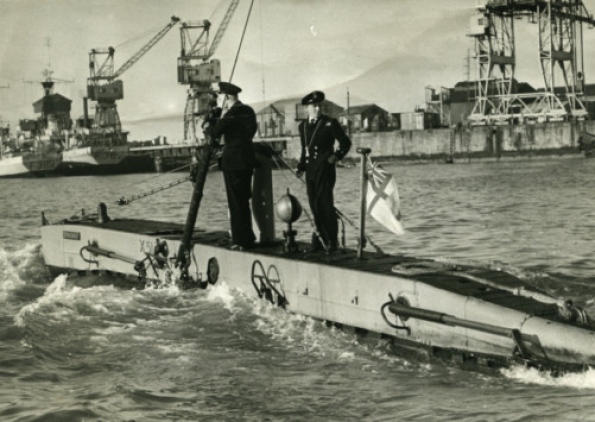
Two Navy servicemen on a ‘Stickleback’ submarine in 1954. Picture: Royal Maritime Museum

A MULTI-million pound museum to create the biggest ­memorial in the world to more than 5,300 Commonwealth sailors killed in the line of duty, and honour Scotland’s role in the ­development of submarine technology, is planned for the banks of the River Clyde.

 Award-winning architect ­Gareth Hoskins, who designed the £47 million National Museum of Scotland redevelopment, the Culloden Battlefield Memorial Centre and the Bridge Arts Centre, has been asked to draw up plans for the new £6m building overlooking the Firth of Clyde at Helensburgh.

Funding for the proposed Scottish Submarine Centre is being sought from a consortium of private and public bodies with organisers claiming to have secured pledges of more than £1m so far.

An application for £240,000 is due to go before the Scottish Regional Armed Forces Community Covenant Awards Board for approval later this month.

The Community Covenant grant scheme was launched by the Ministry of Defence in August last year. It offers funding of £30m over four years to UK projects which strengthen ties between serving and former military personnel with their communities.

The proposed Submarine Centre will be the only one of its kind in Scotland. Already, the Royal Navy Museum has agreed to donate an X51-class submarine as a centrepiece of the state-of-the-art digital museum to act as a memorial to submariners from around the world.

The midget submarine is a direct descendant of the X-class subs whose crews trained in the Firth of Clyde during the ­Second World War to develop the techniques needed to attack enemy shipping in the narrow fjords of Norway. The X51, improved on the wartime midget submarines, was first unveiled in 1954 on the Gareloch in the Firth of Clyde. Capable of carrying a crew of five, the miniature subs were used for a variety of roles. However, the history of submarines and the Clyde is much longer.

It is hoped the new facility will open by the end of 2016 in time for the 100th anniversary of the K13 disaster. Thirty-two people died when the steam-driven submarine failed during sea trials in the Gareloch near Helensburgh on 29 January, 1917 within sight of the location proposed for the new museum and memorial. Brian Keating, a Helensburgh-based businessman who is driving the project, said: “Helensburgh and the Clyde have been associated with the submarine service for more than 100 years. A lot of work was done here to pioneer the technology.

“The Clyde has also played a major role as a home to submarines on active duty. Many of the most famous and daring ­missions carried out during the Second World War either began here or were in some way connected with the Clyde.

“We want to create a world-class museum which celebrates the marine engineering heritage of the Clyde shipbuilders involved in the development of submarines and serves as a memorial to the brave men from all over the Commonwealth who served in the ­‘silent service’.”

Architect Hoskins, a native of Helensburgh, was recently awarded a series of top awards.

Source – The Scotsman

Jude Law apes Gibraltar submarine captain for new film Black Sea

ACTOR Jude Law has prepared for his next Hollywood role by joining the crew of an operational Royal Navy nuclear submarine on patrol.

Jude-Law-on-board-submarine-HMS-Talent-in-Gribraltar-for-filmingJude Law on board submarine HMS Talent in Gribraltar for filming

The 40-year-old actor spent several days on HMS Talent learning the life of a submariner, and he remained on board when the vessel left Gibraltar to take part in war games in the Mediterranean.

However, London-based Law, whose film credits include The Talented Mr Ripley and Sherlock Holmes, was not allowed to see the most sensitive operational areas of the hi-tech submarine.

The actor is due to star in the film Black Sea as a British submarine captain who embarks on a hunt for a stolen submarine with gold on board.

He was very down-to-earth, he went around every department and worked out with the Captain

Leading Seaman Anthony Morgan

Crewmen said he immersed himself in the job and made sure he ate with all the officers and sailors. Leading Seaman Anthony Morgan said: “He was very down-to-earth, he went around every department and worked out with the Captain.”

When Law left he was given a “dolphin” badge, which is presented to newly-qualified submariners.

Source – Express

US – SSBNX Under Pressure: Submarine Chief Says Navy Can’t Reduce – Video Clip

SSBN Force Level Requirements: It’s Simply a Matter of Geography

By Rear Adm. Richard Breckenridge Director, Undersea Warfare, OPNAV N97

There have been recent claims that today’s ballistic missile submarine force is operating with excess capacity and, therefore, force reductions to save resources may be in order. As I have noted in response to a recent op-ed, this supposition is untrue – in fact, our lean SSBN force is providing the cornerstone of our national security at a pace that has remained essentially constant since the late 1990s. Even so, questions about the size and capability of our future at-sea deterrence are appropriate to consider as we recapitalize this national asset. Given past force structure reductions from the “41 for Freedom” SSBN force of the 1960s and 1970s, to the 18 Ohio-class SSBNs of the 1980s and 1990s, to our current force of 14 SSBNs, one might wonder, “What is the minimum number needed for strategic deterrence?” Given advances in technology and the changing scope and complexity of post-Cold War deterrence, is there a way to “do more with less” as we field the next class of SSBNs?

The Mission: Delivering survivable nuclear deterrence from large open-ocean areas

The purpose of the SSBN force is to deter nuclear attack against the United States and against our friends and allies. Our “boomers” do this as part of a nuclear triad. The SSBN role is to provide an assured response capability that is survivable, reliable and robust enough to act as compelling deterrent against a nuclear strike from a foreign power. To make sure our SSBNs are survivable, they are operated from bases giving them access to the broad ocean areas in both the Atlantic and the Pacific. They are stealthy – both in transit and on station. They are operated in a manner that makes their locations unpredictable, while still ensuring that our adversaries know that we have the ability to hold them at risk. This enduring, certain deterrent force acts as an important stabilizer; it is always there and always at the ready.

The Ohio-class ballistic missile submarine USS Rhode Island (SSBN 740) returns to Naval Submarine Base Kings Bay after three months at sea, March 20, 2013. (U.S. Navy photo by Mass Communication Specialist 1st Class James Kimber/Released)

The Ohio-class ballistic missile submarine USS Rhode Island (SSBN 740) returns to Naval Submarine Base Kings Bay after three months at sea, March 20, 2013.

Our Current and Future SSBN Force: A case study in system optimization

An unarmed Trident II D5 missile launches from the Ohio-class fleet ballistic-missile submarine USS Nevada (SSBN 733) off the coast of Southern California, March 1, 2011. The test launch was part of the U.S. Navy Strategic Systems Programs demonstration and shakedown operation certification process. The successful launch certified the readiness of an SSBN crew and the operational performance of the submarine's strategic weapons system before returning to operational availability. The launch was the 135th consecutive successful test flight. (U.S. Navy photo by Seaman Benjamin Crossley/Released)

An unarmed Trident II D5 missile launches from the Ohio-class fleet ballistic-missile submarine USS Nevada (SSBN 733) off the coast of Southern California, March 1, 2011. The test launch was part of the U.S. Navy Strategic Systems Programs demonstration and shakedown operation certification process. The successful launch certified the readiness of an SSBN crew and the operational performance of the submarine’s strategic weapons system before returning to operational availability. The launch was the 135th consecutive successful test flight.

Our SSBN force has been “optimized for leanness” based on more than 50 years and 4,000 patrols of proven performance. The deterrent value we provided with 41 SSBNs we now provide with 14 Ohio-class SSBNs. This 65 percent force reduction is a result of two impressive technological developments – the extended range of the D5 missile and quieting technologies that make our SSBNs that much harder to find, even by a persistent and determined adversary. Our boomers are able to exploit the vast reaches of the Atlantic and Pacific Oceans to patrol silently while within range of key targets to hold an aggressor at risk.

As we return to our question of the leanest force capable of providing this credible and persuasive deterrent, our answer simply comes down to world geography 101 principles. Because the Pacific Ocean is larger, we operate two additional SSBNs in the Pacific to accommodate range and survivability considerations. Six SSBNs in the Pacific and four in the Atlantic is the bare minimum required to provide uninterrupted alert coverage for the combatant commander.

So if 10 SSBNs is our absolute minimum, why do we need 14 today? The reason hinges on the three-year refueling overhaul at the mid-life of each SSBN removing them from strategic service. Today, of our 14 SSBNs, we operate on average 11 to provide vital nuclear deterrence. Based upon other electronic system modernizations, this minimum force level occasionally dips to 10 operational SSBNs. One important historical note is relevant to the refueling overhaul discussion. The Ohio-class core life exceeded the design estimates of 15 years and the Navy was able to postpone mid-life refueling by six years.  Naval Sea Systems Command engineers then conducted detailed technical analysis of all other shipboard systems and extended the service life of our Ohio class from 30 to 42 years – a mind-staggering 40 percent life extension. This technological feat saved the country substantial budgetary resources, reaping a greater return from the initial investment in this SSBN class; essentially four less SSBNs will be procured during this century as a result of this achievement.

The good news is that this legacy of lean success is being imprinted in the DNA of the new Ohio replacement SSBN. The engineers at NAVSEA and our partners in industry are designing a new boomer with a 42-year service life and a reactor core that will not require refueling throughout the life of the ship. This will reduce the class mid-life overhaul by one-third and we will be able to deploy our 10 operational SSBNs with a force of just 12 total SSBNs.

If you want to see a “lean, mean fighting machine,” look no further than our current and future ballistic missile submarine force.

Source – Navy Life